Hank Williams: The Short Life That Invented Country Music
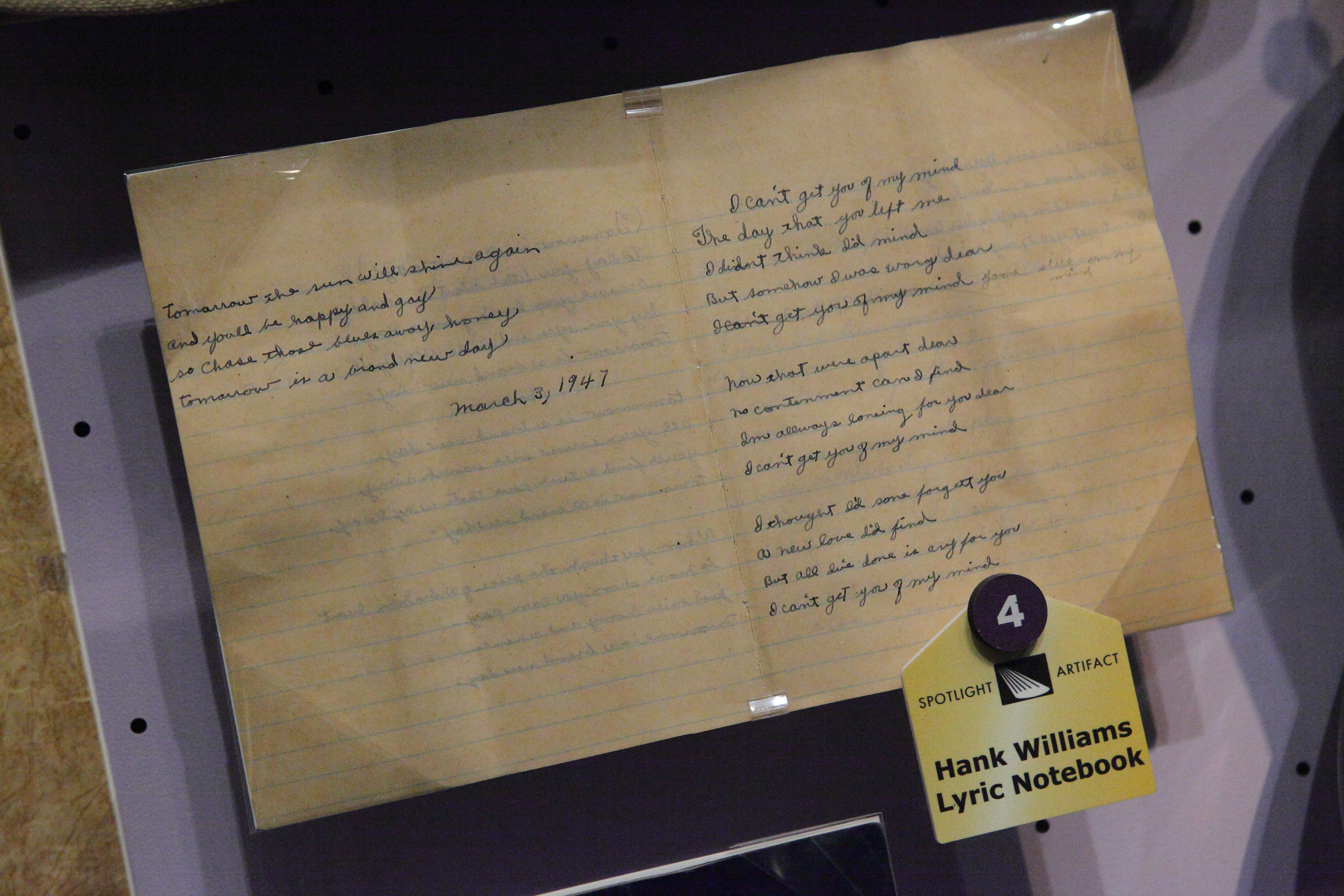
He never learned to read music. Hank Williams wrote songs the way he lived -- by feel, from pain, in plain language that cut straight to the bone. In a career that barely spanned six years of real fame, he placed 55 singles in the Billboard country top ten, earned a posthumous Pulitzer Prize, and died on New Year's Day 1953 in the back seat of a powder-blue Cadillac on a West Virginia highway. He was 29 years old. Montgomery, Alabama, was where he became Hank -- where a gawky kid from the red-dirt sticks won a talent show, busked outside a radio station, and assembled the Drifting Cowboys. The city claims him still.
Rufus Payne's Gift
Hiram Williams was born on September 17, 1923, in Mount Olive, a rural community in Butler County, Alabama. He came into the world with spina bifida occulta, a birth defect that would cause him lifelong pain and eventually fuel the addictions that killed him. His father, a lumber company railroad engineer, was hospitalized with a brain aneurysm when Hank was seven, leaving his mother Lillie to raise the family alone through the Great Depression. She ran boarding houses, worked in a cannery, and nursed the night shift. Hank got his first guitar around age eight -- a secondhand instrument his mother bought for $3.50. But it was Rufus "Tee-Tot" Payne, a Black street musician in Georgiana, Alabama, who taught the boy to play. Payne's style was blues. He drilled rhythm and time into young Hank and added showmanship -- stoops, bows, laughs, and cries. Williams later credited Payne as the only musical teacher he ever had. Payne died in poverty in Montgomery in 1939, never knowing what his student would become.
The Empire Theater and the Drifting Cowboys
In 1937 the Williams family moved to Montgomery, and the 13-year-old Hiram reinvented himself as Hank. That same year he entered a talent contest at the Empire Theater and won first prize -- fifteen dollars -- singing an original song called "WPA Blues." He began playing his Silvertone guitar on the sidewalk outside the WSFA radio studio, and the station's producers noticed. By his mid-teens he had his own radio appearances and a band: the Drifting Cowboys, managed by his formidable mother. Hank dropped out of school in October 1939 to tour full-time, playing dancehalls, honky-tonks, and movie theaters across central Alabama, western Georgia, and the Florida Panhandle. The drinking started early. WSFA fired him for habitual drunkenness in 1942. Roy Acuff, meeting him backstage, delivered the famous warning: "You've got a million-dollar voice, son, but a ten-cent brain."
Lovesick Blues and the Grand Ole Opry
Williams clawed his way back. He married Audrey Sheppard in 1944, signed with MGM Records in 1947, and released "Move It on Over," a country hit. He joined the Louisiana Hayride radio show in Shreveport, which beamed his voice across the Southeast. Then came "Lovesick Blues" in 1949 -- a cover of a 1922 song that Williams made entirely his own. It sat at number one on the Billboard charts for four consecutive months. On June 11, 1949, he debuted at the Grand Ole Opry in Nashville and received six encores. He reassembled the Drifting Cowboys with Bob McNett, Hillous Butrum, Jerry Rivers, and Don Helms, and the hits poured out: "Cold, Cold Heart," "Hey, Good Lookin'," "Jambalaya (On the Bayou)," "Your Cheatin' Heart," "I'm So Lonesome I Could Cry." By 1950 he was earning an estimated $1,000 per show. Tony Bennett's pop cover of "Cold, Cold Heart" stayed on the charts for 27 weeks, proving Williams's songs could cross any boundary.
The Back Seat of a Cadillac
The pain never stopped. Williams's spina bifida worsened after a hunting accident in 1951. A spinal fusion at Vanderbilt University Hospital that December left him in a back brace and deeper into painkillers. He was fired from the Grand Ole Opry in August 1952 for missing shows. A quack named Toby Marshall -- a convicted forger posing as a doctor -- prescribed him amphetamines, Seconal, chloral hydrate, and morphine. His last known public performance was a benefit concert in Montgomery on December 21, 1952. Ten days later, headed to a New Year's Day show in Canton, Ohio, Williams hired a college student named Charles Carr to drive. Snowstorms grounded his flight. Somewhere after midnight, crossing into West Virginia, Williams died in the back seat. At his funeral on January 4, 1953, at the Montgomery Auditorium, an estimated 15,000 to 25,000 people gathered outside. Roy Acuff, Ernest Tubb, and Red Foley sang "I Saw the Light" over his silver casket.
A Voice That Will Not Fade
Williams had eleven number-one country hits in a career that lasted barely a decade. He was inducted into the Country Music Hall of Fame in 1961, the Rock and Roll Hall of Fame in 1987, and received a posthumous Pulitzer Prize in 2010 for "craftsmanship as a songwriter who expressed universal feelings with poignant simplicity." Elvis Presley, Bob Dylan, Johnny Cash, the Rolling Stones, and the Beatles all cited him as an influence. His remains rest at Oakwood Cemetery Annex in Montgomery, where the governor proclaimed September 17 Hank Williams Day. The Hank Williams Museum sits at 118 Commerce Street downtown, housing his 1952 Cadillac -- the car he died in. Montgomery shaped Hank Williams, and Hank Williams shaped American music. The songs he wrote by feel, without reading a note, still sound like the truth.
From the Air
Located at 32.3847N, 86.2913W in downtown Montgomery, Alabama. The Hank Williams Museum at 118 Commerce Street sits near the Alabama River bend. Key visual references include the Alabama State Capitol dome, the river bluffs, and the downtown grid. Nearby airports: Montgomery Regional Airport (KMGM), approximately 7 nm southwest; Maxwell Air Force Base (KMXF), approximately 4 nm west. Best viewed at 2,000-3,000 feet AGL on approach from the south along the Alabama River.