Harar
Every evening at dusk, outside the walls of Harar's old city, a man squats in the dirt and calls to the hyenas by name. They come from the surrounding hills -- spotted hyenas, each known individually to the feeder, who places scraps of meat on a stick held between his teeth and lets the animals take it from his mouth. Tourists gather. Cameras flash. The hyenas, unbothered, accept their meal and vanish back into the darkness. This tradition has persisted for decades, possibly centuries, and in any other city it would be the headline attraction. In Harar, it barely cracks the top five. This is a place where 82 mosques crowd inside walls you can walk around in an hour, where the coffee plant may have first been domesticated, and where the city's designation as the fourth holiest city in Islam -- after Mecca, Medina, and Jerusalem -- carries the weight of a thousand years of unbroken devotion.
The City Behind the Walls
Harar Jugol, the old walled city, is a UNESCO World Heritage Site and one of the most intact medieval Islamic cities anywhere in the world. Five historic gates pierce the walls, with the Harar Gate at the western end serving as the main entry. Inside, the streets narrow to shoulder width. Brightly painted houses -- turquoise, ochre, coral -- press against each other along lanes that curve and fork without obvious logic. Three of the city's mosques date from the 10th century. Over 102 shrines dot the Jugol's interior. The Arabic name for Harar is the City of Saints, and the density of religious sites within so compact an area gives the name literal truth. Walking a single city block, visitors can expect five to ten greetings from residents, at least one invitation to conversation, and someone offering to serve as a guide -- all delivered with a warmth that locals describe as typical even by Ethiopian standards.
Where Coffee Began
Sir Richard Burton, the Victorian explorer who entered Harar in disguise in 1855 -- the first European known to have done so -- recorded that the city was considered the birthplace of the khat plant. But Harar's deeper agricultural claim involves coffee. The original domesticated Arabica coffee plant is said to have originated here, and Harar coffee remains one of Ethiopia's oldest and most distinctive varieties. It is dry-processed, producing a heavy-bodied cup with wine-like, fruity notes and hints of chocolate or spice. The variety holds a Geographical Indication, protecting its regional identity. Yet Harar coffee is becoming rarer. Farmers have discovered they can earn more from khat, which requires less processing and sells faster. The irony is sharp: the city that may have given the world its most beloved beverage is slowly replacing it with a stimulant leaf that most of the world has never heard of.
Crossroads of the Horn
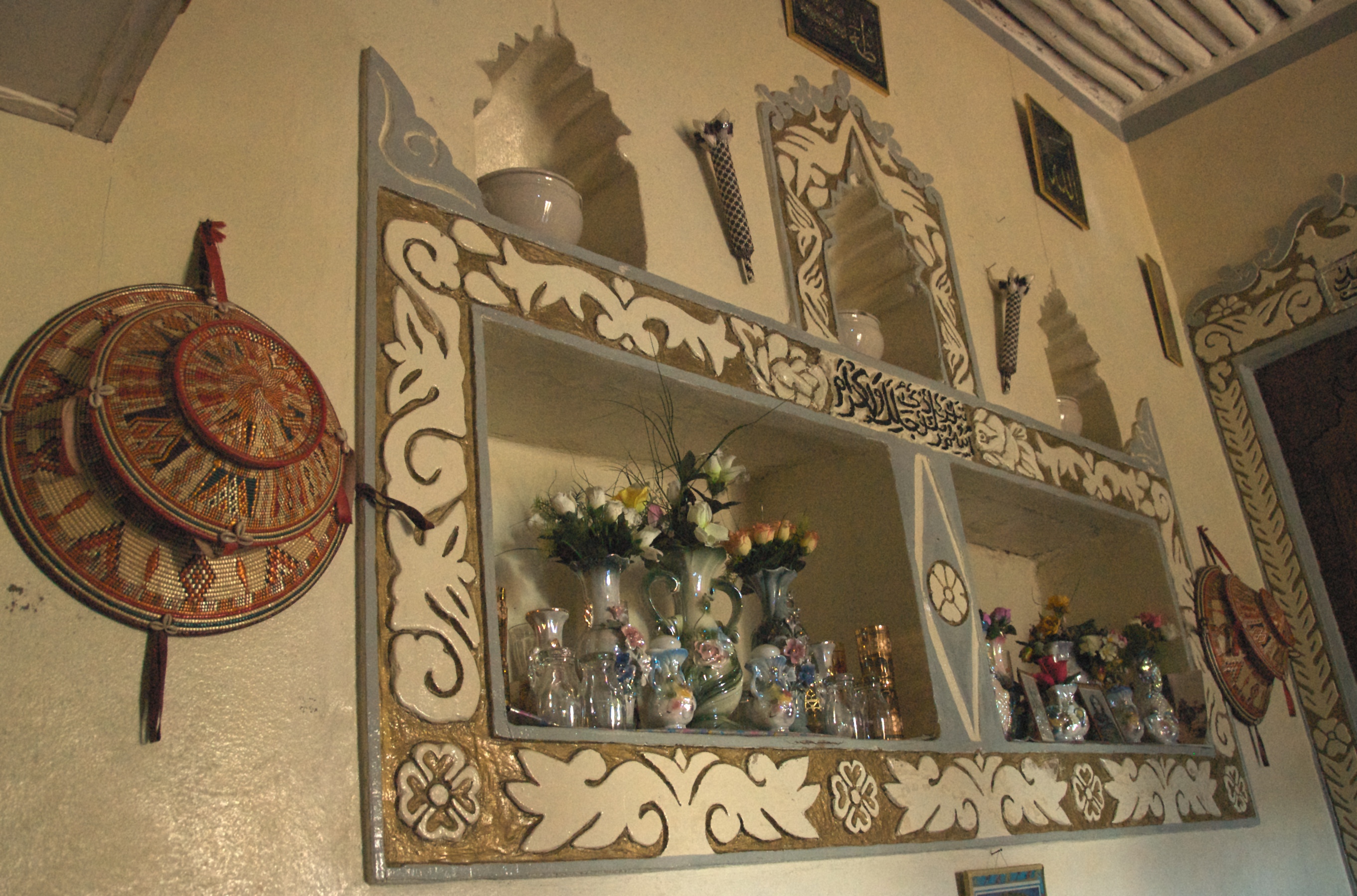
Harar has been a commercial hub for centuries, sitting at the junction of trade routes linking the Ethiopian highlands to the ports of the Horn of Africa. Its population reflects that history of connection: Amhara, Oromo, Harari, Somali, Gurage, and Tigrayan communities coexist within and around the walls. Amharic is the most widely spoken language, but Oromo, Harari, and Somali are all heard in the markets. The Harari people themselves, who make up about 12 percent of the city's population, maintain distinctive cultural traditions including elaborately decorated interior rooms in their traditional houses, some of which are open for visitors to see. Emperor Haile Selassie was born in the nearby town of Ejersa Goro. The French poet Arthur Rimbaud spent years here as a trader in the 1880s, and his former house is now a museum -- though what he actually did in Harar remains a subject of scholarly debate.
Beyond the Gates
The territory surrounding Harar offers its own rewards for those willing to travel rough roads. To the west, the town of Aweday hosts the largest khat market in Ethiopia, a chaotic green-leafed spectacle that peaks in the afternoon. Beyond Aweday, the town of Haramaya sits along the southern shore of picturesque Lake Haramaya. To the east, Babile's camel market draws traders from across the region, and past Babile lies the Dakhata Valley, also called the Valley of Marvels, where wind-sculpted rock formations rise from the landscape like the ruins of some impossible civilization. The Babile Elephant Sanctuary protects one of the northernmost populations of African elephants. Getting to any of these places involves minibuses, negotiation, and patience, but the journey is part of the texture of travel in eastern Ethiopia -- a region where the infrastructure is thin but the landscape and human encounters are rich.
A City That Keeps Its Own Time
Reaching Harar requires effort. From Addis Ababa, the bus takes roughly eleven hours. The alternative is to fly or take the overnight train to Dire Dawa, 54 kilometers away, and then negotiate a minibus or private taxi for the final stretch. The city has very few quality accommodations; hot water is a luxury, and running water at all is not guaranteed. Restaurants are sparse, though the bunna bets -- street coffee stands -- compensate generously, and Harar's nightlife outside the Jugol is surprisingly lively. None of this deters the travelers who come. Harar operates on its own rhythms, shaped by centuries of devotion, trade, and the daily rituals of coffee and conversation. It is a place where getting lost in the alleyways is the point, where the call to prayer echoes from dozens of minarets simultaneously, and where the hyena man will be outside the walls again tonight, calling his animals home.
From the Air
Located at 9.31N, 42.13E in eastern Ethiopia at approximately 1,850 m elevation. The Jugol walled city is compact and visible as a dense cluster of buildings on a hilltop. Nearest airport is Dire Dawa International Airport (HADR), approximately 54 km west. The terrain between Dire Dawa and Harar rises from the Rift Valley floor to the eastern Ethiopian highlands. The surrounding landscape is semi-arid with dramatic escarpments. From altitude, the transition from lowland desert around Dire Dawa to the greener highlands around Harar is clearly visible.