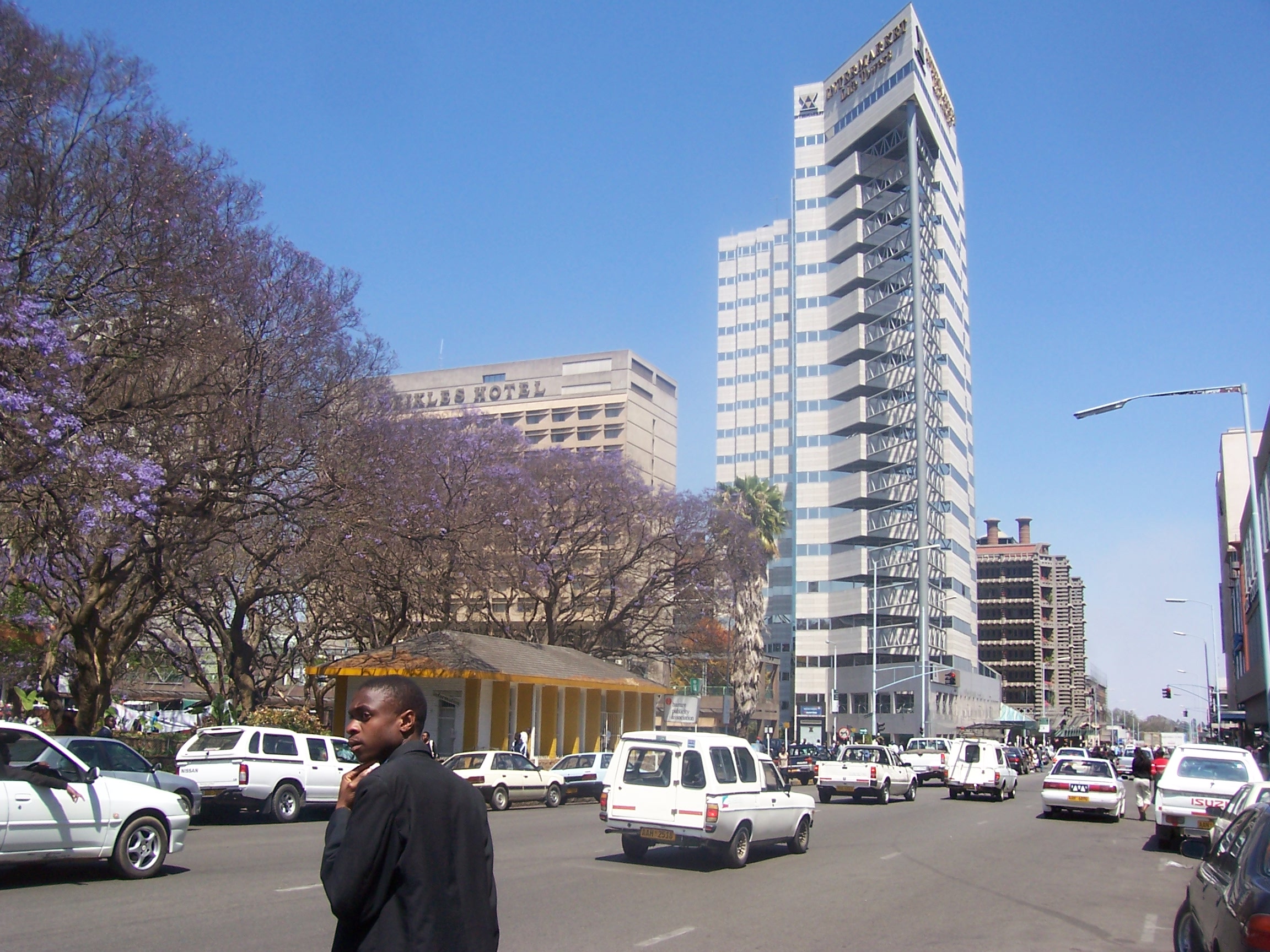
Harare
Order a Chibuku at a bar in Harare and it arrives in a two-liter brown plastic bottle the locals call a "scud." The beer inside is lumpy, opaque, and beige -- brewed from sorghum in the traditional African style -- and shaking the container before you drink is not optional. It is, in miniature, Harare itself: unpretentious, unfamiliar to outsiders, and far more rewarding than first impressions suggest. Set on a highland plateau at roughly 1,500 meters above sea level, Zimbabwe's capital is home to over two and a half million people, a city of wide thoroughfares and flowering jacaranda trees that has weathered one of Africa's worst economic crises and come out the other side with a vibrant street culture, a growing cafe scene, and a stubborn optimism that defies the headlines.
From Fort Salisbury to Harare
The city began as Fort Salisbury, established in 1890 by Cecil Rhodes's Pioneer Column at a kopje in Mashonaland. For decades it served as the administrative capital of Southern Rhodesia, its grid of streets named after British colonial figures and its suburbs designed for the comfort of white settlers. Independence in 1980 brought a new name -- Harare, derived from the Shona chieftain Neharawa -- and a transformation in character if not in layout. The wide avenues and garden suburbs remained, but the city's population surged as Zimbabweans from rural areas moved to the capital. Today the central district still preserves older buildings like the Mining Pension Fund Building at Central Avenue and Second Street, while Robert Mugabe Road holds a concentration of early colonial architecture between Second Street and Julius Nyerere Way.
Surviving the Storm
Harare's modern story cannot be told without acknowledging the economic crisis that ravaged Zimbabwe in the 2000s. Hyperinflation reached absurd proportions -- at its peak in November 2008, prices doubled every 24 hours -- and basic services collapsed. Roads deteriorated, streetlights went dark across much of the country, and the infrastructure that colonial planners had built began to crumble from neglect. Dollarization in 2009, when Zimbabwe abandoned its own currency in favor of the US dollar, brought a measure of stability. Fuel shortages became a thing of the past, ATMs dispensed American bills, and a can of Coca-Cola settled at about a dollar. By the 2010s, new investment began trickling into infrastructure, and the city's commercial life slowly revived -- though scars from the crisis years remain visible in potholed side streets and unfinished buildings.
The Sound of the City
Harare's nightlife runs deep into the early hours. The dominant sound is Zimdancehall, a local genre that fuses Jamaican dancehall rhythms with Shona lyrics and electronic production, blaring from clubs across the city. Working-class neighborhoods favor Sungura, a guitar-driven style rooted in Congolese rumba, while wealthier suburbs gravitate toward South African amapiano and Western pop. The musical ecosystem reflects Harare's social geography -- a city where class lines are drawn sharply but cultural energy flows across them. Live music venues, open-air bars, and nightclubs coexist alongside a growing restaurant scene. Cork Road in Avondale has become a hub of outdoor cafes and galleries, including 40 Cork Road, an art gallery and sculpture garden that doubles as the place to be seen.
Markets and Mbare
For a taste of Harare at its most unfiltered, head to Mbare. The neighborhood's terminal and market complex is giant, hectic, and bewildering -- a sprawl of bus bays, market stalls, and narrow alleys where vendors sell everything from baskets and clothing to fresh produce and secondhand electronics. Finding a taxi here can mean walking over 500 meters through the chaos. Most long-distance bus services arrive at Mbare, making it the de facto gateway to the country for budget travelers. The contrast with upscale shopping centers like Borrowdale and Westgate, where suburbanites browse in air-conditioned comfort, captures the breadth of Harare's economic range. Locally made goods tend to be high quality and affordable; imported items carry heavy taxes, a legacy of Zimbabwe's economic isolation.
A City of Gardens
What surprises many visitors is the greenery. Harare's highland climate -- warm days, cool evenings, and a pronounced rainy season from November to March -- supports lush gardens that give the suburbs a park-like quality. Many of the city's bed-and-breakfasts occupy former residential houses with extensive grounds, offering a quiet counterpoint to the energy of the central district. The national staple, sadza -- a thick white porridge made from maize meal, served with meat or vegetables -- anchors meals across the social spectrum, from street stalls in Mbare to the dining rooms of the Meikles Hotel. Zimbabwe's small but growing wine scene, anchored by producers like Kumusha, offers surprisingly good bottles at prices that would be unthinkable in Europe or North America. The city is, above all, walkable and friendly -- a place where strangers still greet you on the street.
From the Air
Harare sits at 17.83°S, 31.05°E on a highland plateau at roughly 1,500 meters elevation. From 3,000-5,000 feet AGL, the city's wide grid and extensive green suburbs are clearly visible. Harare International Airport (FVHA) lies south of the city center. The jacaranda tree canopy gives the suburbs a distinctive purple hue during the October-November flowering season. Victoria Falls (FVFA) is roughly 900 km to the northwest, and Bulawayo (FVBU) lies about 440 km to the southwest.