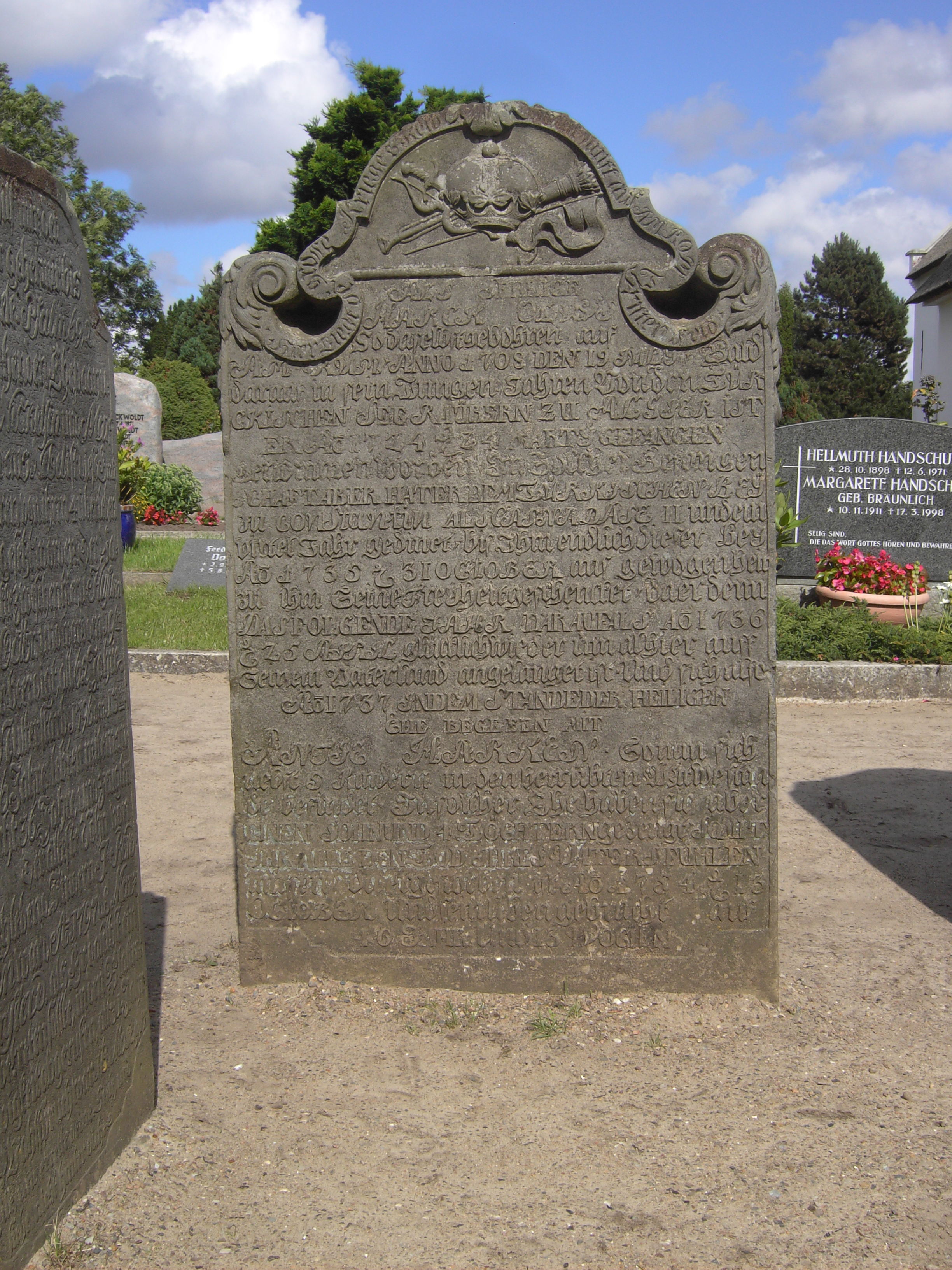
Hark Olufs
He was sixteen when the corsairs boarded. The Hoffnung had cleared Nantes bound for Hamburg in 1724, and somewhere along that passage Barbary pirates took the ship, the cargo, and the crew. Hark Olufs and his two cousins were chained and carried south to the slave market in Algiers. His family on Amrum - a windswept island most Europeans could not have found on a map - tried to raise the ransom and could not. The Danish slavery fund refused to help because the Hoffnung had sailed under Hamburg colours. By any reasonable reckoning, that should have been the end of his story.
It was the beginning.
A Sailor's Son from Suddorf
Hark Olufs was born on Amrum in July 1708, the son of a sea captain named Oluf Jensen. The island then belonged to Denmark, and most boys who grew up there ended up at sea by their teens. Olufs was no exception. In 1721, at thirteen, he joined the crew of the Hoffnung, his father's ship. Three years later he was a working seaman on a routine cargo run between French Atlantic ports and the Hanseatic League - exactly the kind of voyage Frisian sailors made by the thousands. There is nothing in the surviving record to suggest he was extraordinary. He was a competent boy doing a competent job in a dangerous trade, on a coastline that had been losing sailors to Barbary corsairs for two hundred years.
The Bey's Household
Sold at the Algiers market, Olufs ended up in the household of the Bey of Constantine - the Ottoman-appointed governor of a province in what is now northeastern Algeria. House slaves in this position were not chained labourers but personal retainers, valued for skill and trust. Olufs learned quickly. By 1727 or 1728 he had risen from servant to treasurer, handling the Bey's finances. Between 1728 and 1732 he commanded the Bey's Life Guards. Then, in 1732, he became Agha ed-Deira - commander in chief of the local cavalry. A teenage prisoner from a North Sea sandbar was now leading horsemen across the Constantine plateau. To get there, he had converted to Islam, learned Arabic and Turkish, and proven himself in a military culture not designed to promote foreigners. He did it anyway.
The Long Way Home
In 1735 the Algerian army marched on Tunis to depose Al-Husayn I ibn Ali, founder of the Husainid dynasty. Olufs rode with them. After the campaign succeeded, the Bey rewarded his service with the one gift that mattered: freedom. On 31 October 1735 he was released and permitted to return to Amrum. He had been gone eleven years. He came back to Suddorf, the hamlet where he had grown up, and lived another nineteen years in a one-storey thatched house among neighbours who had thought him lost forever. In 1747 he published an autobiography in Danish - a slave narrative written before the genre had a name - which appeared in German in 1751. He died on 13 October 1754, at forty-six.
The Stone in the Churchyard
Olufs is buried in the cemetery of St. Clement's Church in Nebel, the next village over from his birthplace. His gravestone is one of the famous Talking Gravestones of Amrum - 152 carved sandstone slabs whose inscriptions tell the lives of the dead in unusual detail. Olufs's was cut by Tai Hirichs, a self-taught stonemason from the islet of Nordstrandischmoor. The lettering still reads. Generations of Amrumers have grown up knowing his story. In 2010 a German novelist published a biographical novel about him. The boy the slavery fund refused to ransom is now the most famous person ever to have come from this island - the one name visitors leave with.
From the Air
Olufs's grave in Nebel sits at roughly 54.65 degrees north, 8.36 degrees east, in the cemetery beside St. Clement's Church on Amrum. The nearest civil airport is Sylt (EDXW), about 30 km north. From cruise altitude in clear weather, Amrum reads as a long pale streak between the wider islands of Sylt and Foehr in the North Frisian chain.