Harlem River Houses
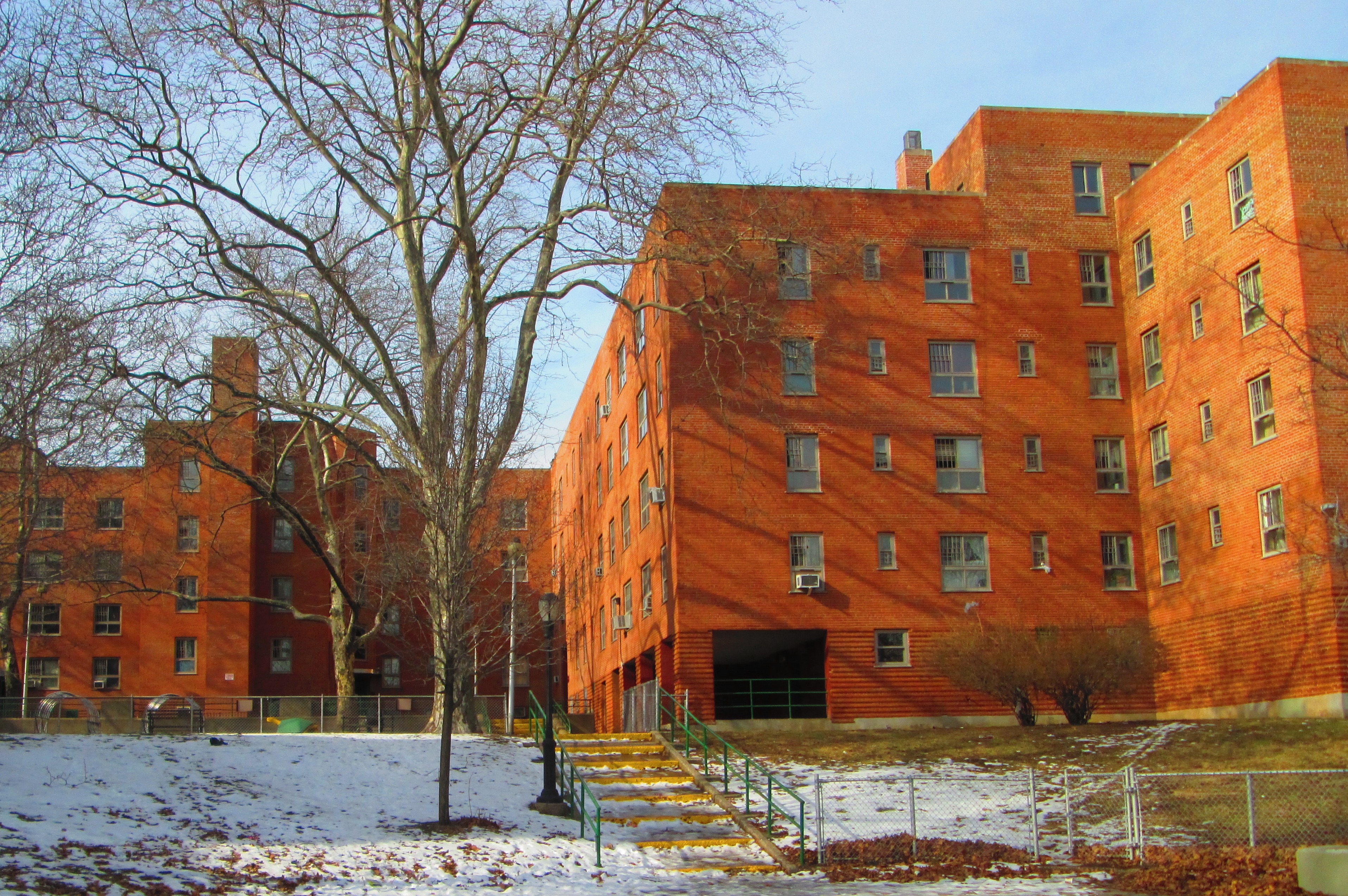
When the Harlem River Houses opened in October 1937, approximately 11,000 families applied for 574 apartments. The demand was staggering but unsurprising. Here was something that had never existed in Harlem before: a public housing complex designed not merely to warehouse the poor but to offer working-class African Americans genuinely beautiful living spaces -- landscaped courtyards, wide walkways, original sculptures, and buildings no taller than five stories, arranged to let light and air reach every unit. The project, spanning nine acres between 151st and 153rd Streets along the Harlem River Drive, was one of the first two federally funded housing developments in New York City. Eighty-eight years later, it remains a New York City Landmark.
Built to Prove a Point
The Harlem River Houses emerged from the New Deal's conviction that the federal government could build better than the slums it was replacing. Construction ran from 1936 to 1937, funded by the Public Works Administration as part of a national effort to create employment and improve living conditions during the Great Depression. What set the Harlem River Houses apart from most public housing that followed was its ambition. The design team included John Louis Wilson Jr., one of the first African American architects registered in New York State. The complex's seven residential buildings were arranged around open courtyards rather than squeezed onto every available square foot. The budget was generous and the aspirations high: the goal was not just shelter but dignity. The project attracted not only the destitute but working families, teachers, professionals -- anyone who could meet the modest income requirements and was willing to wait.
Art in the Courtyards
Public art was part of the plan from the beginning, not an afterthought. The sculptor Heinz Warneke created several works for the complex's landscaped spaces: Bears Playing, a 1938 sculpture of two cubs in a playful tangle; Black Laborer, a 1939 figure of a kneeling man holding a hammer; and Mother and Child, also from 1939. These sculptures were integrated into the circulation spaces and courtyards, designed to be encountered casually by residents going about their daily lives. The artist Richmond Barthe received a Federal Art Project commission for an 80-foot bas-relief in cast stone, intended for the Harlem River Houses. When the work was completed in 1939, however, it was instead installed at the Kingsborough Houses in Brooklyn -- a redirection whose reasons have been debated by art historians ever since.
The People Who Lived There
Among the original tenants was a boy named Robert Parris Moses, who would grow up to become one of the most important grassroots organizers of the civil rights movement. Working with the Student Nonviolent Coordinating Committee in Mississippi, Moses was instrumental in Freedom Summer and the voter registration drives that changed the political landscape of the South. He later created the Algebra Project, bringing mathematical literacy to underserved communities. Another resident, Lemoine Deleaver Pierce, became a noted educator and mediator. The project attracted ambitious, striving families -- people for whom the Harlem River Houses represented not the end of the road but a stable platform from which to build something larger. As of 1987, about three dozen original tenants still lived in the complex, half a century after they had moved in.
A Landmark Against the Odds
The Harlem River Houses received New York City Landmark designation in 1975, a recognition that set it apart from the vast majority of public housing built in the decades after World War II. Where later projects often became synonymous with deterioration and social failure -- towering superblocks that concentrated poverty and isolated residents -- the Harlem River Houses had been designed at human scale, with attention to light, space, and the small details that make a place feel like home rather than storage. The complex is listed on the National Register of Historic Places. A renovation project was underway as of 2025, aiming to preserve the original architectural character while updating systems that are nearly nine decades old. The Harlem River Houses endure as evidence of what public housing can be when it is built with the assumption that its residents deserve beauty.
From the Air
Located at 40.826N, 73.937W in Harlem, Manhattan, between 151st and 153rd Streets along the Harlem River Drive. The complex is visible as a cluster of low-rise buildings with landscaped courtyards near the Harlem River, just south of the Macombs Dam Bridge. Nearby airports include LaGuardia (KLGA, 6 nm east) and Teterboro (KTEB, 8 nm northwest). Best viewed at 2,000-3,000 ft AGL to appreciate the courtyard layout and river frontage.