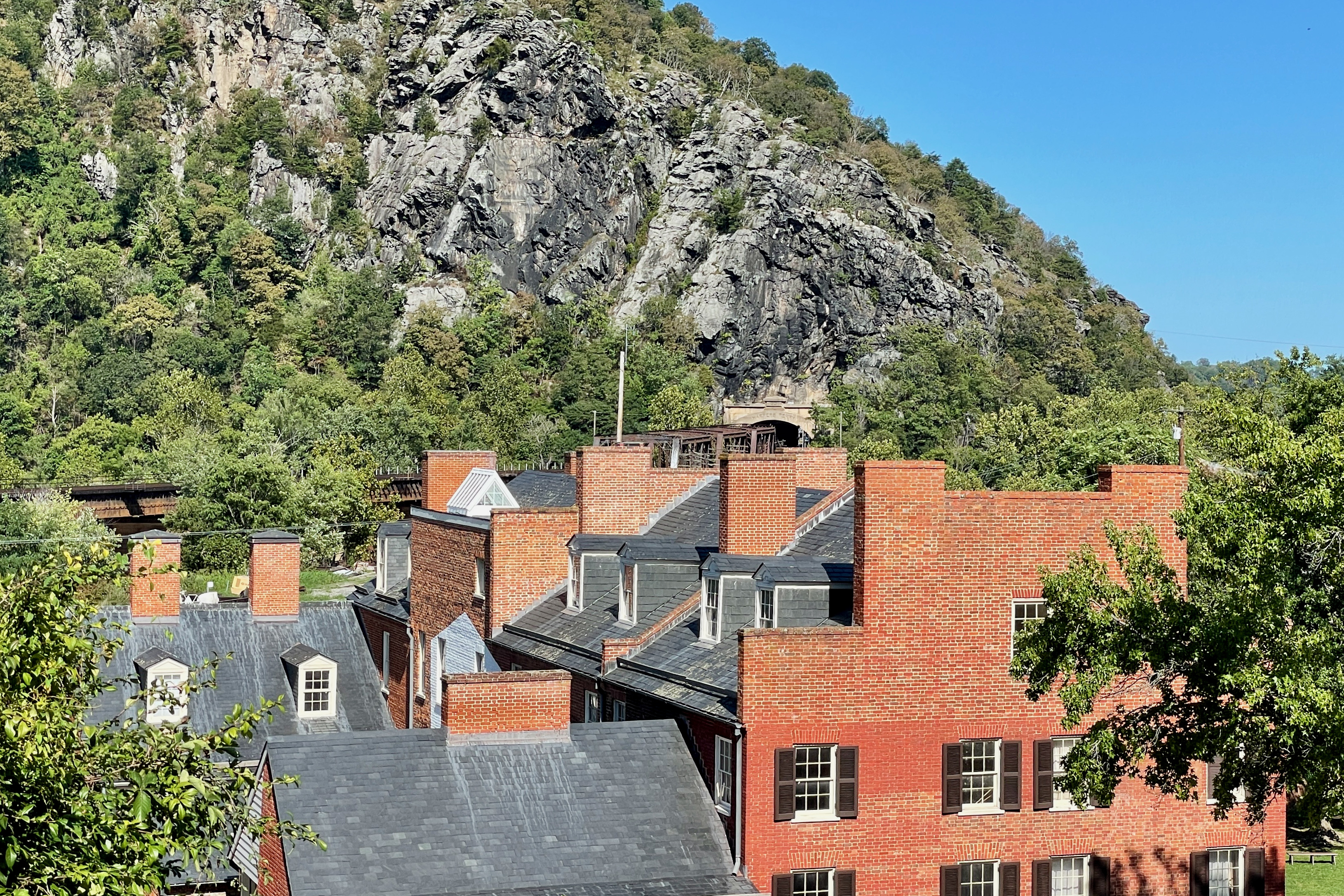
Harpers Ferry
On the night of October 16, 1859, John Brown led 21 men in a raid on the federal arsenal at Harpers Ferry, Virginia. His plan was audacious: seize the weapons, arm enslaved people in the surrounding countryside, and spark a slave rebellion that would spread across the South. The raid failed. Local militia pinned down the raiders. U.S. Marines, commanded by Colonel Robert E. Lee, stormed the engine house where Brown made his last stand. Ten of Brown's men died, including two of his sons. Brown was tried, convicted of treason, and hanged on December 2, 1859. He had failed to start a slave rebellion. But he had succeeded in terrifying the South and inspiring the North. His execution made him a martyr. Within eighteen months, the nation would be at war, and Union soldiers would march singing 'John Brown's Body.' Harpers Ferry, where two rivers meet at the edge of the Blue Ridge, became the place where the Civil War truly began.
The Plan
John Brown had been fighting slavery with violence for years. In Kansas Territory, he and his sons had killed proslavery settlers in retaliation for attacks on free-state communities. Now he conceived a grander scheme. The federal arsenal at Harpers Ferry held thousands of weapons. If he could seize them, he could arm enslaved people throughout the South. The Appalachian Mountains would provide refuge for guerrilla warfare. The institution of slavery would collapse from within. Brown recruited followers, obtained financing from wealthy abolitionists (the 'Secret Six'), and rented a farm in Maryland as a staging area. His force was small - 21 men, including five Black men and three of his sons - but he believed thousands of enslaved people would rise to join him.
The Raid
On Sunday night, October 16, Brown's men crossed the Potomac River bridge and took the arsenal without resistance. They cut telegraph wires and captured hostages, including Lewis Washington, great-grandnephew of George Washington. But Brown hesitated. Instead of immediately fleeing to the mountains with weapons, he waited for enslaved people to arrive. They didn't come - word of the raid hadn't spread, and those who heard were skeptical. By morning, local militia had surrounded the arsenal complex. A Baltimore & Ohio train, initially stopped by the raiders, was allowed to continue, carrying news of the attack. Brown and his surviving men retreated to a small brick engine house. They were trapped.
The Capture
Lieutenant Colonel Robert E. Lee arrived with a company of U.S. Marines. On the morning of October 18, he sent Lieutenant J.E.B. Stuart to demand Brown's surrender. When Brown refused, marines stormed the engine house with sledgehammers and bayonets. In three minutes it was over. Ten of Brown's men lay dead or dying. Brown himself was wounded but alive. Among the marines was future assassin John Wilkes Booth, who had borrowed a militia uniform to witness the event. Brown was immediately tried in nearby Charles Town. Despite offers to plead insanity, he refused, using the courtroom as a platform for his abolitionist message. The jury took 45 minutes to convict. Judge Parker sentenced him to hang.
The Martyr
Brown's execution on December 2, 1859, transformed him from a failed insurrectionist into a symbol. He walked to the gallows calmly, reportedly handing a note to a guard: 'I, John Brown, am now quite certain that the crimes of this guilty land will never be purged away but with blood.' Church bells tolled across the North. Ralph Waldo Emerson said Brown would 'make the gallows glorious like the Cross.' Southerners saw something different: proof that the North intended to destroy their society. The raid's failure didn't matter. What mattered was that Northerners celebrated a man who had tried to incite slave rebellion. The nation's divisions, already deep, became unbridgeable. Sixteen months after Brown's execution, Fort Sumter fell.
Visiting Harpers Ferry
Harpers Ferry National Historical Park preserves the town where two rivers meet and history turned. The Lower Town, nestled at the confluence of the Potomac and Shenandoah Rivers, includes the reconstructed engine house where Brown made his stand (the original was moved, then returned). Museums tell the story of Brown's raid, the Civil War battles that swept through the town, and the Storer College that educated African Americans after the war. The Appalachian Trail passes through town; hikers often stop to explore. Views from Maryland Heights across the rivers are spectacular. The town itself is walkable, with restored nineteenth-century buildings housing exhibits and shops. Harpers Ferry is 65 miles northwest of Washington, D.C. Dulles International Airport (IAD) is the nearest major airport. The park is accessible by Amtrak's Capitol Limited and MARC commuter rail.
From the Air
Located at 39.32°N, 77.73°W at the confluence of the Potomac and Shenandoah Rivers, where West Virginia, Virginia, and Maryland meet. From altitude, Harpers Ferry appears as a small town wedged into the gap where rivers cut through the Blue Ridge Mountains. The distinctive water gap and railroad bridges are visible. The Appalachian Trail crosses the Potomac here.