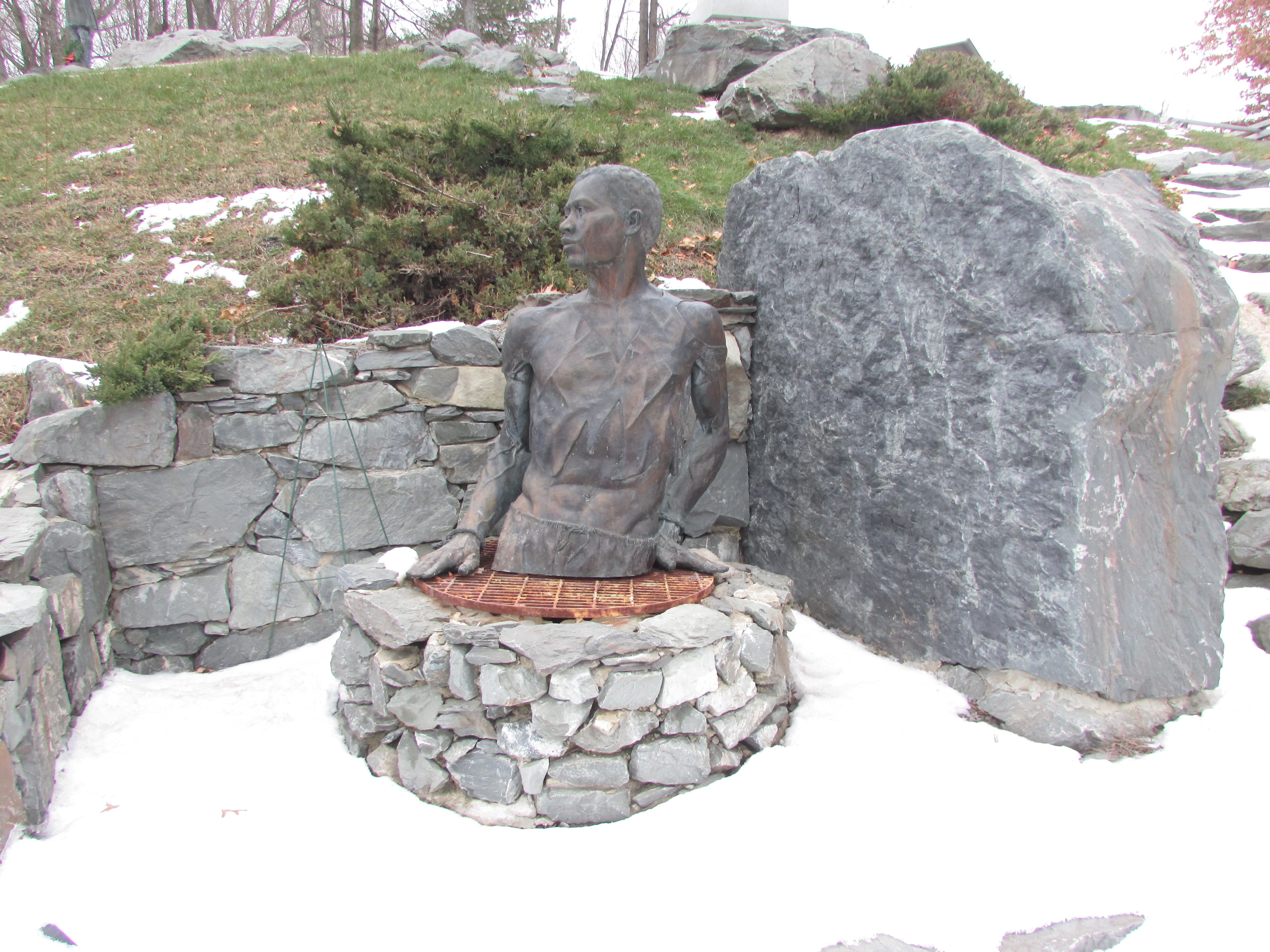
Harriet Tubman Underground Railroad
Harriet Tubman was born into slavery on Maryland's Eastern Shore around 1822, in the same flat tidewater landscape of marshes, creeks, and forests that she would later use as an escape route to freedom. After her own escape in 1849, she returned at least thirteen times to guide approximately seventy enslaved people north - never losing a single passenger. 'I never ran my train off the track and I never lost a passenger,' she said. The Underground Railroad was not a railroad and not underground - it was a network of safe houses, sympathetic helpers, and secret routes that funneled freedom-seekers from the slaveholding states to the North and Canada. The Harriet Tubman Underground Railroad National Historical Park preserves the landscapes of Dorchester County where Tubman was enslaved, where she first resisted, and where she returned repeatedly despite a $40,000 bounty on her head, earning the name 'Moses' from those she led to freedom.
Born in Bondage
Araminta Ross - she later took her mother's name, Harriet - was born to enslaved parents on the Brodess plantation in Dorchester County. As a child, she was hired out to work in the fields and homes of neighboring farmers, receiving beatings that left scars she carried for life. At around age twelve, an overseer threw a heavy metal weight at another enslaved person who was attempting to escape; it struck Harriet instead, fracturing her skull and causing seizures, headaches, and visionary experiences that she interpreted as communications from God. Despite her injury, she became known for extraordinary physical strength and endurance - qualities that would later save lives on the Underground Railroad. In 1849, facing sale to the Deep South, she escaped alone, following the North Star through nearly ninety miles of Eastern Shore countryside to Pennsylvania and freedom.
The Conductor
Most people who escaped slavery never returned south. Tubman returned repeatedly, using her intimate knowledge of the Eastern Shore's creeks, forests, and safe houses to guide family members and strangers to freedom. She typically traveled in winter when longer nights provided cover, beginning trips on Saturday nights since newspapers announcing escapes wouldn't publish until Monday. She carried a pistol and reportedly threatened to shoot any passenger who wanted to turn back - not from cruelty but because a returned fugitive could endanger the entire network under torture. Her methods were meticulous: she studied routes, cultivated contacts, and developed signals for approaching safe houses. Slaveholders offered increasing rewards for her capture; Tubman evaded every attempt. Her passengers included her elderly parents, whom she finally brought north in 1857. 'I freed a thousand slaves,' she reportedly said. 'I could have freed a thousand more if only they knew they were slaves.'
The Network
The Underground Railroad extended far beyond Tubman. It encompassed thousands of people - free Black communities, Quaker families, abolitionist networks - who provided food, shelter, disguises, and transportation to freedom-seekers. On the Eastern Shore, the routes often led northeast toward Wilmington, Delaware, where Thomas Garrett and the Quaker community provided crucial assistance. From there, Philadelphia's active Black community offered refuge before the final journey to New York or Canada. Safe houses were rarely identified by signs or signals - the network operated through personal relationships and word of mouth. The risks were enormous: helpers faced prison or worse under the Fugitive Slave Act of 1850, which required Northerners to assist in capturing people who had escaped slavery. Yet the network persisted. Estimates suggest that between 30,000 and 100,000 people escaped slavery through this system before the Civil War ended the institution.
Beyond the Railroad
Tubman's courage extended beyond the Underground Railroad. When the Civil War began, she served the Union Army as a cook, nurse, scout, and spy - the first American woman to lead an armed military raid when she guided the Combahee River Raid in 1863, liberating over 750 enslaved people. After the war, she settled in Auburn, New York, where she cared for elderly relatives and established a home for aged African Americans. She worked alongside Susan B. Anthony and other suffragists fighting for women's voting rights. She lived until 1913, long enough to see some of her dreams realized and others deferred. Her final words reportedly were: 'I go to prepare a place for you.' In 2016, the Treasury announced plans to feature Tubman on the twenty-dollar bill - a decision that has faced political delays but would make her the first African American on U.S. currency.
The Park Today
The Harriet Tubman Underground Railroad National Historical Park encompasses sites across Maryland's Eastern Shore where Tubman lived, worked, and led escapes. The Harriet Tubman Underground Railroad Visitor Center in Church Creek provides exhibits, films, and ranger programs interpreting her life and the broader Underground Railroad story. The Harriet Tubman Underground Railroad Byway connects over forty sites across two counties, including Blackwater National Wildlife Refuge - the same marshlands Tubman navigated in darkness. The landscape remains remarkably unchanged: flat, watery, forested, and isolated. Walking these trails, visitors can begin to understand how Tubman used this terrain as cover and why she was never captured despite nineteen trips into slaveholding territory. A sister park in Auburn, New York preserves her later home. Both parks, established under President Obama in 2013-2017, ensure that her story remains not just remembered but experienced in the landscapes where courage was required.
From the Air
Located at 38.45°N, 76.14°W on Maryland's Eastern Shore, Dorchester County. The terrain from altitude appears as a mosaic of tidal marshes, rivers, and forests - the Blackwater National Wildlife Refuge is visible as a large wetland complex. Cambridge, Maryland is the nearest town. The Chesapeake Bay lies to the west. Baltimore-Washington International Airport (BWI) is 90 miles northwest.