Hase-dera (Kamakura)
There are eleven faces on the statue, and each one looks different. The main face gazes forward with calm composure. Above it, smaller heads peer in every direction -- some serene, some fierce, one laughing -- each representing a different phase in the search for enlightenment. At over nine meters tall and gilded in gold leaf, the Juichimen Kannon at Hase-dera is one of the largest wooden statues in Japan, and it has been drawing pilgrims to this hillside temple in Kamakura for the better part of a millennium. The temple sits on a slope above Sagami Bay, its terraced gardens offering views across the rooftops of the old samurai capital to the sea beyond. It is a place where the weight of centuries feels tangible -- where carved stone, weathered wood, and the lingering scent of incense conspire to slow time down to something approaching stillness.
Two Statues from One Tree
The legend of Hase-dera's Kannon begins in 721 AD, when a monk named Tokudo is said to have discovered an enormous camphor tree in the mountains of the Kii Peninsula. From that single log, he carved two statues of the eleven-headed Kannon. The first was enshrined at Hase-dera in Nara, where it remains today. The second was cast into the sea with a prayer: let the waves carry it to wherever it is most needed. According to the temple's tradition, the statue washed ashore fifteen years later on the coast near Kamakura, and a hall was built to house it. Whether the story is literally true matters less than what it reveals -- a belief that sacred objects have their own volition, that they choose where they belong. The camphor wood figure, with its gold gilding still luminous after centuries, stands in the main hall as though it has always been here, as though the sea knew exactly where to deliver it.
From Tendai to Pure Land
Hase-dera's origins are traditionally placed in the Tenpyo era, between 729 and 749 CE, though temple documents suggest it truly came into its own during the Kamakura period, from 1192 to 1333, when the city served as the seat of Japan's military government. The temple originally belonged to the Tendai sect of Buddhism, a tradition emphasizing the study of the Lotus Sutra and esoteric ritual. Over the centuries, Hase-dera shifted its affiliation, eventually becoming an independent temple of the Jodo-shu -- the Pure Land school founded by the monk Honen, which taught that salvation was available to anyone through the simple act of reciting the name of Amida Buddha. That theological journey, from esoteric scholarship to populist devotion, mirrors the temple's own character: Hase-dera is a place of serious religious significance that also feels genuinely welcoming to casual visitors.
A Cave Full of Gods
Below the main temple complex, a narrow passage leads into the Benten-Kutsu Cave, a grotto carved into the hillside and lined with stone carvings of Buddhist and Shinto deities. The cave takes its name from Benzaiten, the goddess of music, eloquence, and flowing water, whose image appears among dozens of bas-relief carvings along the damp rock walls. Statues of Daikoku-ten -- the god of wealth -- and various other figures emerge from niches and ledges, their features softened by humidity and time. The low ceiling forces visitors to duck, and the flickering light gives the carvings a quality of movement, as though the deities are shifting just at the edge of perception. It is a strange, atmospheric space, equal parts sacred site and natural wonder, and it captures something essential about Kamakura's religious landscape: the way Buddhist temples, Shinto shrines, and the natural world are layered on top of one another, distinctions blurring at the edges.
The Fourth Station
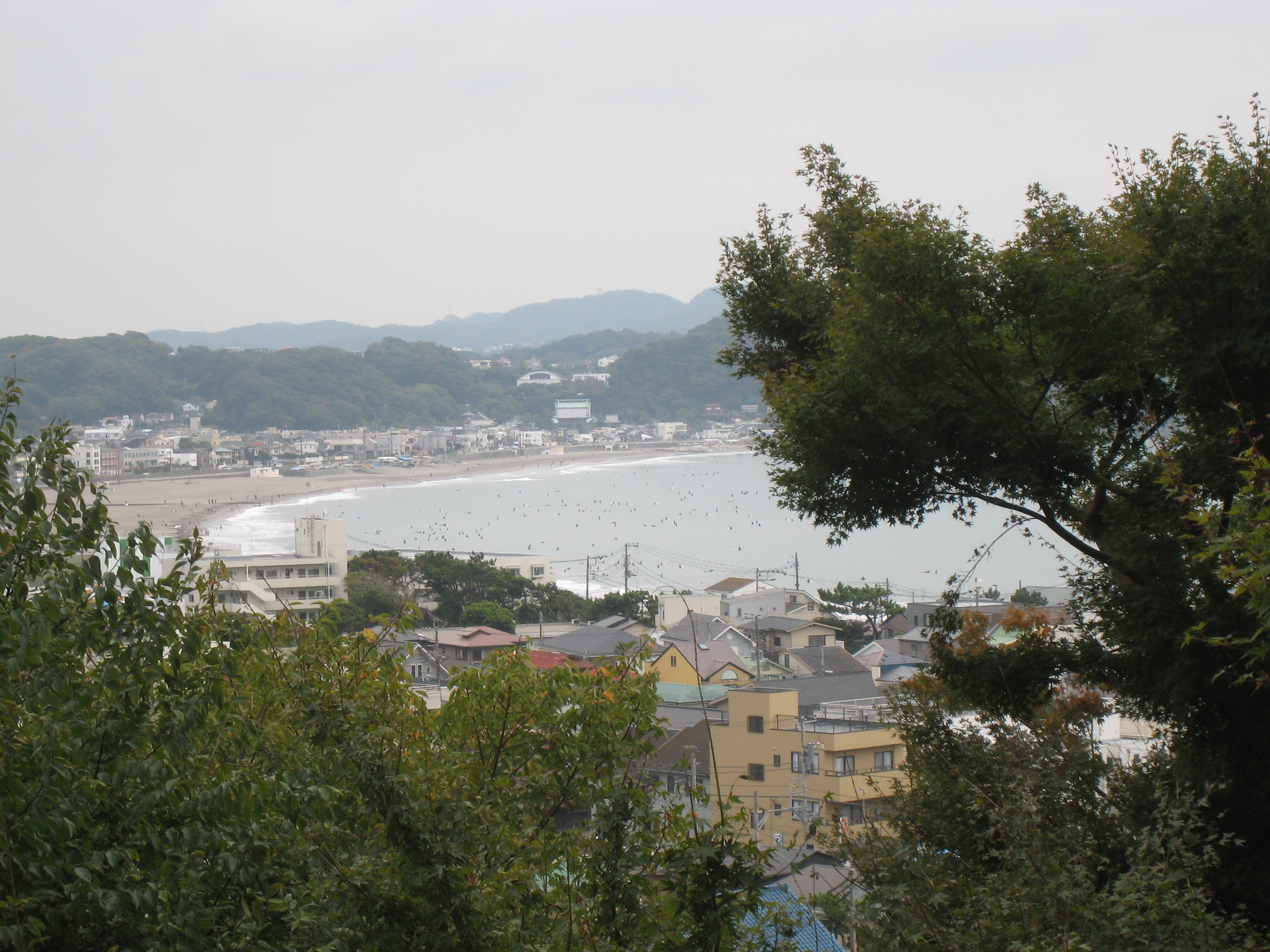
Hase-dera holds a particular significance for pilgrims. It is the fourth station on two separate pilgrimage circuits: the Bando Sanjusankasho, a route of 33 temples in the Kanto region dedicated to Kannon, and the Kamakura Kannon Pilgrimage. The practice of walking these circuits dates back centuries and continues today, connecting temples across prefectures into a single devotional geography. For many visitors, though, the pilgrimage is as much aesthetic as spiritual. The temple's terraced gardens bloom with hydrangeas in June and glow with illuminations in summer evenings. The view from the observation platform sweeps across the tiled rooftops of Kamakura's Hase neighborhood to Sagami Bay. A five-minute walk from Hase Station on the Enoden railway -- the charming two-car train that rattles along the coast from Kamakura to Enoshima -- the temple is an easy detour from the more famous sites around Tsurugaoka Hachimangu, and a quieter one.
From the Air
Hase-dera sits at 35.31N, 139.53E on a hillside above Kamakura's coast, facing Sagami Bay. From the air, the temple grounds appear as a patch of dense green on the slope between the coastal strip and the forested hills behind Kamakura. The Great Buddha at Kotoku-in is approximately 500 meters to the northeast. Enoshima island is visible to the southwest. Nearest airports: Tokyo Haneda (RJTT) approximately 25nm northeast, Atsugi Naval Air Facility (RJTA) approximately 15nm north. The Kamakura coastline and its pocket beaches are clearly visible from moderate altitude. Best visibility in autumn and winter when haze clears.