Hashino: The Samurai Who Read a Dutch Textbook and Forged Modern Japan
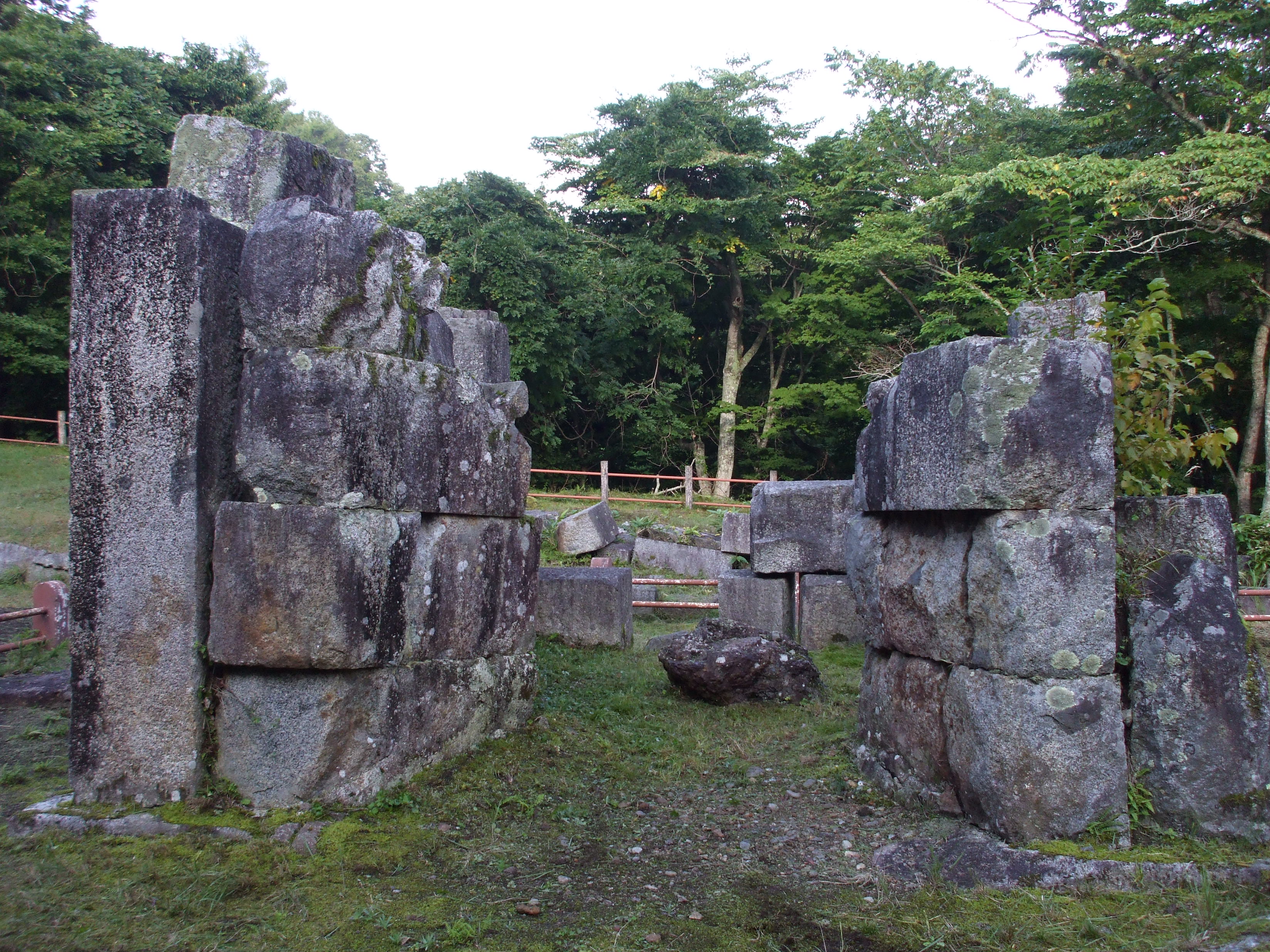
The instructions were in Dutch, a language almost no one in Japan could read. But in 1857, in a forested valley near deposits of magnetite in what is now Kamaishi, Iwate, a samurai named Oshima Takato built a blast furnace based on diagrams in Het Gietwezen in s' Rijks Ijzer-Geschutgieterij te Luik, a European engineering text by Huguenin. On December 1, 1857, molten pig iron flowed from iron ore for the first time in a western-style furnace on Japanese soil. That moment -- a feudal engineer reverse-engineering foreign technology in a mountain forest -- captures the spirit of Japan's industrial revolution in miniature. Today the ruins of the Hashino blast furnaces stand in a quiet woodland clearing, a UNESCO World Heritage Site and the oldest surviving western-style ironworks in Japan.
A Samurai's Failed First Attempt
Oshima Takato came from Nanbu Domain in northern Japan, a samurai with an engineer's mind. During the turbulent Bakumatsu period, as foreign warships menaced Japanese harbors, the Mito Domain hired him to build western-style mortars for coastal defense. In 1855, Oshima constructed a reverberatory furnace in Mito, but the iron it produced was too brittle and impure for casting reliable weapons. The project failed. Oshima returned north to Morioka, chastened but not defeated. With the help of an engineer on loan from the powerful Satsuma Domain in distant southern Kyushu, he tried again -- this time choosing a site near rich magnetite deposits in the Hashino valley. His new design, adapted from the Dutch textbook, called for a true blast furnace rather than a reverberatory one. The gamble paid off. The furnace worked, and Japan had its first successful western-style ironworks.
Iron, Coins, and Defiance
The Tokugawa shogunate, wary of western innovations after the Mito rebellion and the repressive Ansei Purge led by Ii Naosuke, chose not to expand the Hashino operation. In April 1859, the shogunate handed the furnace over to Morioka Domain. The domain saw opportunity where the central government saw risk. Within years, Morioka had constructed two additional blast furnaces, expanding the operation to over 1,000 workers producing 1,125 tons of pig iron per year -- making Hashino the largest smelter in Japan. Much of the iron went to weapons production, but the domain also minted coins on behalf of the government. When orders came in 1868 to stop production, Morioka Domain refused, continuing to mint coins illegally on a large scale through 1869. Only the Meiji Restoration and the abolition of the domain system in 1871 finally shut down the operation. The first and second blast furnaces were closed; the third lingered until 1894, when it was absorbed into the Kamaishi Tanaka Metals Company.
Rediscovery and Recognition
The forest reclaimed Hashino. For decades, the furnace ruins lay buried under vegetation in the mountain valley, their significance forgotten as Japan's steel industry moved to massive coastal plants. Excavation began in 1955, and in 1957, the site received protection as a National Historic Site of Japan. International recognition followed: in 1984, the American Society of Metals designated Hashino a historical landmark, citing its role in the development that led to the Yawata Iron and Steel Works, which became the backbone of Japan's modern steel industry. The crowning acknowledgment came in 2015, when UNESCO inscribed Hashino as part of the Sites of Japan's Meiji Industrial Revolution: Iron and Steel, Shipbuilding and Coal Mining -- a collection of 23 properties across eight prefectures that together tell the story of Japan's transformation from feudal isolation to industrial power in barely fifty years.
What the Forest Holds
Visiting Hashino today means walking a forested trail to a clearing where the stone foundations of three blast furnaces stand among the trees. The ruins are modest in scale -- these were not the towering industrial complexes of a later era but experimental structures, hand-built by a domain workforce in a remote valley. Channels that once carried water for the bellows and slag dumps that held the waste of iron production are still visible. The magnetite mine that supplied the ore lies nearby in the hills. The setting itself tells a story: Japan's industrial revolution did not begin in a great port city or a government laboratory. It began here, in a forest, with a samurai reading a Dutch book by firelight, trying to make iron flow.
From the Air
Located at 39.33N, 141.68E in the forested mountains east of Kamaishi, Iwate Prefecture. The site sits in a narrow valley surrounded by dense forest in the Kitakami Mountains. From altitude, the area appears as unbroken mountain forest with no prominent visual landmarks at the site itself. The city of Kamaishi on the Pacific coast lies approximately 15 km to the east. Nearest airport is Iwate Hanamaki Airport (RJSI), approximately 70 km to the west. Recommended viewing altitude is 3,000-5,000 feet AGL. The Pacific coastline east of the mountains provides a strong visual navigation reference.