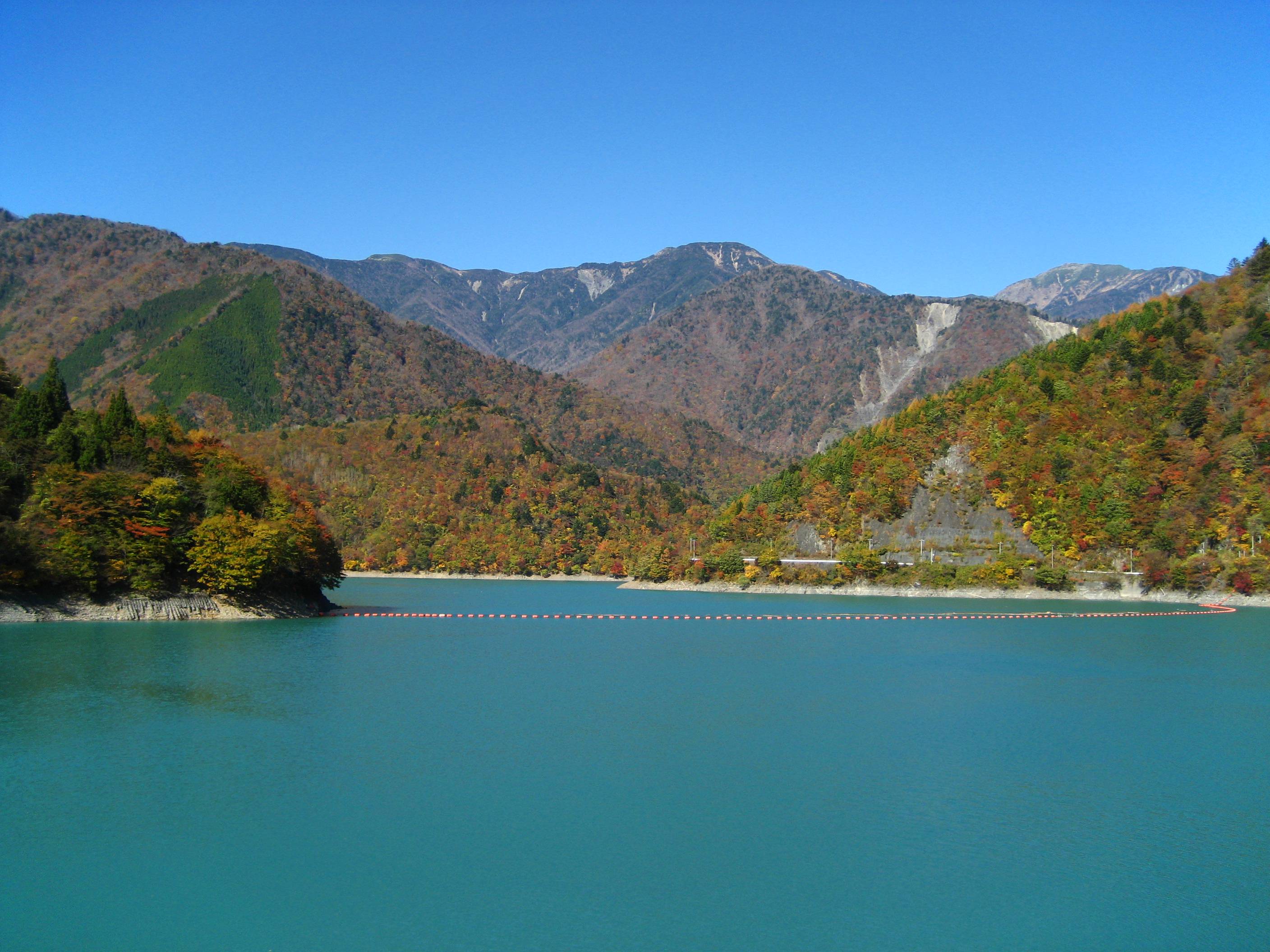
Hatanagi-I Dam
The United Nations does not typically build dams. But on September 10, 1958, the Bank for Reconstruction and Development signed a loan agreement with the Chubu Electric Power Company to fund a structure that would become a world record holder. Deep in the mountains of Shizuoka Prefecture, where the Oi River cuts through gorges in the Minami Alps, engineers were about to raise the tallest hollow-core concrete gravity dam ever built. At 125 meters, Hatanagi-I would stand taller than a thirty-story building, its honeycomb interior a feat of structural ingenuity that used less concrete than a solid dam while holding back an entire river valley's worth of water.
A River's Potential, a Century in the Making
The Oi River had been on engineers' minds since the Meiji era. At the turn of the twentieth century, government planners recognized that the river's fast current, steep mountain tributaries, and abundant rainfall made it ideal for hydroelectric power. The valley was sparsely populated, minimizing displacement concerns. Design work began as early as 1902, and the first dam on the Oi River, the Tashiro Dam, was completed in 1927. Then progress stalled. The Great Depression froze budgets in the 1930s, and World War II consumed national resources in the 1940s. It was not until Japan's postwar economic miracle created an insatiable demand for electricity, particularly in the industrial corridor around Nagoya, that the river's full potential would finally be tapped.
The Hollow Heart
What makes Hatanagi-I remarkable is not just its height but what is inside it, or rather, what is not. A hollow-core gravity dam uses a series of internal chambers and buttresses rather than solid mass to resist the pressure of impounded water. The technique requires less concrete, reducing both cost and construction time, but demands precise engineering to ensure structural integrity. The Hatanagi project paired this dam with a smaller downstream companion, Hatanagi No. 2 Dam. Together they form a pumped-storage hydroelectric system. During periods of low electricity demand, reversible turbine generators pump water from the lower reservoir back up to the higher one. When demand peaks, the water flows downhill through penstocks, spinning the generators to produce power. The system's generators have a maximum flow rate of 137 cubic meters per second.
The Railway That Made It Possible
Building a record-setting dam in a remote mountain gorge requires moving enormous quantities of material through difficult terrain. The Oigawa Railway Ikawa Line, originally built in 1935 to carry workers and supplies for earlier dam projects, was expanded to serve the Hatanagi construction. This narrow-gauge railway threads through 61 tunnels and crosses 51 bridges along its 25.5-kilometer route, including Japan's only active rack-and-pinion section, engineered to climb gradients that conventional rail cannot handle. The railway made construction feasible by providing reliable access to a valley where roads were poor and seasonal flooding unpredictable. Today the Ikawa Line carries tourists rather than construction crews, offering one of Japan's most scenic rail journeys through gorges of emerald-green water and dense mountain forest.
Water for a Prefecture
The lake created behind Hatanagi-I serves purposes well beyond electricity generation. It is an important source of tap water, industrial water, and irrigation for Shizuoka Prefecture, a region whose economy depends on tea cultivation, manufacturing, and agriculture. The reservoir transformed the upper Oi valley, turning a narrow river gorge into a body of still water surrounded by the peaks of the Minami Alps National Park. The dam sits within the national park boundaries, an unusual coexistence of industrial infrastructure and protected wilderness. Public access comes via Shizuoka Prefectural Road 60, with bus connections running from Ikawa Station or directly from Shizuoka Station and Shin-Shizuoka Station, making the dam a surprisingly reachable destination given its mountain setting.
Concrete and Consequence
Hatanagi-I came online in early 1962, the culmination of a construction effort that began with that World Bank loan in 1958. The dam represents a particular moment in Japan's history: a country rebuilding itself through infrastructure, channeling international aid into industrial capacity, and reshaping its landscape to fuel economic growth. The hollow-core design that makes it a world record holder was itself a statement of engineering confidence. Japan was not merely building dams; it was pushing the boundaries of dam technology. More than six decades later, the structure still functions as designed, its turbines still reversing flow between reservoirs, its concrete still holding back the Oi River in the shadow of 3,000-meter peaks.
From the Air
Located at 35.32N, 138.18E in the upper Oi River valley within Minami Alps National Park. The dam and reservoir are visible from altitude as a distinct body of water in a narrow mountain gorge surrounded by peaks exceeding 3,000 meters. The downstream Hatanagi No. 2 Dam is visible nearby. Nearest airport is RJNS (Shizuoka Airport) approximately 70 km to the south. Terrain rises steeply on all sides; maintain safe altitude above surrounding ridgelines. Best visibility in clear autumn and winter conditions.