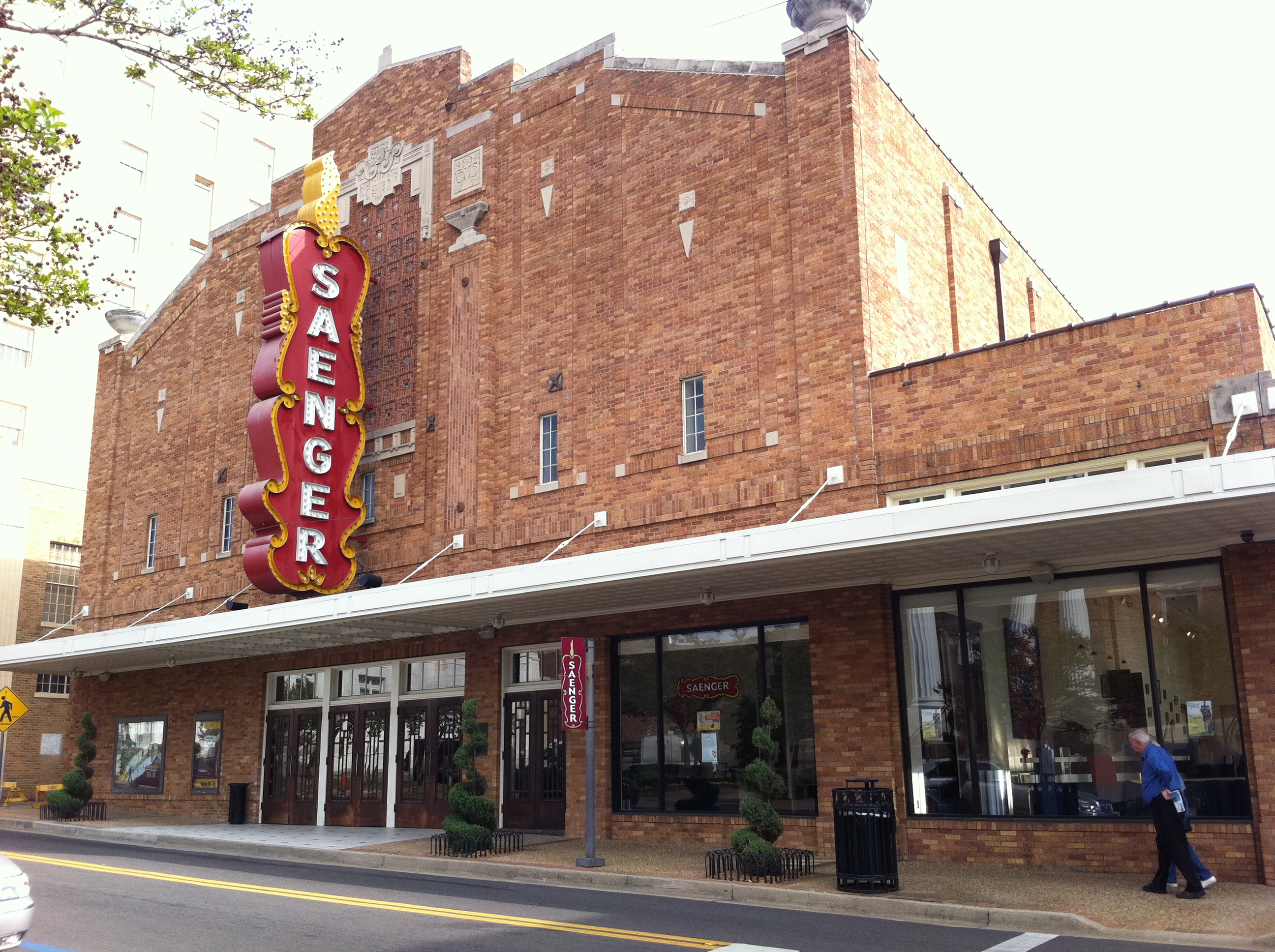
Hattiesburg, Mississippi
Captain William H. Hardy, a civil engineer surveying railroad routes through the pine forests of southern Mississippi, needed a name for the settlement growing at the confluence of the Leaf and Bouie rivers. He chose Hattie -- after his wife. When the town was incorporated in 1884 with a population of 400, it was little more than a clearing in the longleaf pine. Within two decades, railroads from Meridian, New Orleans, Jackson, and Gulfport all converged here, earning Hattiesburg the nickname that stuck: the Hub City. Today, with a population of 48,730, it anchors the Pine Belt region of Mississippi and carries a history that runs from lumber fortunes and military mobilizations to some of the most courageous acts of the American civil rights movement.
Rails, Lumber, and the Making of a Hub
Before the Civil War, interior Mississippi was largely undeveloped -- only properties along major rivers served as plantation land. The forests of longleaf pine that blanketed the southern part of the state were too dense and too far from markets to exploit. Railroads changed everything. In 1884, the New Orleans and Northeastern Railroad connected Meridian to New Orleans, passing directly through Hattiesburg. The Gulf and Ship Island Railroad soon followed, linking the Gulf port of Gulfport to the state capital at Jackson. Hattiesburg sat at the crossroads, and the lumber industry erupted. Sawmills processed the vast pine forests surrounding the town, sending timber south to ships and north to markets across the country. The Hub City had found its purpose, and its population boomed alongside the timber economy.
Freedom Day and the Perpetual Picket
Hattiesburg's most consequential chapter was written not in commerce but in courage. By 1960, thirty percent of Forrest County's population was Black, yet less than one percent had been allowed to register to vote. County Registrar Theron Lynd used poll taxes, literacy tests, and comprehension exams -- all subjectively administered -- to bar African Americans from the ballot. In 1961, the U.S. Justice Department filed suit against him; he became the first southern registrar convicted under the Civil Rights Act of 1957. But the real breakthrough came on January 22, 1964 -- Freedom Day. Supported by student demonstrators and fifty northern clergymen, roughly 100 African Americans marched to the courthouse to register. For the first time since Reconstruction, an interracial protest picketed the courthouse for voting rights without a single arrest. When the courthouse closed that day, activists returned the next morning, and the next, in what became the Perpetual Picket -- a daily presence that lasted for months.
Vernon Dahmer's Last Stand
Even after the Civil Rights Act of 1964 and the Voting Rights Act of 1965, white resistance in Mississippi was brutal. Vernon Dahmer, the most prominent Black leader in Forrest County and president of the local NAACP, had spent years fighting for voting rights. He announced publicly that he would pay the two-dollar poll tax for Black voters too poor to afford it. On the night of January 10, 1966, the White Knights of the Ku Klux Klan attacked his home with firebombs and gunfire. Dahmer grabbed his rifle and held off the attackers long enough for his wife, their three young children, and his elderly aunt to escape the burning house. He died the next day from burns and smoke inhalation. His murder sparked large protest marches in Hattiesburg. Four Klansmen were eventually convicted, and in August 1998, after four earlier trials ended in deadlocks, KKK Imperial Wizard Samuel Bowers was convicted of ordering the assassination and sentenced to life in prison.
Camp Shelby and a University Town
South of Hattiesburg lies Camp Shelby, the largest U.S. National Guard training base east of the Mississippi River, hosting up to 100,000 National Guardsmen and Reservists annually. During World War II, the base brought thousands of soldiers through the region, and a USO club was built in 1942 to serve African American troops, since local facilities were segregated. That building -- the only remaining USO club site in the United States -- now houses the African American Military History Museum, interpreting Black military service from the Revolutionary War through the Global War on Terrorism. Hattiesburg is also home to two universities: the public University of Southern Mississippi and the private William Carey University. The city's twenty-five-block Historic Neighborhood District, listed on the National Register of Historic Places since 1980, contains one of the finest collections of Victorian-era houses in the state.
Storms and Resilience
The Hub City has been tested by nature as well as by history. On February 10, 2013, an EF4 tornado formed west of Hattiesburg, tore across the University of Southern Mississippi campus, and carved a path of destruction through the city and neighboring Petal. More than 80 people were injured, but no one died -- a result attributed to the nearly thirty-minute lead time of the tornado warning. A second tornado, an EF3, struck on January 21, 2017, killing four and leaving 10,000 without power. Each time, the city rebuilt. Hattiesburg sits at the confluence of rivers, at the intersection of railroads, at the crossroads of history. It has been shaped by all of them.
From the Air
Hattiesburg is located at approximately 31.32N, 89.31W, at the confluence of the Leaf and Bouie rivers in southern Mississippi. From altitude, look for the urban area nestled in the Pine Belt, with the University of Southern Mississippi campus visible in the southern portion of the city. Interstate 59 runs north-south through the western side, and US Route 49 runs north-south through the center. Camp Shelby is visible to the south as a large cleared area. Nearest airports: Hattiesburg Bobby L. Chain Municipal Airport (KHBG) approximately 4nm south of city center; Hattiesburg-Laurel Regional Airport (KPIB) approximately 20nm northeast in Jones County. Amtrak's Crescent line stops at the restored 1910 train depot downtown. Best viewed at 3,000-5,000 feet AGL to see the city's railroad hub layout and river confluences.