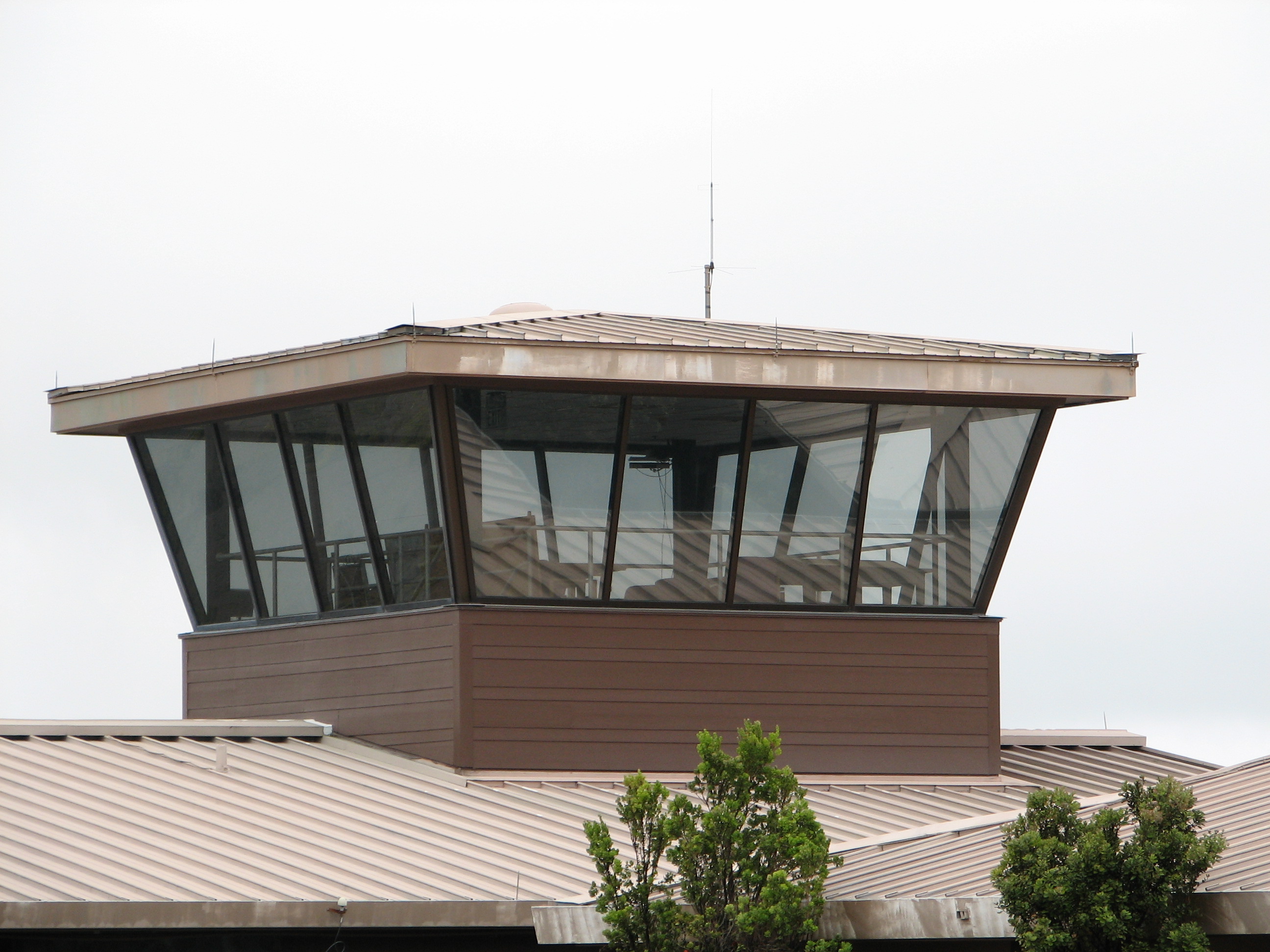
Hawaiian Volcano Observatory
The first seismometers were designed by a Japanese professor and installed in a cellar that prison inmates had dug through 5.5 feet of volcanic ash. The cellar sat next to a hotel on the rim of an active volcano. This was 1912, and Thomas Jaggar, a geologist from the Massachusetts Institute of Technology, had come to Kilauea not to visit but to stay. The Hawaiian Volcano Observatory that he founded would become the world's leading center for the study of active volcanism -- and would eventually be destroyed by the volcano it was built to watch.
A Geologist and a Hotelier
When Jaggar gave a lecture in Honolulu in 1909, he was approached by Lorrin A. Thurston, a businessman and grandson of one of the missionaries who had toured Kilauea in 1823. Thurston wanted a permanent scientific observatory at the volcano. George Lycurgus, who owned the Volcano House hotel at the caldera's edge, offered a site adjacent to his establishment. Local businessmen formed the Hawaiian Volcano Research Association to fund the effort. MIT contributed $25,000 from the estate of Edward and Caroline Whitney, and the first instruments were housed in a cellar called the Whitney Laboratory of Seismology. Professor Fusakichi Omori of Japan, now best known for his work on aftershock sequences, designed the original seismometers.
Surviving Its Own Subject
From 1912 to 1919, Jaggar ran the observatory personally, recording eruptions and earthquakes while coping with the hazards of working inside an active caldera. In 1913, an earthquake cracked a wall and water seeped in. The windows meant to let in natural light turned the vault into an oven under the tropical sun. In 1919, Jaggar convinced the National Weather Service to take over operations. The USGS assumed control in 1924 and has run HVO ever since, except during a brief period in the Great Depression when the National Park Service stepped in. The observatory moved several times -- always staying near Kilauea's summit, always adapting to the volcano's shifting moods.
Eyes on Six Volcanoes
At its peak, HVO monitored six Hawaiian volcanoes from its facilities at Uwekahuna Bluff, the highest point on the rim of Kilauea Caldera: Kilauea and Mauna Loa (the most active), Hualalai, Mauna Kea, Haleakala on Maui, and Kama'ehuakanaloa (formerly Lo'ihi), a submarine volcano still growing beneath the ocean's surface. The observatory's instruments measured seismic activity, ground deformation, gas emissions, and lava chemistry. Its webcams broadcast eruptions live to the world. The adjacent Thomas A. Jaggar Museum offered visitors exhibits on volcanology and sheltered views of Halema'uma'u crater, with a public observation deck that was open 24 hours a day.
The 2018 Expulsion
On May 10, 2018, Hawaii Volcanoes National Park closed the Kilauea summit area. Explosions, earthquakes, and toxic ash clouds from Halema'uma'u made the observatory's position on the caldera rim untenable. The summit collapse events that followed over the next three months caused considerable structural damage to the observatory building and the Jaggar Museum. Both were permanently closed. Much of the park reopened in September 2018, but the buildings never did. In 2024, they were demolished. The observatory that had watched Kilauea for over a century was erased by the volcano it had spent that century studying.
A New Beginning in Hilo
With nearly $70 million in federal relief funds appropriated in 2019, HVO began planning for a future away from the caldera rim. Since 2018, the observatory has operated from temporary offices in Hilo, 30 miles from the summit. A new field office within Hawaii Volcanoes National Park is planned for completion in 2026, and a permanent headquarters on the University of Hawaii at Hilo campus is projected to open in 2027. The move to Hilo is both practical and symbolic. HVO can no longer sit at the edge of what it studies -- the volcano made that clear. But the monitoring continues, the webcams still stream, and the seismometers still record every tremor from the most active volcanic system on Earth.
From the Air
The former Hawaiian Volcano Observatory site was located at Uwekahuna Bluff, 19.429°N, 155.259°W, on the western rim of Kilauea Caldera. The buildings were demolished in 2024. From the air, the caldera rim and the former observatory site are visible; look for the cleared area on the bluff's highest point. Current HVO operations are based in Hilo (PHTO). A new field office is under construction within the park. The caldera itself remains the primary visual landmark, with Halema'uma'u crater visible within it.