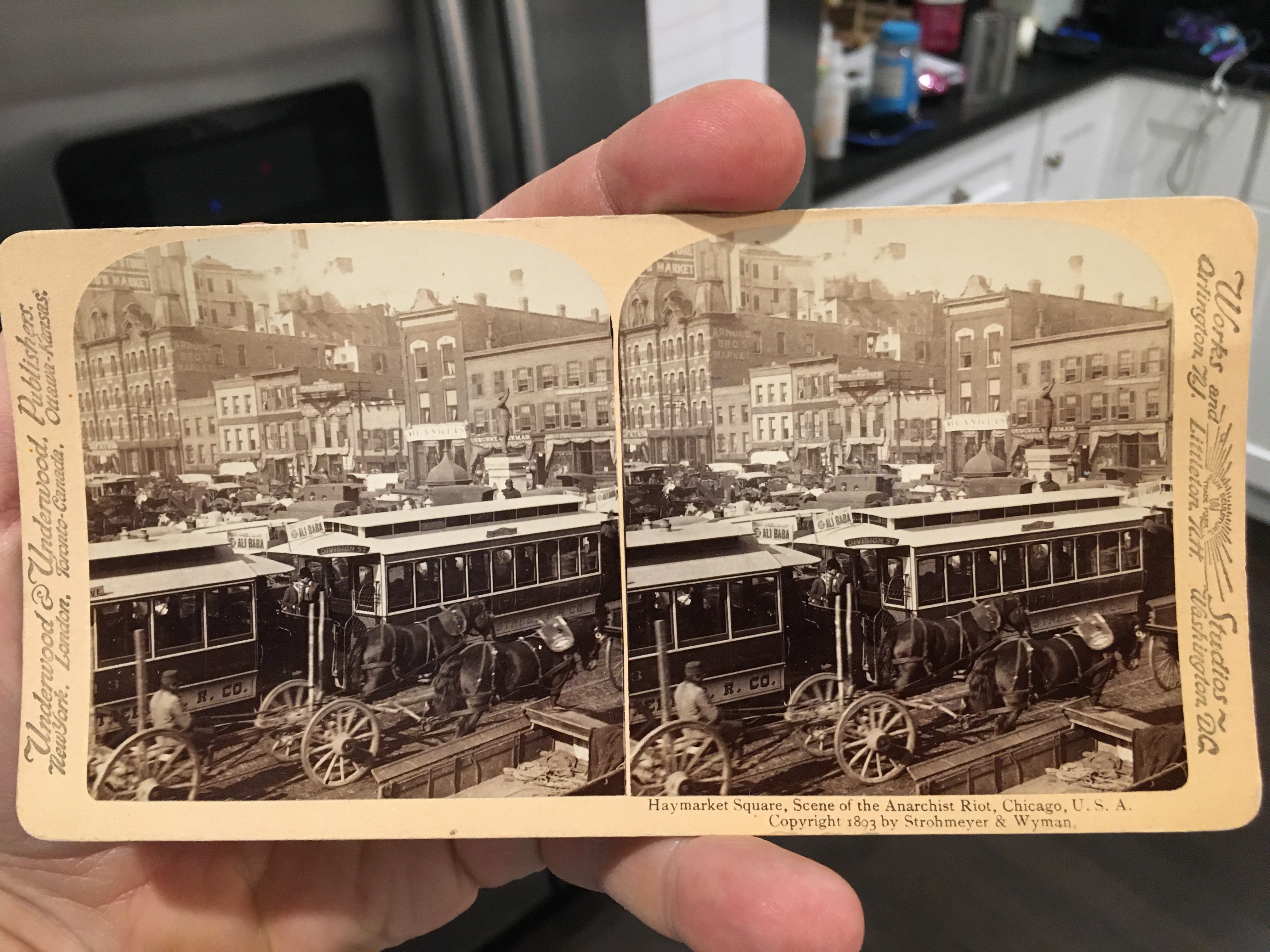
Haymarket Square
On the evening of May 4, 1886, a crowd of workers gathered in Haymarket Square to protest the police killing of strikers the day before. The rally was peaceful, even boring - the mayor attended and left early, satisfied nothing would happen. Then, as police moved in to disperse the dwindling crowd, someone threw a bomb into their ranks. The explosion killed one officer instantly; gunfire erupted from both sides. When it ended, seven police officers were dead or dying and an unknown number of civilians had been killed or wounded. The bomber was never identified. But eight anarchist labor organizers were arrested, tried, and convicted - not for throwing the bomb, but for allegedly inspiring it with their speeches. Four were hanged, one committed suicide in jail, and three received lengthy prison sentences. The Haymarket affair became a global symbol of labor's struggle and governmental repression. May Day, celebrated as International Workers' Day around the world, commemorates the Haymarket martyrs.
The Eight-Hour Movement
The 1880s saw explosive growth in the American labor movement, centered on the demand for an eight-hour workday. Twelve and sixteen-hour shifts were common; workers had no weekends, no vacations, no sick days. The Federation of Organized Trades called for a nationwide strike on May 1, 1886, if employers didn't grant the eight-hour day. In Chicago, the center of radical labor organizing, 80,000 workers walked off their jobs. On May 3, police fired on strikers at the McCormick Reaper Works, killing at least two. Anarchist leaders called for a protest rally the next evening at Haymarket Square. They expected thousands; about 2,500 came.
The Bomb
The rally was unremarkable until the end. Speakers denounced police violence and capitalism. The crowd thinned as rain threatened. Chicago Mayor Carter Harrison attended and left around 10 PM, satisfied the gathering was peaceful. Minutes later, police Captain John Bonfield marched 176 officers into the square to disperse the remaining crowd. As the final speaker stepped down, someone threw a bomb into the police formation. The explosion was devastating. Officer Mathias Degan died almost immediately. Police opened fire - apparently in all directions, hitting both civilians and fellow officers. The chaos lasted minutes. When it ended, seven officers and an unknown number of civilians were dead or dying.
The Trial
Eight anarchist leaders were charged with murder, though none had thrown the bomb and most weren't even at the rally when it exploded. The prosecution argued they had conspired to incite violence with their speeches and writings. The jury was packed with men who admitted bias. The judge allowed inflammatory evidence. All eight were convicted. Seven were sentenced to death; one received fifteen years. The verdict outraged labor activists and civil libertarians worldwide. Prominent figures including William Dean Howells and George Bernard Shaw protested. The governor commuted two sentences to life. One defendant, Louis Lingg, died by suicide in his cell - a smuggled dynamite cap, apparently. On November 11, 1887, four men were hanged: Albert Parsons, August Spies, George Engel, and Adolph Fischer.
The Martyrs
Six years later, Illinois Governor John Peter Altgeld pardoned the three surviving prisoners, issuing an eighteen-thousand-word document that demolished the prosecution's case. He declared the trial a miscarriage of justice, the judge biased, the jury rigged. The pardon destroyed Altgeld's political career but secured his legacy. The Haymarket martyrs became labor icons. Their execution date, November 11, was commemorated by workers worldwide until it merged with the May Day tradition. In 1889, the International Socialist Congress designated May 1 as International Workers' Day in their honor. The irony is profound: May Day is celebrated as a labor holiday everywhere except the United States, where the events that inspired it occurred.
Visiting Haymarket
Haymarket Square is located in Chicago's Near West Side, at the intersection of Randolph Street and Des Plaines Avenue. A sculpture by Mary Brogger, installed in 2004, depicts a wagon (the speakers' platform) on the site where the rally occurred. An earlier monument to the police, erected in 1889, was bombed twice during the turbulent 1960s and 1970s and now resides at the Chicago Police Training Academy. The Forest Home Cemetery in suburban Forest Park contains the Haymarket Martyrs' Monument, where five of the eight defendants are buried; it's a National Historic Landmark and a pilgrimage site for labor activists. The Chicago History Museum has Haymarket artifacts and documentation. The site is easily accessible via Chicago Transit Authority trains. O'Hare International Airport (ORD) is 15 miles northwest.
From the Air
Located at 41.88°N, 87.65°W in Chicago's Near West Side, at Randolph Street and Des Plaines Avenue. From altitude, the site is within Chicago's dense urban grid, west of the Loop and the Chicago River. The area is now commercial and industrial. Lake Michigan is visible to the east.