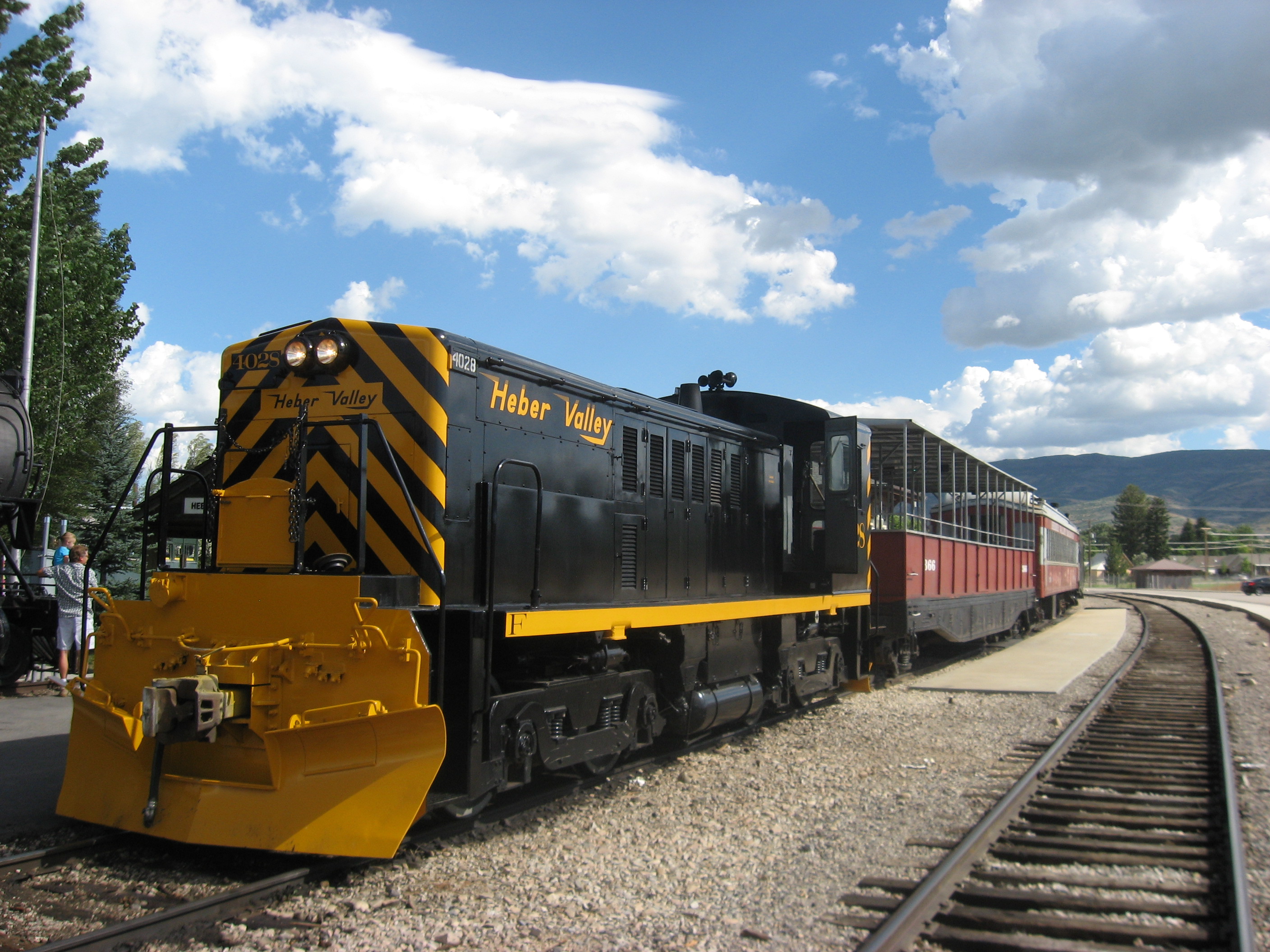
Heber Valley Railroad
On the day before the 2002 Winter Olympics Opening Ceremony, three steam locomotives coupled together pulled a single train from Soldier Hollow to Heber City. In the consist rode the Olympic flame itself, carried on its torch relay through the Utah mountains. The Heber Valley Railroad had come a long way from October 27, 1990, when the last private train ran before the line went bankrupt. Citizens had petitioned. The state had intervened. And now 110,000 passengers a year ride the rails that were nearly torn up for scrap.
The Rio Grande's Abandoned Dream
The Denver and Rio Grande Western Railroad completed this branch line in 1899, connecting Heber City to Provo. It was supposed to be the first leg of something grander: the Utah Eastern Railway, a route through Provo Canyon and across the mountains into Colorado via the Duchesne River. That dream died, leaving Heber City as a permanent terminus instead of a waypoint. The railroad hauled freight for decades, requiring a ten-mile reroute in 1941 when Deer Creek Reservoir flooded the original alignment. Regular service ended in 1966, though the line briefly revived in 1968 for a singular cargo: the National Christmas Tree, hauled to its destination by D&RGW crews.
Saved by Scenery and Stubbornness
Rail enthusiasts saw the threat coming. The proposed construction of U.S. Route 189 through Provo Canyon would have erased the railroad grade entirely. In 1970, preservationists brought Union Pacific No. 618, a 1907 Baldwin steam locomotive that had been sitting on static display at the Utah State Fairgrounds, up the line from Provo. The Heber Creeper was born. But financial disputes and documentation problems plagued the private operation. When it collapsed into bankruptcy in 1990, the community refused to let the railroad die. The Heber Valley Historic Railroad Authority formed, the Utah State Legislature funded the purchase, and operations resumed in May 1993.
Olympic Glory
The 2002 Winter Olympics transformed the railroad into the Olympic Steam Team. No. 618 and Great Western No. 75 joined forces with Nevada Northern Railway's No. 93, three steam engines pulling eight-car trains packed with spectators bound for the Soldier Hollow cross-country skiing venue. Passengers disembarked at a depot built for the games and continued to the entrance by horse-drawn sleigh. The triple-headed torch relay train the day before the Opening Ceremony marked the peak of the railroad's visibility. That same year, the line appeared in a Piano Guys music video, and the group returned for a benefit concert.
Steam Dreams and Diesel Realities
No. 618 last ran under steam in 2010, when its federal boiler certificate expired. The 1907 locomotive has been undergoing its required 1,472-day inspection and major overhaul ever since, a process complicated by the railroad's growth. Longer and heavier trains now carry those 110,000 annual passengers, straining the capabilities of century-old steam power. In response, the railroad modernized its fleet in the late 2010s, acquiring EMD GP9 diesels from Pan Am Railways and a collection from the National Railway Historical Society's British Columbia chapter. In 2019, they rescued the original neon sign from Salt Lake's Rio Grande Depot, restoring it to LED operation by 2025 and mounting it on the locomotive shop as a beacon of the railroad's heritage.
From the Air
Located at 40.50N, 111.42W in the Heber Valley, Utah. The railroad runs approximately 16 miles between Heber City and Vivian Park in Provo Canyon. Notable visual landmarks along the route include Mount Timpanogos, Deer Creek Reservoir, and Soldier Hollow (2002 Olympic venue). Best viewed from 6,000-8,000 feet AGL to see the full route. Heber City sits at approximately 5,600 feet elevation. Nearest airports: Heber City Municipal (36U), Provo Municipal (KPVU), Salt Lake City International (KSLC). The line follows the Provo River canyon, making it visible as a narrow corridor through mountainous terrain.