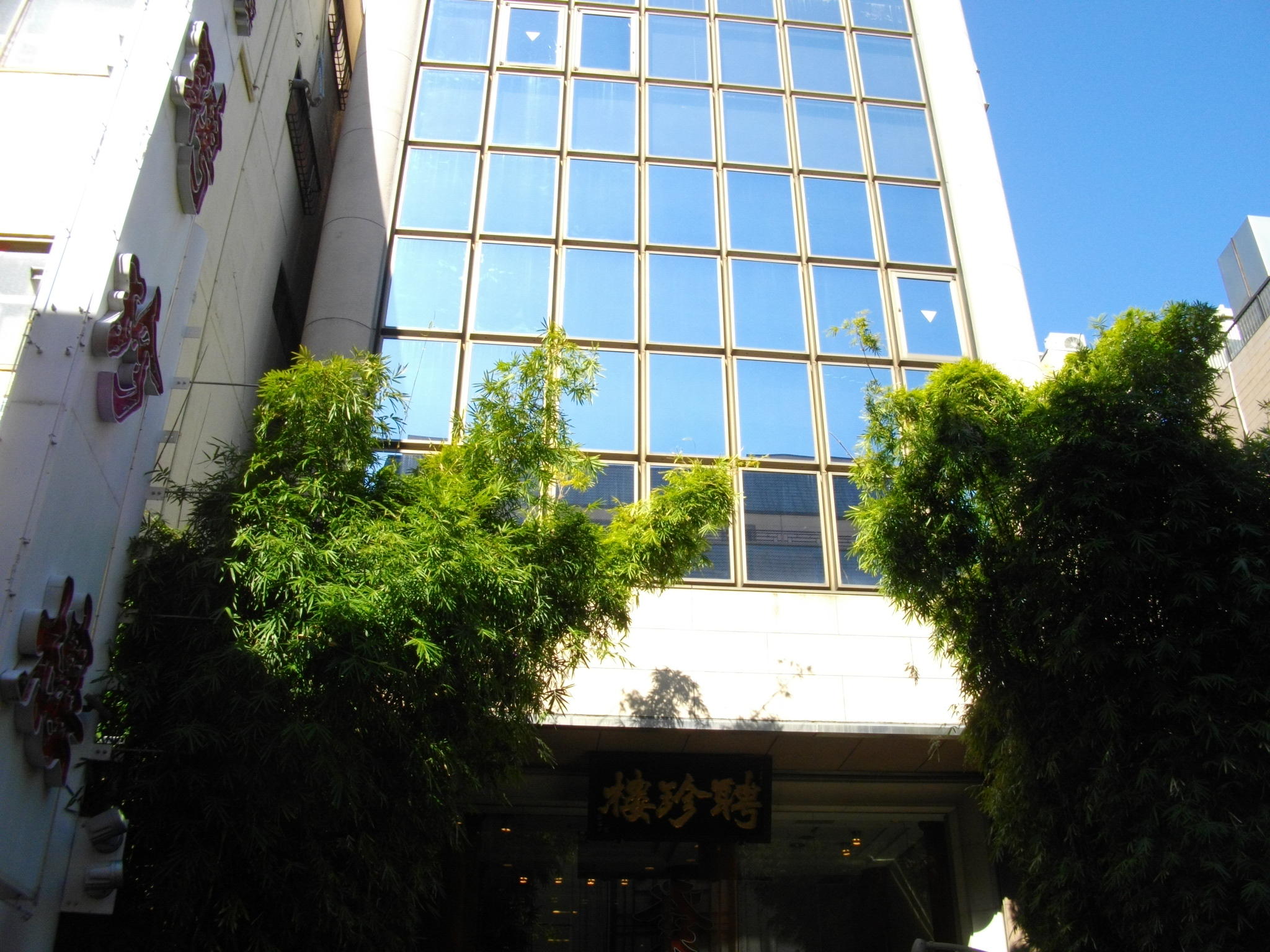
Heichinrou: The Restaurant That Survived Earthquakes, Air Raids, and Iron Chef
Martin Yan introduced him as "the greatest Chinese chef in our time." Xie Huaxian, grand chef of Heichinrou, had just defeated Iron Chef Chen Kenichi on Japanese television -- the culmination of a culinary showdown that pitted Heichinrou's chefs against the reigning champion of Chinese cuisine. Chen had already beaten two of Heichinrou's head chefs before Xie stepped in and won. The victory made for great television, but Heichinrou did not need television to prove its credentials. The restaurant had been serving Cantonese cuisine from the same spot in Yokohama Chinatown since 1884, making it the oldest operating Chinese restaurant in Japan. Its name -- three characters meaning "a place welcoming distinguished, good, and wonderful people" -- had survived the Great Kanto earthquake of 1923, the firebombing of Yokohama in World War II, and the slow economic decline that finally brought it to bankruptcy in 2022.
Three Families, One Address
The Zhang family founded Heichinrou in 1884 on the site it would occupy for nearly 140 years. In those early days, the ground floor held cigarette shops and the restaurant operated on the second floor under the management of Zhang Mao Yuan. When the Great Kanto earthquake struck on September 1, 1923, the building collapsed. The Bao family -- father Bao Zhao Chuang and son Bao Jin Ju -- rebuilt and operated the restaurant through World War II, by which time it was well-known as one of Yokohama Chinatown's premier establishments. Then the Yokohama air raids destroyed the building a second time. Bao Jin Ju, having watched his restaurant leveled twice, lost the will to rebuild. Enter Tatsuo Hayashi -- born Pang Zhu Chen in Guangdong Province, China -- who had arrived in Yokohama at age 19, worked grueling years, returned to China in despair at 30, then came back to Japan and trained as a cook. In 1960, he purchased the brand, the building, and the land. What he bought was a 45-square-meter space selling barbecue pork and sausages. What he would build was a culinary empire.
The Man Who Built the Gate
Tatsuo Hayashi did not just save Heichinrou. He transformed Yokohama Chinatown itself. With the support of the Yokohama government and the Chinatown community, Hayashi built the 15-meter-high Chinatown tower gate -- the iconic Pai Lau that marks the entrance to the district and became its defining landmark. He also founded a second major restaurant, Manchinrou. During his lifetime, Hayashi was widely respected as a leader of the Chinese immigrant community in Japan, a man who saw Chinatown not just as a neighborhood but as a cultural institution worth investing in. He died in November 1976, one year after passing the business to his son Yasuhiro Hayashi. By then, Heichinrou had grown from that tiny post-war space to 80 square meters, and the trajectory was firmly upward. In 1967, the restaurant had become a limited company and introduced San Ma Min noodles alongside an expanded a la carte menu.
From Chinatown to Hong Kong and Back
Under Yasuhiro Hayashi, Heichinrou expanded aggressively. The first branch opened in Kichijoji in 1978, followed by locations in Ikebukuro, Hibiya, Shibuya, and other Tokyo neighborhoods. In 1986, the flagship Yokohama Chinatown location underwent a complete renovation. The most audacious move came in 1988, when Heichinrou opened a subsidiary in Hong Kong -- the first Chinese restaurant to expand from Japan back to the cuisine's homeland. Local customers initially rejected it. For two years the Hong Kong branch struggled for acceptance. But persistence paid off, and Heichinrou Hong Kong eventually established itself as a high-end destination, operating branches in Causeway Bay, Kwun Tong, Admiralty, Diamond Hill, and Central. In 1990, Yokohama City awarded the restaurant its Townscape Award for the beauty of the renovated Chinatown building. The logo, designed by Alan Chan in 1988, depicted a basket of peaches, lily bulbs, lotus roots, lychees, bergamots, and pomegranates -- symbols of longevity, love, harvest, wealth, health, and children.
The Lights Go Out in Chinatown
By the 2000s, Heichinrou had diversified into dim sum manufacturing, bottled teas in partnership with Dydo Drinks, health supplements, and e-commerce. In 2007, the restaurant celebrated its 120th anniversary. In 2009, Yasuhiro Hayashi received the Promotion and Development of Cantonese Cuisine Contributor award from the China National Tourism Agency and the Guangdong Government. That same year, the Yokohama Archives of History confirmed that Heichinrou's founding date was actually 1884, not 1887 as previously believed, based on research published for Yokohama's 150th anniversary. Then the decline came. On June 4, 2022, Heichinrou began bankruptcy proceedings at the request of creditors and applied for liquidation. On May 21, 2025, the restaurant entered bankruptcy proceedings for the third time along with two related companies, affecting a thousand groups that held reservations. The place that had survived earthquakes and firebombing, that had sent a chef to defeat Iron Chef, that had built the gate to Chinatown itself, could not survive the economics of the modern restaurant industry. The chairs are empty now at Heichinrou, but the gate Tatsuo Hayashi built still stands.
From the Air
Located at 35.44°N, 139.65°E in the heart of Yokohama Chinatown, on the western shore of Tokyo Bay. The Chinatown district is identifiable from low altitude by its dense grid of narrow streets, ornamental gates, and colorful building facades between Yamashita Park and the Motomachi shopping street. Best viewed at 2,000-3,000 feet AGL. Yokohama's waterfront landmarks -- the Red Brick Warehouse, Minato Mirai 21, and the Yokohama Bay Bridge -- provide orientation. Tokyo Haneda Airport (RJTT) is approximately 15 nautical miles north. The Chinatown tower gate (Pai Lau) is the district's most recognizable ground-level feature.