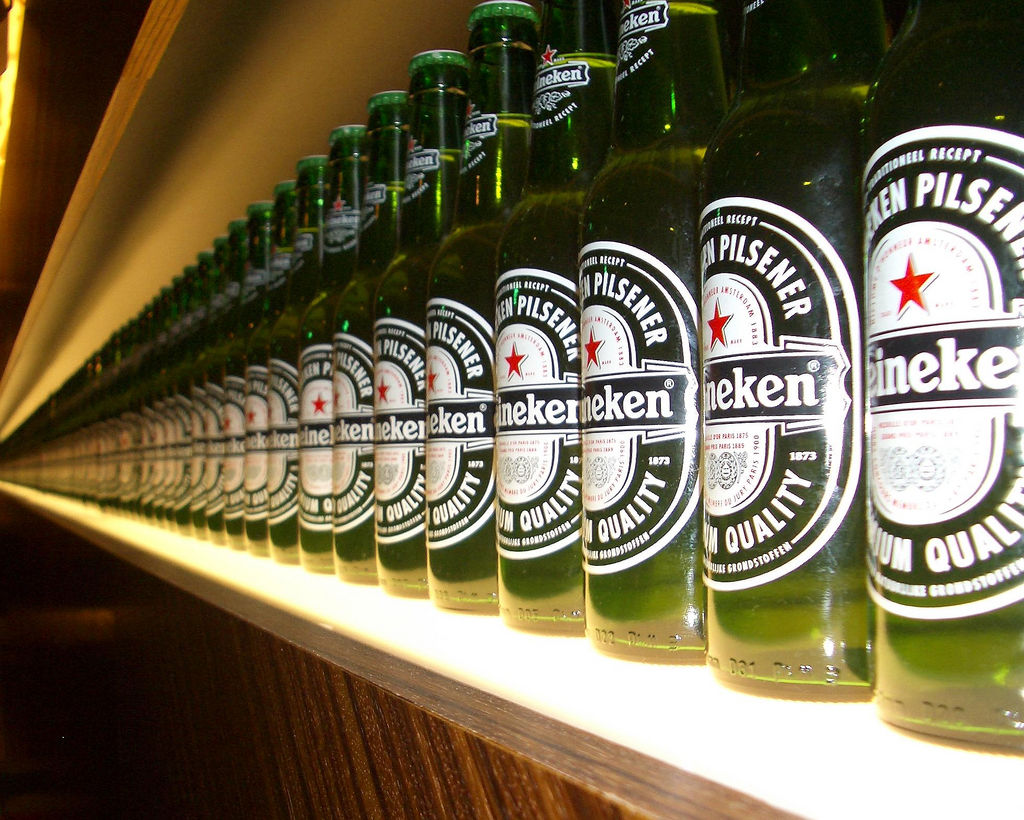
Heineken Experience
The brewery had a problem in the late 1980s. It was producing beer for one of the most recognisable brands on Earth, sold in around 192 countries from a green bottle that people can identify with the label torn off, and the original 1867 building it occupied was simply not big enough any more. So Heineken did what successful breweries do: it built a larger plant on the edge of Amsterdam, in 1988 it shut the old one, and then it had to decide what to do with a Victorian industrial cathedral in the middle of a city famous for tourism. The answer, which turned out to be one of the cleverest second acts in European brewing, was to keep brewing here for the tourists.
Gerard's Brewery
Gerard Adriaan Heineken bought a struggling brewery called De Hooiberg, The Haystack, in 1864 and set about modernising it. By 1867 he had outgrown the original premises and built a new facility on the Stadhouderskade. Two decades later, in 1886, Heineken inaugurated a research laboratory and appointed a chemist named Hartog Elion, an apprentice of Louis Pasteur, to lead it. Elion isolated the yeast strain that became Heineken A-yeast and which is still the basis of the recipe today. The brewery on the Stadhouderskade did the work of building a Dutch beer empire for more than a century. Heineken bottles travelled, by ship and by truck and eventually by jet, to virtually every country with a coastline and most without one. In 1988, after 121 years, the kettles here were drained for the last time. A modern plant in Zoeterwoude took over.
From Brewery to Attraction
Heineken kept the building, kept some of the old copper, and opened it to the public in 1991 as the Heineken Treat and Information Centre. It was a modest affair at first, with tours and tastings inside what had been a working factory. By 2001 it had been rebranded the Heineken Experience and was attracting hundreds of thousands of visitors a year, enough to put it on most short lists of Amsterdam's busiest paid attractions. A 2008 renovation reopened the place across four levels of exhibits, video walls, sampling rooms and a top-floor bar with city views. Another renovation in 2021 and 2022 reworked the entrance because the queue had started to spill out into the street, which is the kind of problem most attractions would call a success.
Industrial Heritage
The European Route of Industrial Heritage, a Europe-wide cultural network, picked the Heineken Experience as one of its 66 Anchor Points. The route maps 845 industrial sites in 29 countries, the iron foundries and dockyards and pumping stations that made the modern continent, and a beer brewery in Amsterdam belongs on that list. The Stadhouderskade building is what an urban brewery looked like before refrigeration changed the rules, before fermentation could be moved out to fields of stainless steel tanks on the city's edge. The copper kettles, polished and unused, sit in the rooms where they actually worked. The water tanks, the malt mills, the cellars, the cooperage details, all of it is still legible if you slow down. Most visitors are here for the free beer at the end. Some of them stop to read the labels.
What You Get for the Ticket
The Experience does not pretend to be a museum first. It is a brand attraction, and it is open about that. Two free Heinekens are included with admission. There is a ride that simulates being a bottle going through the production line. There is a sampling lab. There is a souvenir shop that sells personalised bottles. People walk out of it laughing, mildly tipsy, and carrying green and red shopping bags. None of that erases what the building is. This is where Gerard Heineken's bet, in 1864, on cleaner lagers brewed with isolated yeast in a country where dark beers had been the default, paid off. The brewery is closed; the company has gone global. The original building is still where it started, on a canal in Amsterdam-Zuid, and it is full of tourists drinking beer.
From the Air
The Heineken Experience sits at 52.3578°N, 4.8911°E on the Stadhouderskade in Amsterdam-Zuid, on the southern edge of the canal ring across the Singelgracht from De Pijp. Best viewed at low altitude in clear weather. Nearest airport is Amsterdam Schiphol (EHAM), about 11 km southwest.