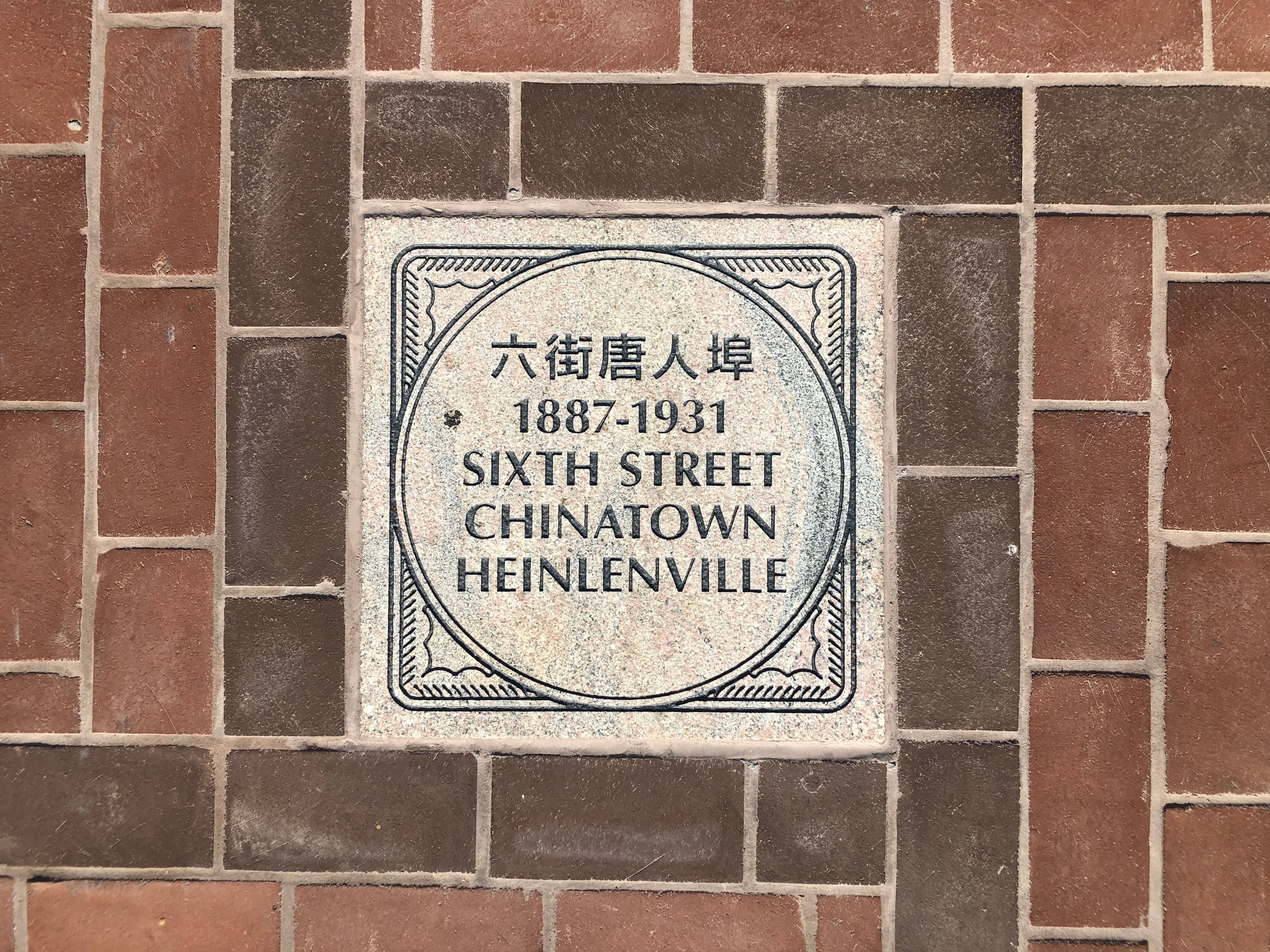
Heinlenville
The name was meant as an insult. When John Heinlen, a German-born rancher, built a neighborhood for San Jose's displaced Chinese residents in 1888, his white neighbors mocked the settlement as "Heinlenville" and its creator as a fool. They ostracized him. They threatened his life. Heinlen built it anyway -- arson-proof brick walls, running water, perimeter fences topped with barbed wire, and hired guards to patrol at night. The name stuck, but not as a slur. For forty-three years, the residents of Heinlenville made it their own, and the mockery became a badge of defiance.
Ten Days After the Fire
In 1887, arsonists destroyed San Jose's Market Street Chinatown, leaving the city's Chinese residents without homes in a place that wanted them gone. Ten days later, Heinlen began planning. He owned a five-acre pasture near the affluent Hensley neighborhood and commissioned Theodore Lenzen, a fellow German immigrant and the architect of San Jose's City Hall, to design a new settlement. Heinlen signed contracts with Chinese merchants on June 20 and July 14, 1887. The city rejected his building permit application. His son Goethe fought the injunction and won. The elder Heinlen, born in Germany in 1815, had witnessed anti-German sentiment during his years in Ohio. Some historians speculate this experience shaped his sympathy for another community facing organized hatred. Whatever his motivation, he acted when no one else would.
A Fortress Against Hostility
Heinlen designed his neighborhood to withstand the violence that had destroyed Market Street Chinatown. The buildings were brick, not the wood that had burned so easily. The property was divided into six blocks between Sixth and Seventh streets, with interior streets named after thoroughfares in San Francisco's Chinatown. One of those names carried an unintentional irony: Kearny Street was misspelled as "Kearney," inadvertently echoing Denis Kearney, the anti-Chinese agitator who had once incited San Jose's white population against the very people now living on the street that bore his misspelled name. A tall wooden fence enclosed the neighborhood, topped with barbed wire. White guards locked the perimeter gates each evening and patrolled through the night. Agitators damaged the fence repeatedly, and Heinlen kept repairing it. The message was clear: this community would not be burned out again.
Four Thousand Lives Behind the Fence
At its peak, Heinlenville was home to 4,000 people, making it the largest Chinese community in the United States outside San Francisco. It was the first stop for Chinese migrants arriving in the Santa Clara Valley, and its presence drew Japanese immigrants to nearby Sixth Street, giving rise to the Japantown that still exists today. Merchant elders and district associations governed daily life. The Sze Yup, Sam Yup, and Yeung Wo associations organized residents by their home regions in China. Restaurants inside Heinlenville drew Japanese families on weekends, and African Americans rented rooms in Chinese-run boarding houses. During the First and Second Sino-Japanese Wars, Chinese and Japanese residents maintained cordial relations on the principle that it was their ancestral homelands at war, not San Jose neighbors. Children attended racially integrated city schools, unusual for California at the time.
Slow Erasure
Heinlenville survived the 1906 earthquake that leveled San Francisco's Chinatown, its merchants rebuilding quickly to serve a booming agricultural region. But the community could not survive the laws designed to strangle it. The Chinese Exclusion Act of 1882 and the Geary Act of 1892 choked off the stream of new immigrants that had sustained the enclave. Younger generations left for careers in business and manufacturing, seeking housing beyond the aging compound. By the early 1930s, the Santa Clara Valley's Chinese population had dwindled to fewer than a thousand people. In 1931, during the Great Depression, the Heinlen Company declared bankruptcy and sold the land to the city. Most remaining residents moved to Japantown. The city razed the neighborhood to build a municipal corporation yard, erasing forty-three years of community life to make room for city trucks.
What Remains
Three buildings from the Heinlenville era still stand across Sixth Street, having served Chinese, Japanese, and Filipino communities over the decades. The Ng Shing Gung temple, the last building the city spared from demolition, was fought over for years -- the Hip Sing Tong sued to prevent its destruction, and public outcry saved it from auction in 1941. It fell into disrepair nonetheless and was dismantled in 1949, its facade and furnishings placed in storage. In 1991, the temple was reconstructed at History Park in San Jose, where it now houses a museum of Heinlenville artifacts. On October 10, 2023, Mayor Matt Mahan dedicated Heinlenville Park on the site where the neighborhood once stood. The park features artwork and plaques honoring both the Chinese community and the German rancher whose name -- given in contempt, kept in pride -- outlasted every attempt to erase what he built.
From the Air
Located at 37.351N, 121.894W in what is now the Japantown area of San Jose, California, between Sixth and Seventh streets. The original Heinlenville site is now occupied by modern development including an apartment complex and Heinlenville Park, adjacent to the surviving Japantown commercial district. Nearest airports: Reid-Hillview (KRHV, 5nm E), San Jose International (KSJC, 3nm NW), Moffett Federal Airfield (KNUQ, 8nm NW). Best viewed at 1,500-2,500 feet AGL where the Japantown district's grid is visible within the broader downtown fabric.