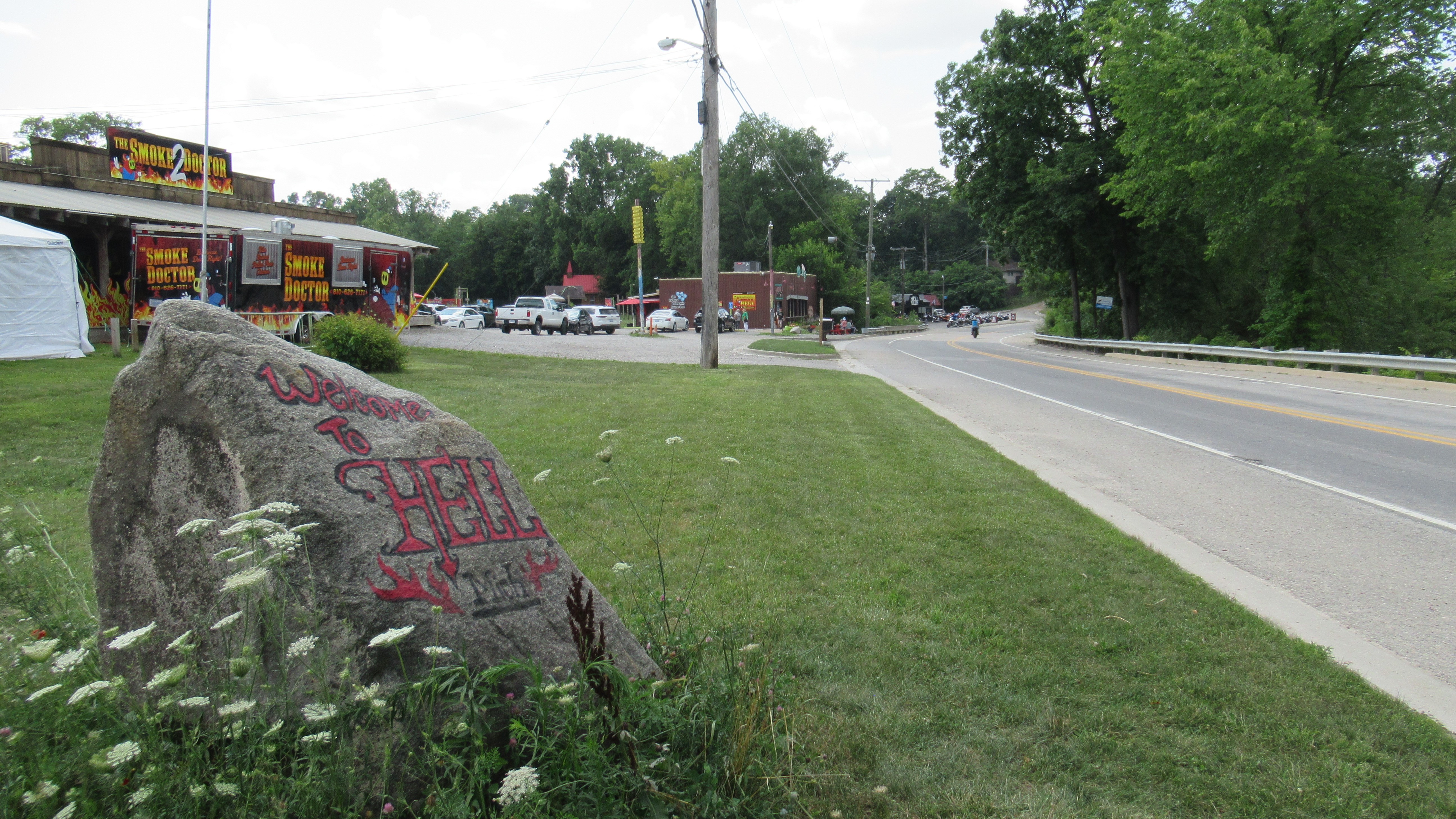
Hell, Michigan: The Town That Embraced Its Name
Hell froze over on January 29, 2019. The Michigan hamlet's temperature dropped to -15°F, giving every headline writer exactly what they'd always wanted. Hell, Michigan, exists primarily to enable puns. The name supposedly originated in the 1830s when a German immigrant, asked what to call the new settlement, replied 'I don't care. You can call it Hell for all I care.' The village embraced its destiny. Now Hell offers sin-themed tourist attractions, a post office that stamps mail with 'Hell,' and the opportunity to be appointed Mayor for a day. It's commerce as comedy, a place that exists because the name is too good not to use.
The Origin
Several explanations exist for Hell's name. The German immigrant story is most popular, though historians debate whether it happened. Other theories: 'hell' referred to the swampy terrain, difficult to traverse; German settlers used 'hell' (meaning 'bright' in German) to describe the area; early visitors simply felt the weather was hellish. George Reeves, who built a mill and general store in the 1840s, may have named the town when applying for a post office. Whatever the origin, the name stuck, and the community has never seriously considered changing it. You don't rename a golden goose.
The Tourism
Hell's economy runs on its name. Screams Ice Cream parlor serves frozen desserts under hellish branding. Damnation University sells degrees in various worthless subjects. The gift shop peddles Hell-themed merchandise: 'I've been to Hell' t-shirts, 'Go to Hell' postcards, devilish souvenirs. The post office does brisk business stamping mail with its 'Hell' postmark. You can become Mayor of Hell for a small fee, receiving a certificate and the temporary authority to... do nothing, really. The attractions are modest - Hell is tiny, perhaps 72 permanent residents - but the concept brings visitors from worldwide.
The Events
Hell maximizes promotional opportunities. 'Hell freezes over' stories run whenever winter temperatures drop (frequently, this being Michigan). June 6, 2006 (6/6/06) brought national attention. Every June 6th draws tourists. Halloween is predictably popular. The 'Official Mayor of Hell' changes constantly - celebrities, random tourists, anyone willing to pay. The current owner stages events, renews the marketing, keeps Hell relevant in the news cycle. A place this small shouldn't generate this much coverage, but the name is an infinite content generator. Media outlets can't resist.
The Reality
Hell is less a town than a concept. The permanent population barely fills a church pew. The 'downtown' is a handful of buildings along Patterson Lake Road. There's no municipal government - Hell is an unincorporated community in Putnam Township. The attractions occupy perhaps an acre. Most visitors stay under an hour, buy a shirt, mail a postcard, and leave. The experience is about the claim: 'I went to Hell.' The actual place is a detour, a photo op, a name on a credit card receipt. Hell's commercial genius is selling literally nothing except the joke.
Visiting Hell
Hell is located in Livingston County, Michigan, roughly 60 miles west of Detroit via I-96 and D-19 (Patterson Lake Road). There's no entrance fee to Hell, though attractions charge for services. The gift shop, ice cream parlor, and other businesses operate seasonally - check hours before visiting. The Hell Creek Ranch offers miniature golf and additional activities. Ann Arbor is 15 miles south, offering real restaurants and lodging. Plan 30 minutes to an hour in Hell, unless you're becoming Mayor, which takes slightly longer. The experience is the name; what you do with that name is up to you.
From the Air
Located at 42.43°N, 83.99°W in southeastern Michigan, between Detroit and Lansing. From altitude, Hell is invisible - an unincorporated community too small to identify, lost in the rural development of Livingston County. Patterson Lake is visible; the buildings that constitute 'Hell' are not. The surrounding terrain is classic Michigan: lakes, farms, small towns, the beginnings of suburban sprawl from Detroit. Nothing from altitude suggests that this particular spot generates disproportionate media attention. Hell exists on maps, on postcards, and in puns - not in visible infrastructure. The joke doesn't require a building.