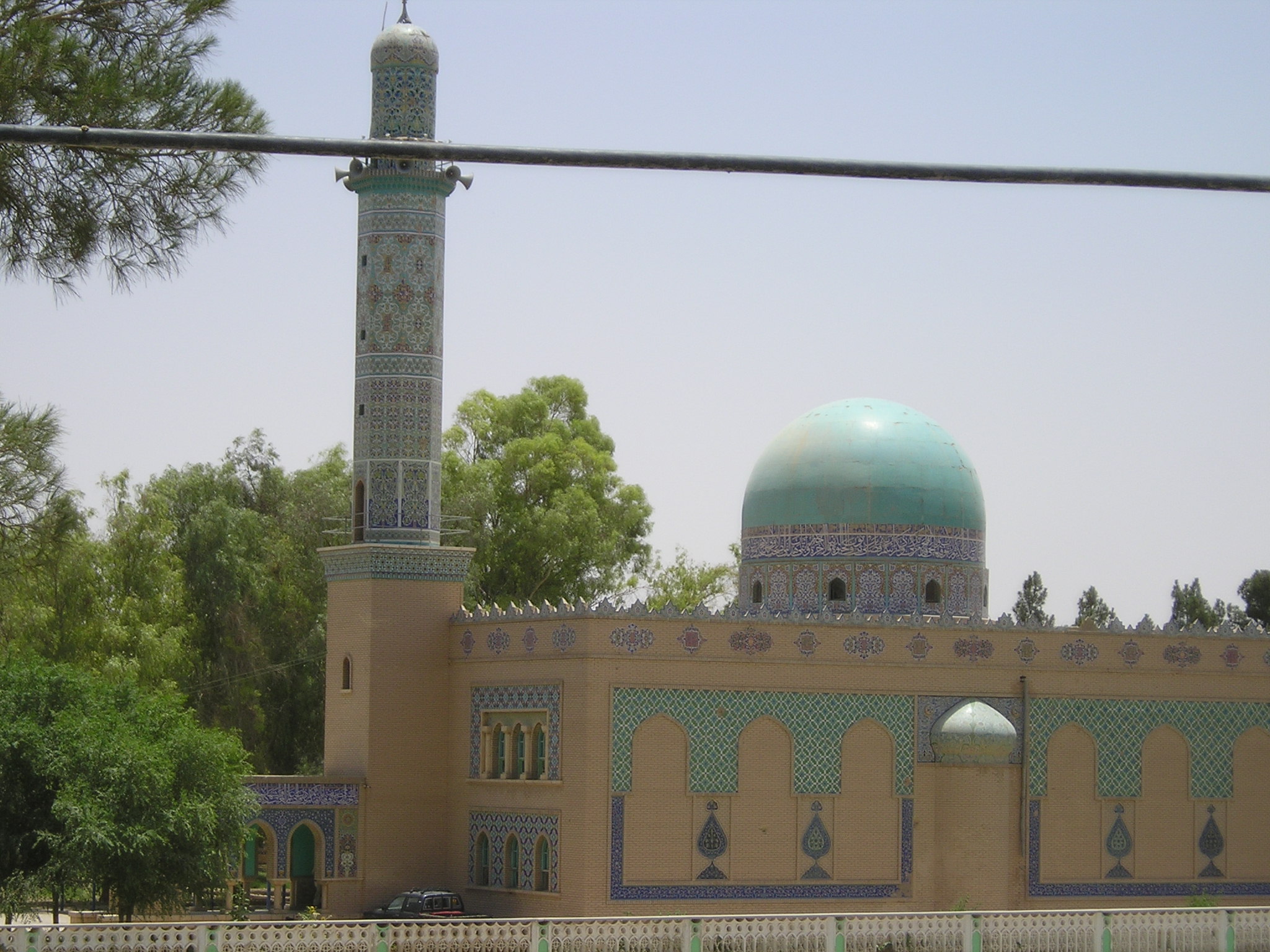
Helmand Province
The Helmand River valley appears in the Avesta -- the Zoroastrian scripture -- as Haetumant, one of the early centers of the faith. It appears in Bronze Age archaeology as the home of a civilization that flourished between 2500 and 1900 BC, contemporaneous with the Indus Valley at its peak. And it appears in 21st-century military dispatches as the province where British commanders described fighting more brutal than anything their army had faced since the Korean War. Helmand Province, in southwestern Afghanistan, holds all of these identities simultaneously. With a population of roughly 1.4 million, it is predominantly Pashtun, overwhelmingly rural, and one of Afghanistan's most socially conservative areas.
Before the Name Had a Province
The Helmand civilization of western Afghanistan was a Bronze Age culture of the third millennium BC, exemplified by sites like Shahr-i Sokhta, Mundigak, and Bampur. It flourished between 2500 and 1900 BC, and scholars have noted links between these sites and the Indus Valley settlements at the end of the fourth millennium BC. The closely related Jiroft culture occupied eastern Iran during the same period; they may represent a single cultural area spanning the modern border. Long before any of this, the Medes governed the region. Then the Achaemenids took it. Alexander the Great invaded in 330 BC. The Mauryan emperor Ashoka erected a pillar with bilingual inscriptions in Greek and Aramaic. Sun-worshipping Zunbils ruled the territory before Arab armies arrived in the 7th century. Each conquest layered over the last, but the river -- the Helmand -- remained the constant, the reason anyone wanted this land at all.
Pusht-e Rud: Across the River
When Ahmad Shah Durrani came to power in 1747, the area now called Helmand Province was part of greater Kandahar, known as Pusht-e Rud -- "across the river" -- reflecting how the region looked from the Durrani capital. Ahmad Shah's genius was not just military but administrative. He redistributed land grants among the Pashtun tribes in a pattern so durable it has survived, with few exceptions, to the present day. The Alizai received Zamindawar. The powerful Barakzai got the alluvial plains around Malgir, Babaji, and Spin Masjid, plus the strategically vital town of Gereshk. The Noorzai were given Garmsir in the south to guard against Baluch raids, and Now Zad was split between the Noorzai and the Ishaqzai. Ahmad Shah's own Popolzai tribe had few members in Helmand, so the Durrani monarchs governed by balancing tribal power rather than favoring any single group -- a pragmatic arrangement that held for centuries.
The War the Province Could Not Escape
In January 2006, the British Parliament announced that ISAF forces would replace American troops in Helmand as part of Operation Herrick, with the 16 Air Assault Brigade at the core. By summer, the province was engulfed in Operation Mountain Thrust. The offensive stalled in July as NATO and Afghan troops were forced into defensive positions under heavy insurgent pressure. Fighting centered on Sangin, Nawzad, and Garmsir, districts whose names became synonymous with the Afghan war. The Taliban treated Helmand as a proving ground for their ability to take and hold territory. In May 2007, NATO forces killed Mullah Dadullah, one of the Taliban's top commanders, along with 11 of his men. In July 2009, Operation Khanjar sent 4,000 U.S. Marines into the Helmand River valley in what was then the largest Marine operation since the Battle of Fallujah. The fighting continued for years. On 13 August 2021, the provincial capital Lashkar Gah fell to the Taliban after weeks of battle. Around 1,500 Afghan soldiers surrendered. According to the Washington Post, the withdrawal was largely met with relief -- Helmand had suffered through some of the deadliest fighting of the entire twenty-year war.
Poppies, Wheat, and What the Land Produces
Helmand is Afghanistan's largest opium-producing province, believed to output more than the entire nation of Myanmar, the world's second-largest producer. But opium is not the only crop. The province also grows tobacco, cotton, sesame, wheat, mung beans, maize, sunflowers, onions, potatoes, tomatoes, cauliflower, peanuts, apricots, grapes, and melons. Farming and animal husbandry -- cows, sheep, goats, donkeys, and camels -- remain the primary livelihood for most families. The Kajaki Dam on the Helmand River provides irrigation and hydroelectric potential, though its capacity has been limited by decades of conflict. About a third of the province's roads are impassable during certain seasons, and some areas have no roads at all. Bost Airport serves domestic flights from Lashkar Gah, though it is designed for civilian use. The massive NATO installation at Camp Bastion, once the main British base in Afghanistan, was claimed by the Taliban on the same August day Lashkar Gah fell.
The Province Behind the Statistics
As of 2020, over half of Helmand's 1.4 million people lived below the national poverty line. The overall literacy rate rose from 5 percent in 2005 to 12 percent in 2011 -- an improvement that still left nearly nine out of ten people unable to read. Only 3 percent of births were attended by a skilled health worker. The ethnic composition is predominantly Pashtun, divided among Barakzai, Nurzai, Alakozai, and Ishaqzai tribes, with significant Baloch, Hazara, and Tajik minorities. The province is deeply tribal and almost entirely rural, bound by social codes that predate any modern government. Helmand's story is not reducible to the war that made its name globally recognizable. The river still flows through the valley. Farmers still plant along its banks. The tribal geography that Ahmad Shah Durrani formalized in 1747 still shapes who lives where. What changes is the flag flying over Lashkar Gah.
From the Air
Located at approximately 31.0N, 64.0E in southwestern Afghanistan. The Helmand River is the dominant geographic feature, running north-south through the province with green irrigated strips visible against the surrounding desert. The Kajaki Dam is a landmark in the north. Lashkar Gah, the provincial capital, sits at the confluence of the Helmand and Arghandab rivers. Nearest airports: Bost Airport (OABT) at Lashkar Gah for civilian use; the former Camp Bastion/Camp Shorabak complex nearby. Kandahar Airport (OAKN) is the nearest major international facility, approximately 130 km east. Best viewed at 5,000-10,000 feet AGL. Terrain is flat river valley flanked by arid mountains and desert.