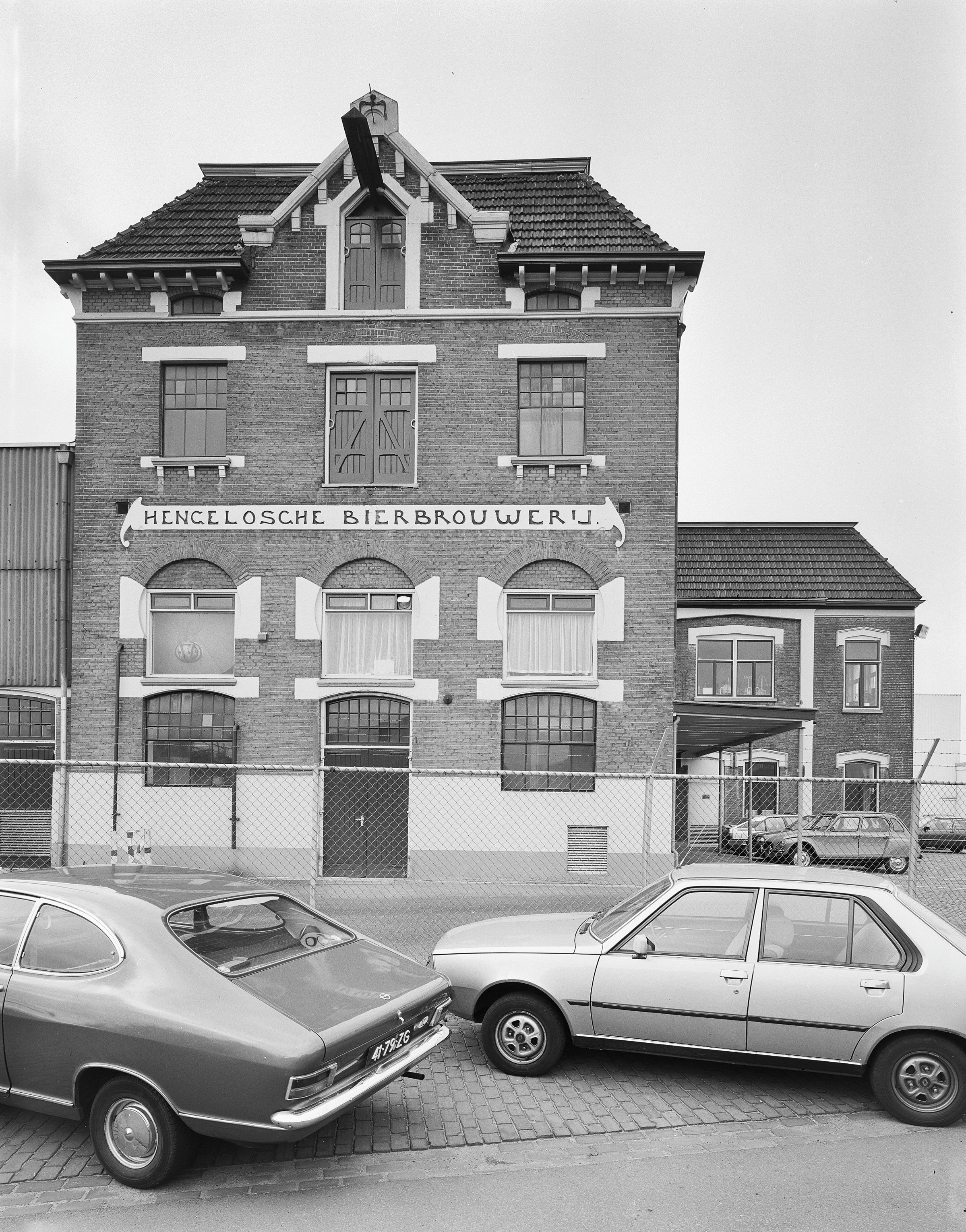
Hengelosche Brewery
In 1988, a brand that had outlasted two world wars vanished from Dutch supermarket shelves over a single contract dispute. Hengelo Bier had been brewed in this small Twente town since 1879 - long enough to outgrow its neighbor Grolsch, long enough to feed a generation's Sunday afternoons. Then Stella Artois, the Belgian giant that had bought the Meijling family business in 1974, lost a key supermarket account to Bavaria Brewery and decided Hengelo was no longer worth saving. They closed the brewery and pushed Dommelsch instead. A century of beer, gone in a boardroom decision.
Steam and Bavarian Ambition
Herman Meijling and J.H. Bartelink opened the Hengelosche Stoom Beiersch Bierbrouwerij on 1 June 1879 - the Hengelo Steam Bavarian Beer Brewery, a mouthful of a name that announced exactly what they intended to do. Bavarian brewing was the disruptive technology of its day. Bottom fermentation and weeks of cellar storage produced a clear lager with a longer shelf life than anything the Dutch had tasted before, and the brewers who adopted it first claimed the country's growing market. Hengelo's two founders bet correctly. Steam power and Bavarian discipline gave their beer reach beyond Twente, and the brewery's industrial footprint - chimneys, copper kettles, rail sidings - grew alongside the town.
Bigger Than Grolsch
After Bartelink left following the First World War, the operation became simply the Hengelosche Bierbrouwerij, family-owned and increasingly large. In the years bracketing the Second World War, Hengelo was one of the biggest breweries in the Netherlands - bigger, locally, than Grolsch a short ride down the road. That fact still surprises Dutch beer drinkers under fifty, because Grolsch is the brand that survived. Hengelo Bier was an everyday beer for everyday people: not legendary, not artisanal, just consistently present in the Twente kitchen and the Twente cafe. For decades that was enough.
Belgian Buyout, Belgian Future
In 1974 the Meijling family sold the brewery to Stella Artois. The Belgians were on the march, and Hengelo was one of their footholds north of the border. That single transaction would echo through brewing history: Stella Artois's Dutch expansion fed the corporate logic that produced InterBrew, then InBev, and finally Anheuser-Busch InBev - today the world's largest brewery group. The Meijlings' little Bavarian-style brewery, in other words, was a brick in the foundation of a global empire. Fourteen years after the sale, that empire decided it didn't need the brick anymore.
1988: The Year the Beer Stopped
The end came not from declining demand but from a strategic pivot. Stella Artois lost a major Dutch supermarket contract to Bavaria Brewery, and rather than fight to keep Hengelo Bier on the shelves, they consolidated their Dutch presence around Dommelsch. The Hengelo brewery closed. The recipe went silent. The chimneys came down. What remains today is a handful of collectors trading old bottles, a website maintained by enthusiasts, and the long shadow of a brand name that older Twentenaren still recognize on sight. The bar across the street outlived the brewery that supplied it. Drive through Hengelo and you can still find the footprint where the kettles once worked - a reminder that industrial heritage in the Netherlands often hides in plain sight, behind facades that no longer announce what they made.
A Beer Town Without Its Beer
Hengelo is still a working Twente city of about eighty thousand, knit into the metropolitan area with Enschede and Almelo, but the loss of its brewery left a specific kind of hole. Beer brands carry identity in the Netherlands - say Heineken in Amsterdam, Grolsch in Enschede, Brand in Limburg - and Hengelo lost its claim. The town's other industries, metalwork and engineering and the legacy of Stork's machine works, carried on. But the smell of malt no longer drifts through certain streets in the early morning, and that absence is the kind of thing only old residents notice until you point it out.
From the Air
Coordinates 52.2598 N, 6.8013 E. The former brewery site sits in central Hengelo, in the heart of the Twente region near the German border. Recommended viewing altitude 2,500 to 4,000 feet for the urban grid. Nearest airport is Twente Airport (EHTW), roughly 5 nautical miles east. Look for the rail junction that defines downtown Hengelo and the open green spaces along the Twente Canal. Visibility is typically good outside the autumn fog season.