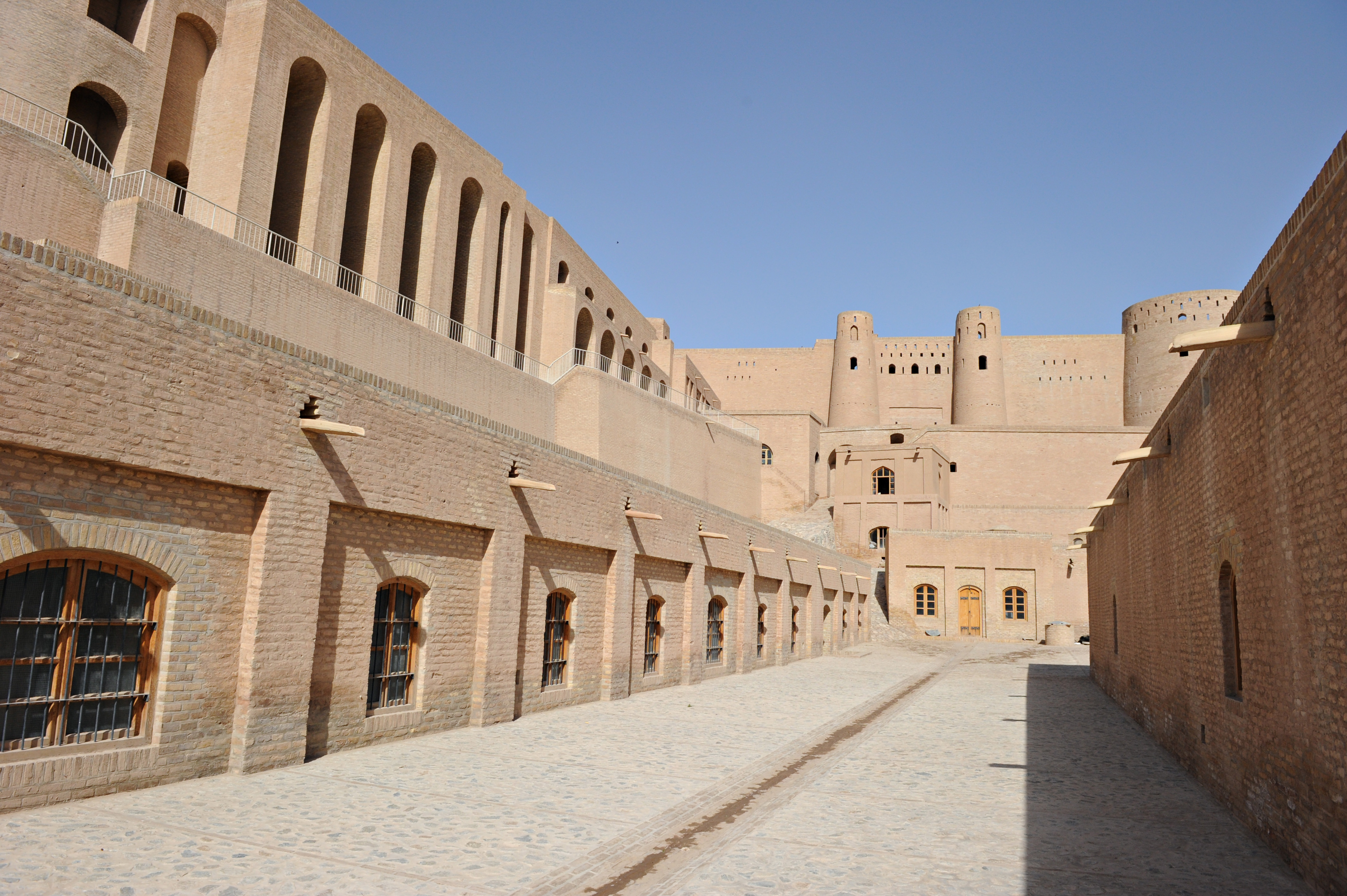
Herat Citadel
Alexander the Great built a fort here in 330 BC, fresh from his victory at the Battle of Gaugamela. Twenty-three centuries later, Afghan craftsmen spent five years restoring its walls with the same materials their ancestors used. Between those two moments, the Herat Citadel -- known locally as Qala-ye Ikhtiaruddin or Arg-e Herat -- was demolished and rebuilt so many times that no one can say exactly how much of Alexander's original structure survives. What survives, without question, is the instinct to build on this spot. Every empire that held Herat made the citadel its headquarters. Every war that swept through the city knocked it down. And every time, someone rebuilt it.
The Center of Every Map
The citadel sits in the center of Herat, and Herat sits at the crossroads of Central Asia. To the east, the road runs to Kandahar and the passes into the Indian subcontinent. To the west lies the Iranian plateau. Northward, the routes lead to the old Silk Road cities of Bukhara and Samarkand. For any power controlling this geography, the citadel was the obvious command post -- elevated, fortified, visible from every approach. The Macedonians, the Ghurids, the Mongols, the Timurids, the Safavids, the Durranis: each in turn garrisoned the fortress, modified its defenses, and stamped it with their architectural preferences. The result is not a single building but a geological record of power, each layer deposited by a different ruler over two millennia.
Two Thousand Years of Damage
The citadel's history reads less like a timeline and more like a demolition report. Genghis Khan's Mongols leveled much of Herat in 1221, and the citadel was not spared. The Timurids rebuilt it in grand style during the 15th century, when Herat was their capital and one of the great cultural centers of the Islamic world. Subsequent centuries brought more destruction -- sieges, earthquakes, the slow corrosion of neglect. By the late 20th century, decades of modern conflict had reduced the citadel to a crumbling shell. Walls that had withstood medieval siege engines were buckling from the concussive effects of artillery and rocket fire. Rain seeped through fractured ramparts. Sections of the interior had collapsed entirely.
Raising It Again
The restoration that began in 2006 was the citadel's most thorough reconstruction in centuries. The Aga Khan Trust for Culture led the effort, with approximately $2.4 million in funding from the United States and German governments. Hundreds of Afghan craftsmen -- bricklayers, plasterers, tile workers -- labored for five years using traditional techniques and materials wherever possible. The work was not merely cosmetic. Structural walls were rebuilt, drainage systems were installed, and the National Museum of Herat was established inside the restored fortress. By the time the project was completed in 2011, roughly 1,100 artifacts from the Herat region were housed within the citadel's walls.
Voices at the Ceremony
At the October 2011 inauguration, U.S. Ambassador Ryan Crocker spoke of a time, just 35 years earlier, when tourists from around the world had come to Herat to experience its heritage. He expressed hope that the restored citadel would draw them back. Nancy Dupree, the American scholar who had spent decades documenting Afghanistan's cultural heritage, offered a more weathered perspective. She had visited the citadel many times over the years and watched it disintegrate. The restoration, she said, was impressive -- but what moved her most was simply seeing something finished. In a country where half-completed projects littered the landscape, the citadel stood as proof that sustained effort could still produce results.
A Fort That Outlasts Its Builders
The Afghan Ministry of Information and Culture now maintains the citadel and its museum. The fortress that Alexander's engineers laid out as a military outpost functions today as a repository of regional memory. Pottery, coins, weapons, textiles -- the 1,100 items on display trace the area's history through the material objects its people made and used. The citadel itself is the largest artifact of all. Its massive walls, visible from across the city, anchor Herat's skyline as they have for centuries. Empires rose around it and collapsed. Dynasties held court within it and were overthrown. The citadel crumbled and was rebuilt, crumbled and was rebuilt again. That cycle is the story of Herat in miniature -- a city that has always been too strategically valuable to abandon and too battered to stay whole for long.
From the Air
Located at 34.346N, 62.189E in central Herat, Afghanistan. The citadel is a large, elevated rectangular fortress clearly visible from the air, sitting prominently in the center of the old city. Nearest airport is Herat International Airport (OAHR), approximately 13 km south. Best viewed at 2,000-5,000 feet AGL. The fortress walls and interior courtyard are clearly distinguishable against the surrounding urban fabric. Arid climate with generally good visibility.