Hever Castle
Henry VIII carried his own locks. Wherever the king traveled, a private lock accompanied him, to be fitted to every bedroom door for his personal security. One of those locks remains at Hever Castle, still mounted in the room where England's most dangerous monarch once slept. It is a small, mechanical reminder of a man who trusted no one -- and of the young woman who grew up in these rooms before he noticed her, desired her, married her, and then cut off her head.
A Girl in the Garden
Hever Castle stands in the village of Hever in Kent, thirty miles southeast of London, surrounded by a moat and gardens that belie its turbulent past. The oldest part of the castle dates to 1270, when it was a simple gatehouse with a walled bailey. In 1462, Geoffrey Boleyn purchased the property and converted it into a Tudor manor house, tucking a timber-framed dwelling inside the medieval stone walls. His grandson Thomas Boleyn inherited the estate in 1505 and raised his three children here: George, Mary, and Anne. Whether Anne was born at Hever is uncertain -- even the year of her birth remains disputed -- but she lived within these walls until 1513, when she was sent to the Habsburg Netherlands to be educated at the court of Archduchess Margaret. She returned to England polished, ambitious, and fluent in French. The gatehouse she passed through as a girl still stands, fitted with the oldest working original portcullis in England.
The King Comes Calling
Henry VIII began pursuing Anne Boleyn in the mid-1520s, conducting his courtship from nearby Bolebroke Castle while Anne remained at Hever under her father's roof. The romance reshaped English history: Henry's determination to marry Anne led to his break with Rome, the dissolution of the monasteries, and the birth of the Church of England. Anne became queen consort in 1533, gave birth to the future Elizabeth I, and was executed at the Tower of London in May 1536 on charges of treason and adultery that few historians now credit. Her father Thomas died at Hever in 1539, broken and stripped of influence. Henry promptly seized the castle and the following year bestowed it upon Anne of Cleves as part of the settlement for annulling their brief marriage. The property thus passed from a woman Henry had killed to a woman he simply could not bear to keep.
The American Restoration
After the Boleyns and Anne of Cleves, Hever drifted through centuries of declining fortunes. The Waldegrave family held it from 1557 to 1715, the Humfreys family to 1749, and the Meade-Waldo family from 1749 to 1903, during which time the castle deteriorated badly and was leased to various tenants. Rescue came from an unlikely quarter: William Waldorf Astor, an American millionaire and the great-grandson of John Jacob Astor, purchased Hever in 1903 and poured a fortune into its restoration. Astor added the Tudor Village, a 'picturesque cluster of guest cottages' that expanded the castle's capacity without altering its medieval profile. He created an Italian Garden to display his collection of classical statuary and ornaments, transforming the grounds into something entirely new while preserving the intimate scale of the original buildings. The castle became a Grade I listed building in 1954.
Ghosts and Portcullises
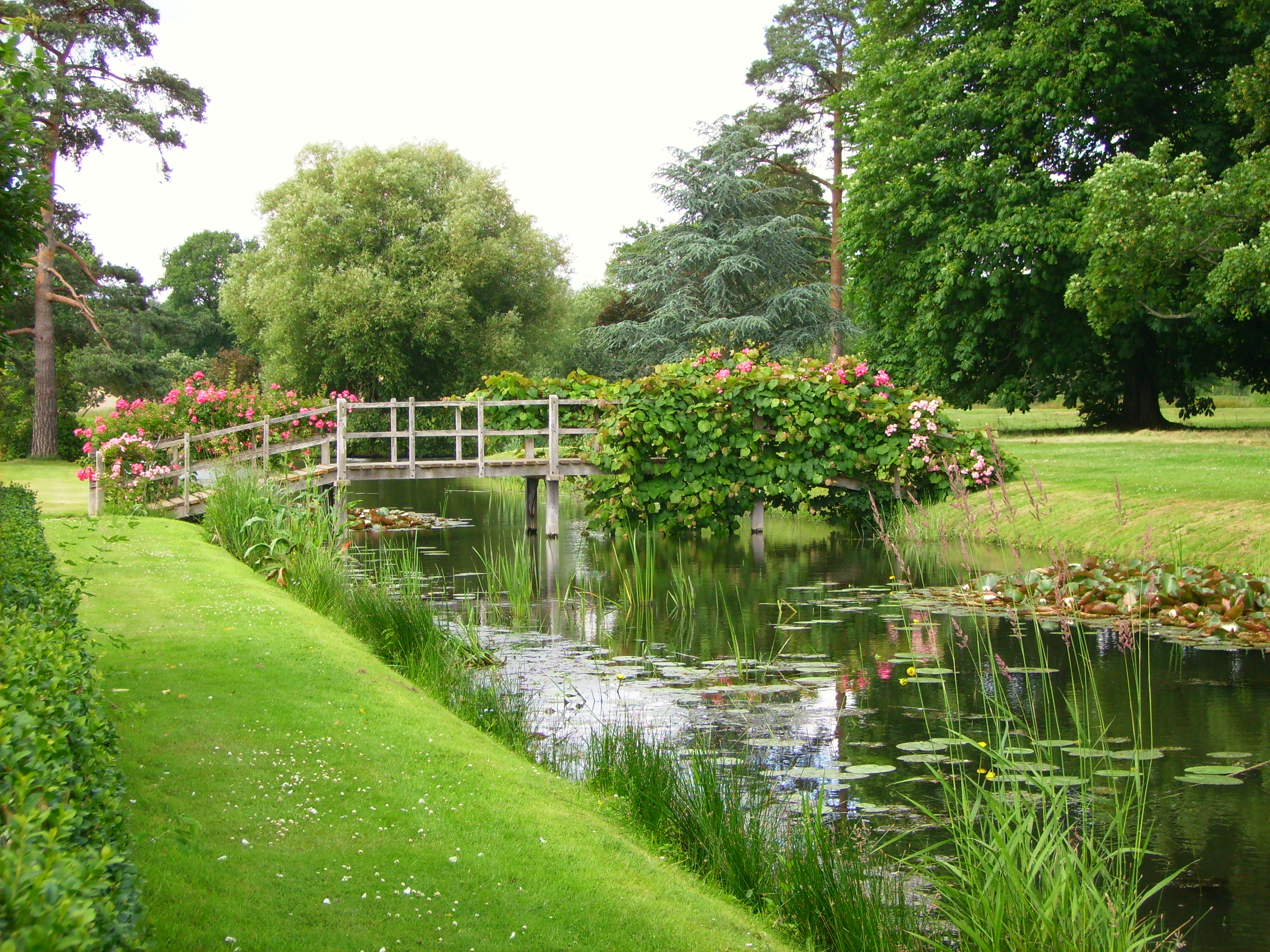
Today, Hever Castle is a tourist attraction that balances its genuine Tudor significance with the attractions of a country estate. The three-floor interior holds antique furniture, a collection of Tudor paintings, and Anne Boleyn's own prayer books -- small volumes that a condemned woman may have held in her final hours. The grounds include a yew hedge maze planted in 1904, a water maze added in 1999 whose object is to reach a central folly without getting wet, and rose gardens that bloom in the Kent summer with a profusion that the Boleyns would recognize. The castle has also become an unlikely film location: scenes from Star Wars: The Phantom Menace and The Princess Bride were shot here, and the loggia by the lake served as a setting in the television series The Great. In 1983, the Astor family sold Hever to John Guthrie, whose family's company, Broadland Properties, continues to operate it. The castle remains what it has been for five centuries: a modest, beautiful house whose scale belies the enormity of the history that unfolded within its walls.
From the Air
Located at 51.19N, 0.11E in the village of Hever, Kent, approximately 30 nm southeast of London. The castle is visible from the air as a moated manor house surrounded by extensive gardens and lakes in the Kentish countryside. Nearest airport: Biggin Hill (EGKB), approximately 12 nm to the northeast. Best viewed at 2,000-3,000 ft AGL.