Hewlett-Packard
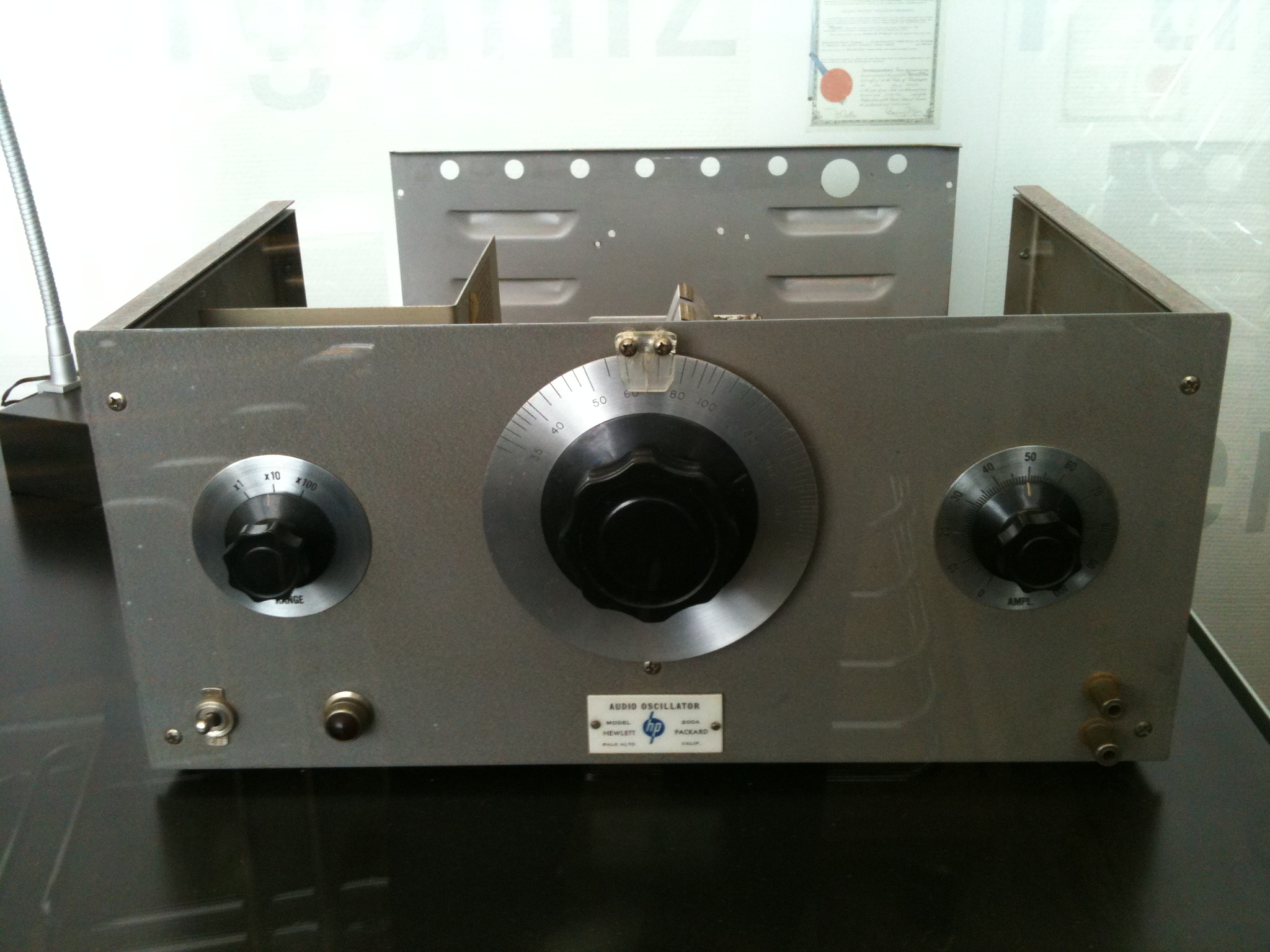
A coin flip decided it. In 1939, Bill Hewlett and Dave Packard stood in a rented garage at 367 Addison Avenue in Palo Alto and tossed a coin to determine whose name would lead their new partnership. Hewlett won, and Hewlett-Packard was born. That garage, now a California Historical Landmark and designated the "Birthplace of Silicon Valley," is where two Stanford electrical engineering graduates built their first product: an audio oscillator priced at $54.40. Walt Disney Studios bought eight of them to test sound equipment for the film Fantasia. From that unlikely beginning grew one of the most consequential technology companies in history.
The Garage Where It Started
Dave Packard moved to Palo Alto in 1938 with his wife Lucile, renting the lower floor of a house at 367 Addison Avenue. Bill Hewlett lived in a small shed on the property. Their mentor, Stanford professor Frederick Terman, had encouraged them to start a business rather than seek employment at established East Coast firms. Terman believed Stanford graduates could build an electronics industry on the Peninsula, and he was right. The garage served as workshop, and HP's first product, the Model 200A audio oscillator, used a novel design that deployed an incandescent light bulb as a stabilizing element in the feedback circuit. It was simpler and cheaper than existing oscillators, and it worked. The pair incorporated on January 1, 1939, with $538 in working capital. Terman's hunch about a West Coast electronics corridor would prove to be one of the great understatements in American industrial history.
Building the HP Way
What set Hewlett-Packard apart from other postwar electronics firms was not just its instruments but its culture. Packard and Hewlett developed a management philosophy they called "the HP Way" -- an approach built on trust, respect for employees, and open communication. HP was among the first companies to offer profit sharing, flexible work hours, and an open-office layout where managers sat among engineers. The philosophy attracted top talent and fostered innovation. By the 1960s, HP had expanded into computing, producing the HP 2116A, a computer designed initially to gather and analyze data from HP instruments. The company's move into calculators in 1972 with the HP-35, the world's first handheld scientific calculator, rendered the slide rule obsolete almost overnight. Engineers who had carried slide rules their entire careers suddenly had a pocket-sized device that could perform trigonometric functions in seconds.
From Instruments to Empire
By the 1980s, HP had become a diversified technology giant. Its LaserJet printers, introduced in 1984, became the industry standard for office printing, eventually making HP the world's largest personal computer manufacturer. Revenue climbed into the tens of billions. But growth brought growing pains. The company that had prided itself on engineering excellence found itself pulled in multiple directions -- printers, PCs, servers, software, services. In 1999, HP spun off its original test and measurement instruments business as Agilent Technologies, severing the direct line to the audio oscillators of that Palo Alto garage. The split was a recognition that HP had outgrown its founding identity.
A Company Divided
The tensions between HP's product lines eventually became irreconcilable. On November 1, 2015, Hewlett-Packard completed a split into two publicly traded companies: HP Inc., which retained the personal computer and printer businesses, and Hewlett Packard Enterprise, which took the enterprise technology, software, and services. The split marked the end of a 76-year run as a unified company. HP Inc. retained the Palo Alto address, while Hewlett Packard Enterprise initially moved to San Jose before relocating its headquarters to Spring, Texas (near Houston) in 2020. The garage at 367 Addison Avenue remains, a modest single-car structure that belies its outsized significance. California designated it Historical Landmark No. 976, and it stands as a reminder that world-changing enterprises can start with a coin toss, a shed, and $538.
From the Air
Hewlett-Packard's original garage is at 37.44°N, 122.15°W in Palo Alto. The broader HP campus and former headquarters are visible along Page Mill Road. Nearby airports include Palo Alto Airport (KPAO) and San Jose International (KSJC). Best viewed at 2,000-3,000 ft AGL.