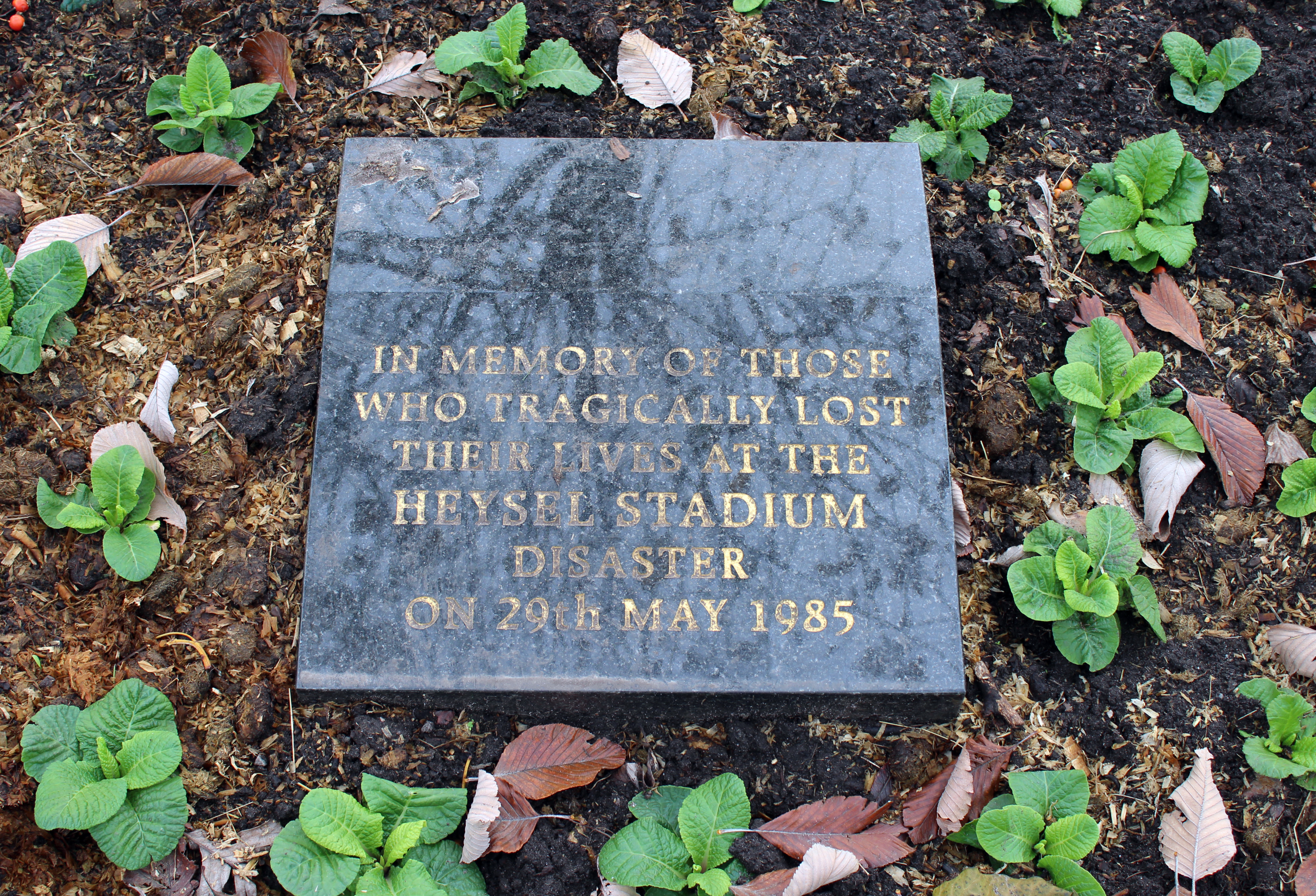
Heysel Stadium Disaster
The match was played anyway. That fact haunts every account of May 29, 1985, when 39 people died at Heysel Stadium in Brussels before what should have been the crowning event of European club football. Liverpool and Juventus, the two best teams on the continent, had gathered with 60,000 supporters for the European Cup final. An hour before kickoff, violence erupted in the stands. A crumbling wall collapsed under the weight of fleeing fans. Bodies piled against fences designed to keep spectators off the pitch. And then, with corpses laid out on the grass and ambulances still arriving, UEFA officials decided the game must go on. Michel Platini scored the winning penalty for Juventus in a victory no one wanted to celebrate.
A Stadium Already Failing
Heysel Stadium was 55 years old in 1985 and falling apart. Large sections of the facility were literally crumbling; Liverpool fans were seen kicking holes through the outer cinder-block wall to gain entry without tickets. Some gates had only single turnstiles, and many spectators reported never being searched or having their tickets checked. Both Juventus President Giampiero Boniperti and Liverpool CEO Peter Robinson had urged UEFA to select another venue. Barcelona's Camp Nou and Madrid's Santiago Bernabeu were both available. But UEFA refused to move the final. Its inspection of the stadium had lasted just thirty minutes. The seating arrangement placed Liverpool supporters in Section X directly adjacent to Section Z, a supposedly neutral zone where tickets had been sold locally but which filled largely with Juventus fans. A flimsy chicken wire fence and a thinly policed buffer zone were all that separated them.
The Wall Gives Way
Tension built throughout the afternoon. Fans threw bottles, stones, and flares across the divide. Hooligans on both sides exchanged taunts. Then Liverpool supporters in Section X charged across the buffer zone, tearing down the chicken wire barrier. Juventus fans in Section Z fled in panic, initially toward the pitch where police blocked them, then toward an exit where they were also prevented from leaving. The crowd compressed against a decrepit retaining wall on the terrace. The wall gave way. Some escaped through the breach; others were crushed beneath falling masonry or trampled by those climbing to safety. Within minutes, 39 people lay dead. Most were Italian, with Belgian, French, British, and Irish victims among them. More than 600 were injured.
A Match That Should Not Have Been
Belgian authorities declared a state of siege in Brussels. Riot police surrounded the stadium. Inside, officials debated. Abandoning the match, they concluded, risked inciting further violence among the remaining 50,000 spectators. The game kicked off 90 minutes late. Players took the field knowing people had died. Liverpool captain Phil Neal later admitted it would have been a better decision to call off the match. Juventus won 1-0 on Platini's penalty, but there was no celebration. Captain Gaetano Scirea received the trophy in subdued ceremony. Liverpool players only understood the full scope of the tragedy when, at their hotel, a crowd of grieving Juventus supporters surrounded their bus. Police had to escort them to the airport.
Exile and Reckoning
The disaster transformed European football. UEFA banned English clubs from all continental competitions for five years, with the ban lifted in 1990. Liverpool served an additional year, returning to European football in 1991 after six years of exile. Belgian police captain Johan Mahieu, responsible for security, was convicted of manslaughter. Fourteen Liverpool fans were found guilty of manslaughter and sentenced to three years imprisonment. The Belgian government's failure to maintain the stadium and UEFA's insistence on using an inadequate venue drew widespread condemnation. The stadium itself was demolished in 1994 and replaced by the King Baudouin Stadium. UEFA later called Heysel the darkest hour in the history of its competitions. A memorial plaque now marks the site where the wall collapsed, bearing the names of the 39 who never made it home.
From the Air
The site of the former Heysel Stadium, now King Baudouin Stadium, lies in the Heysel district of northwest Brussels at coordinates 50.896N, 4.334E. The modern stadium is easily identifiable from altitude by its distinctive oval shape and large parking areas. The Atomium landmark stands immediately to the south. Brussels Airport (EBBR) is 9 kilometers to the east. The stadium sits alongside the A12 motorway connecting Brussels to Antwerp.