Hibiya Open-Air Concert Hall: The 10 Yen Revolution
On September 22, 1969, five thousand young Japanese packed into an open-air amphitheater in the center of Tokyo and paid ten yen each -- roughly the cost of a piece of candy -- to hear rock music performed live at full scale for the first time in Japan. The going rate for a concert ticket was a hundred times higher. The organizers of the New Rock Jam Concert did not care about the money. They cared about the sound. That venue, the Hibiya Open-Air Concert Hall, known to generations of Tokyoites simply as Yaon, had been shaping the capital's relationship with Western music since 1905, when its smaller stage was built as part of a deliberate experiment: Japan's first Western-style park, designed around three imported ideas -- Western flowers, Western food, and Western music.
A Park Built on Three Western Ideas
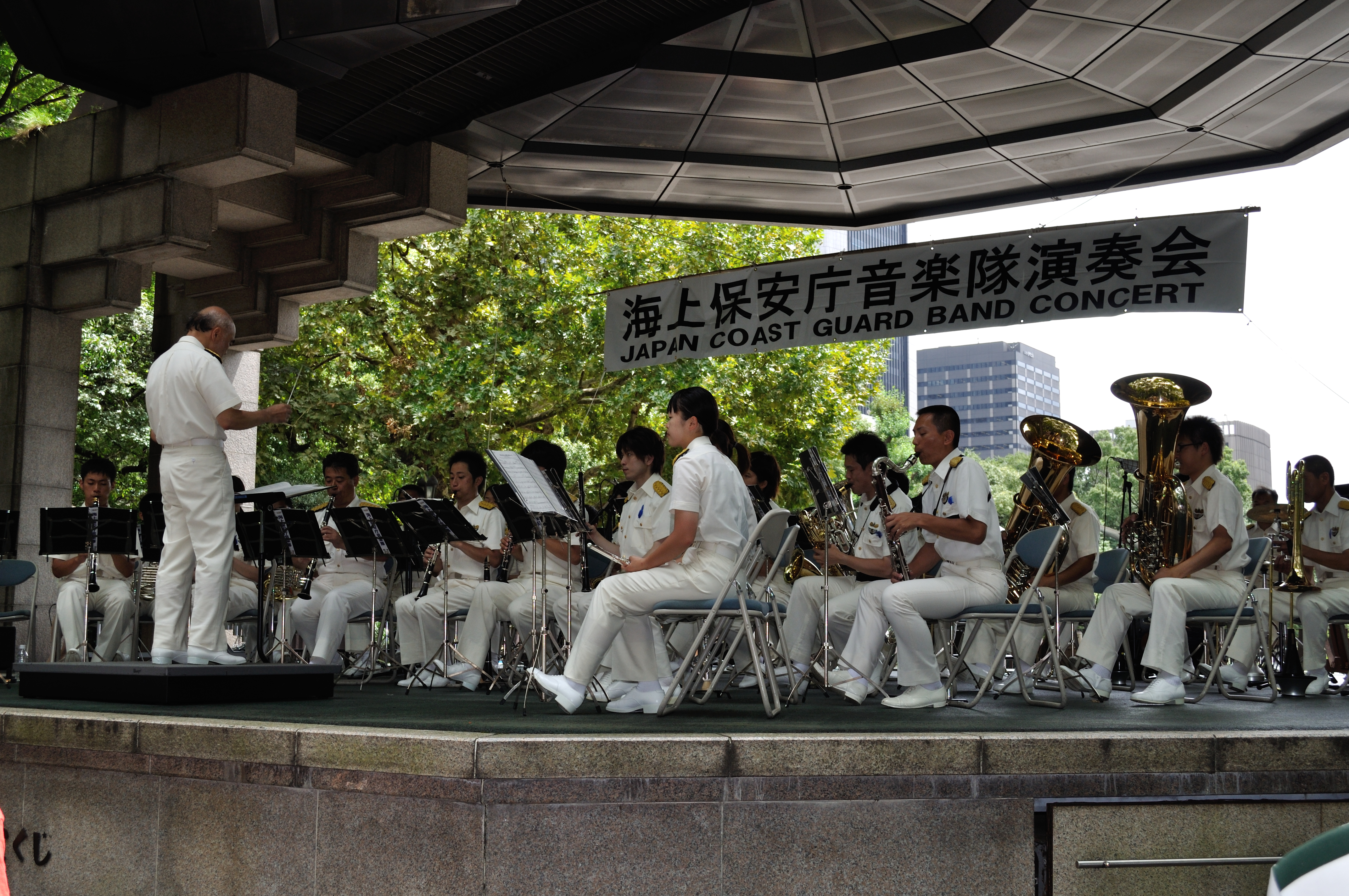
Hibiya Park opened to the public in 1903, occupying forty acres of former military drill grounds in Chiyoda, wedged between the Imperial Palace gardens and the government ministries of Kasumigaseki. The park's designers had a specific vision: bring three elements of Western culture to the Japanese public through flowers, cuisine, and music. The music component arrived in 1905 with the construction of a small open-air concert hall. That original structure collapsed during the devastating Great Kanto earthquake of 1923 but was rebuilt. A second, larger venue followed during the Taisho era, becoming the stage that would define outdoor live music in Tokyo for a century. The larger hall is the one Tokyoites mean when they say Yaon, an abbreviation that has become synonymous with open-air performance itself. Managed by the Tokyo Metropolitan Government, the venue operates only on weekends and holidays from April through October, a concession to the surrounding urban density.
Ten Yen and the Birth of Japanese Rock
The concert that changed everything was not supposed to be historic. The organizers of the September 1969 New Rock Jam Concert simply wanted as many people as possible to hear this music that was reshaping the world. They set admission at ten yen when standard ticket prices ran to a thousand. The strategy worked: the amphitheater filled to capacity, five thousand people crammed onto its open-air benches. The following month, musician Yuya Uchida sponsored a second 10 Yen Concert at Yaon on October 30, featuring acts including Hiro Yanagida, the Happenings Four, and Ai Takano. That show was recorded and released as the live album Free Spirit before the year was out. But the concerts also exposed a problem. Injuries occurred -- one serious, nineteen minor -- and the Japanese concert industry responded by installing fences between stages and audiences, posting security guards in the gap. The 10 Yen Concerts had birthed Japanese rock and Japanese concert security in the same breath.
A Century Under Open Sky
The venue marked its 90th anniversary in 2013 with a revival of Naon no Yaon, an all-female rock festival, and the return of Space Shower TV's Sweet Love Shower music festival, which had called Yaon home from 1996 to 2006. The celebrations hinted at a deeper truth: this was not just an amphitheater but a living archive of Japanese popular music. In 2019, a new annual tradition began -- a free music festival held every June, with bassist and producer Seiji Kameda serving as executive chairman. The 2022 edition included a daring experiment: a Friday-night concert with adjusted volume levels, testing whether weekday performances could work without disturbing the surrounding business district. When the venue's 100th anniversary arrived in 2023, Kameda again led the celebrations, overseeing roughly forty performances between April and November. Generations of musicians had passed through these open-air gates, from military bands to J-pop icons, each adding another layer to Yaon's century of sound.
Silence Before the Next Act
On October 1, 2025, the Hibiya Open-Air Concert Hall closed its gates for an extensive rebuilding. The silence is temporary. For over a hundred years, the venue has operated under a set of constraints that would frustrate any modern promoter: performances limited to weekends and holidays, restricted to a six-month season, hemmed in by government offices and high-rises on every side. Yet those very constraints shaped its character. The small hall still permits only free concerts without artificial amplification, bookings allocated by lottery a full year in advance at a cost of 22,200 yen per day. The large hall maintained a democratic spirit -- the ten-yen ethos never fully faded. When the construction cranes finally pull away, Yaon will return larger and better, but the essential bargain will remain: an open sky above one of the densest cities on Earth, a stage where music has played since the era of the Meiji Emperor, and the knowledge that Japanese rock and roll was born right here, for a dime.
From the Air
Located at 35.672°N, 139.754°E in the heart of Chiyoda, Tokyo, within Hibiya Park. From altitude, the open-air amphitheater is a small but distinctive circular clearing within the park's tree canopy, positioned between the Imperial Palace grounds to the north and the Kasumigaseki government district to the west. Best viewed at 2,000-3,000 feet AGL. Tokyo International Airport / Haneda (RJTT) lies approximately 8 nautical miles to the south. Narita International Airport (RJAA) is approximately 35 nautical miles to the east-northeast.