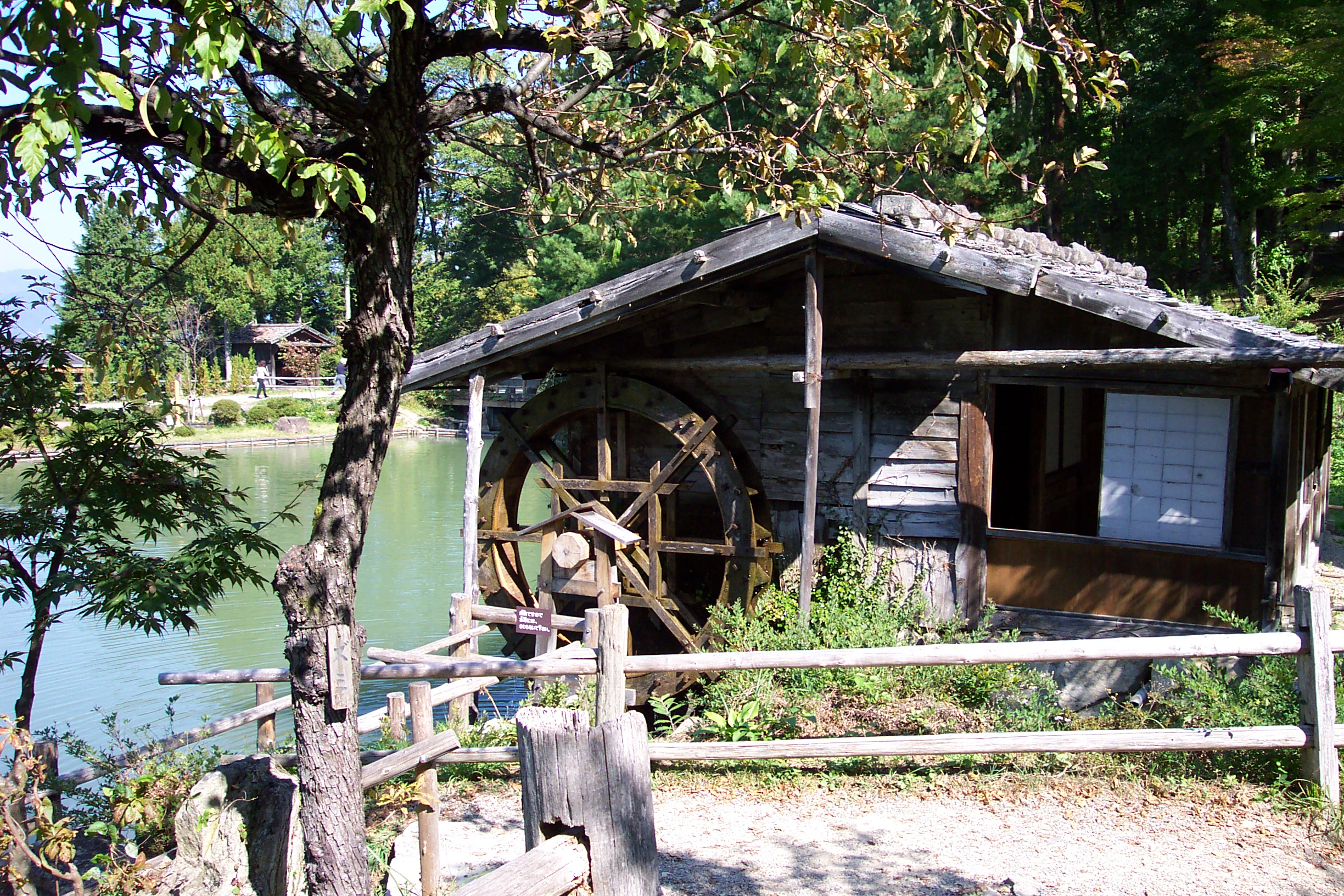
Hida Minzoku Mura Folk Village
The rooflines give it away. Steep as praying hands pressed together, the thatched roofs of the gassho-zukuri farmhouses at Hida no Sato were engineered for a single relentless fact: snow. Heavy, wet, deep snow that buries the valleys of Japan's mountainous Hida region every winter. These roofs, some rising at angles of 60 degrees, let the weight slide off before it can crush the timbers beneath. Opened in 1971 on a hillside southwest of Takayama in Gifu Prefecture, this open-air museum gathered over 30 traditional buildings from across the Hida highlands, rescuing them from abandonment and decay as rural Japan emptied toward the cities.
Hands Joined in Prayer
The name gassho-zukuri literally means "built like hands in prayer," a reference to the steep triangular profile of these farmhouses. The design is purely practical: the dramatic pitch sheds the region's legendary snowfall, which can exceed several meters in a single winter. But the architecture became something more. The cavernous attic spaces created by those steep roofs were used for raising silkworms, a cottage industry that sustained mountain families for generations. Inside these farmhouses at Hida no Sato, visitors can still see the spinning tools, silk worm trays, and weaving looms that once filled the upper floors with the quiet industry of rural life. The structures range from 100 to 500 years old, each one dismantled at its original site and painstakingly reassembled on this hillside overlooking the Takayama valley.
Rescued from the Mountains
By the mid-20th century, the remote villages of the Hida highlands were emptying out. Young people left for factory jobs in Nagoya and Osaka, and the grand old farmhouses they left behind began to rot. Hida no Sato was created as an act of preservation, relocating endangered buildings to a single accessible site where they could be maintained and visited. The collection includes a former village headman's house, logging huts, storehouses, and several gassho-zukuri farmhouses that represent the pinnacle of Hida vernacular architecture. Four of the buildings have been designated National Important Cultural Properties, seven more carry Gifu Prefectural designations, and one holds a Takayama City designation. A single western-style building from the Meiji period rounds out the collection as a Registered Tangible Cultural Property, a reminder of the rapid modernization that would eventually make these older structures obsolete.
Living Crafts
Hida no Sato is not a static exhibit. Daily workshops and demonstrations keep the traditional crafts of the region alive within the walls of the old farmhouses. Visitors can try their hand at sashiko embroidery, the running-stitch quilting technique that mountain women used to reinforce and mend work clothing. Kumihimo, the intricate Japanese art of braided cord-making, is demonstrated alongside wood carving, tie-dyeing, and lacquer work, crafts for which the Takayama region has been famous for centuries. The museum's hillside setting, surrounding a large central pond, places the buildings in a landscape that echoes their original mountain environment. Walking the paths between the farmhouses, with the Takayama valley spread below, it is possible to glimpse what daily life felt like when these structures were not museum pieces but homes.
A View from the Valley's Edge
The museum occupies a hillside about a 30-minute walk or a 10-minute bus ride southwest of Takayama Station, positioned on the opposite side of town from the city center. From above, the thatched roofs dot the green hillside like a scattered hamlet, their dark wooden walls and pale straw coverings distinct against the surrounding forest. The setting is deliberate: these buildings were not urban structures, and placing them on a slope above the valley recreates something of the isolation and elevation of their original mountain sites. In autumn, the surrounding maples blaze red and orange against the grey thatch. In winter, snow caps each roof exactly as it would have in the remote villages where these buildings stood for centuries, completing the illusion that time here has simply stopped.
From the Air
Hida Minzoku Mura Folk Village sits at 36.132N, 137.234E on a hillside southwest of Takayama city center. The thatched-roof buildings and central pond are visible as a distinct cluster on the forested hillside. The nearest airport is RJNT (Toyama Airport), approximately 65 km north. The village sits in the Takayama valley of the Hida region, surrounded by the Northern Japanese Alps. Best viewed at 2,000-4,000 feet AGL to distinguish the individual farmhouse structures. The Miyagawa River through Takayama and Takayama Station to the northeast serve as navigation landmarks.