The Ikebukuro Crash That Changed a Nation's Language
At 12:25 p.m. on April 19, 2019, Kozo Iizuka's wife shouted from the passenger seat: "Watch out! What have you done?" Iizuka, 87 years old, a retired head of Japan's Industrial Science and Technology Agency, was behind the wheel of a Toyota Prius hurtling through the Higashi Ikebukuro district of Toshima ward, Tokyo. He had entered a curve too fast, clipped the curb, panicked, and was now running red lights without ever touching the brake. The car struck a garbage truck broadside, overturned it, then plowed into a crowded pedestrian crossing. Mana Matsunaga, 31, and her daughter Riko, 3, were killed. Ten others were injured. Rather than call the police, Iizuka picked up his phone and called his son. "The accelerator wouldn't come back," he said. "I've hit people." An inspection later confirmed that nothing was wrong with the car.
Speeding Toward a French Restaurant
The dashcam footage and subsequent investigation painted a damning picture. Iizuka had been weaving through traffic, changing lanes three times to overtake other vehicles, because he and his wife were running late for a reservation at a French restaurant. The car's data recorder showed no evidence that the brake pedal was ever pressed during the entire sequence. Iizuka already suffered from leg problems his doctors suspected to be Parkinson's disease. Security cameras captured the car's final acceleration as it blew through the red light -- by the time it struck Mana and Riko on the pedestrian crossing, the vehicle was traveling at tremendous speed. The total casualty count was eventually revised to 12, after the Tokyo Metropolitan Police Department discovered that two additional victims, another mother and daughter, had sustained light injuries.
The 'High-Class Citizen'
What transformed this tragedy from a traffic accident into a national controversy was what happened next -- or rather, what did not happen. Iizuka was not arrested. In Japan, standard police practice is to arrest suspects at the scene, and standard journalistic practice is to suffix a suspect's name with the word meaning "suspect." But Iizuka was referred to in police reports and in the press as "former official" or with the polite honorific "-san." Investigators said he was not arrested because he was hospitalized and posed no flight risk. Critics saw something else entirely: a retired elite bureaucrat receiving protection that ordinary citizens never would. The phrase "high-class citizen" exploded across Japanese social media and was nominated for that year's New Word/Popular Phrase Prize. Publisher Shogakukan selected it as Word of the Month for its Daijisen dictionary. Commentator Atsushi Manabe of Toyo Keizai wrote that the case represented how "unapologetic liars and coldblooded psychopaths succeed more than regular honest people," a "victory of brazen shamelessness" that struck at the public's sense of moral order.
A Father's Fight for Justice
On the day of his wife and daughter's funeral, April 24, 2019, Takuya Matsunaga held a press conference and released photographs of Mana and Riko to the public. On July 18, he announced a signature campaign seeking Iizuka's formal indictment. Collection began on August 3 at Minami-Ikebukuro Park, where three-year-old Riko had loved to play. By September 20, when the petition was presented to the Tokyo District Prosecutor's Office, 391,136 people had signed. Iizuka was indicted on February 6, 2020, but still not arrested. At trial, beginning October 8, 2020, he denied all charges, claiming the car had malfunctioned and saying he had no memory of accelerating. On March 4, 2021, an engineer from the manufacturer testified that every component functioned correctly. On September 2, 2021, the Tokyo Regional Court sentenced Iizuka to five years imprisonment -- the maximum allowed. In a separate civil suit, the Tokyo District Court in October 2023 ordered Iizuka to pay 140 million yen in compensation. Iizuka died of natural causes in prison on October 26, 2024.
A Reckoning on the Road
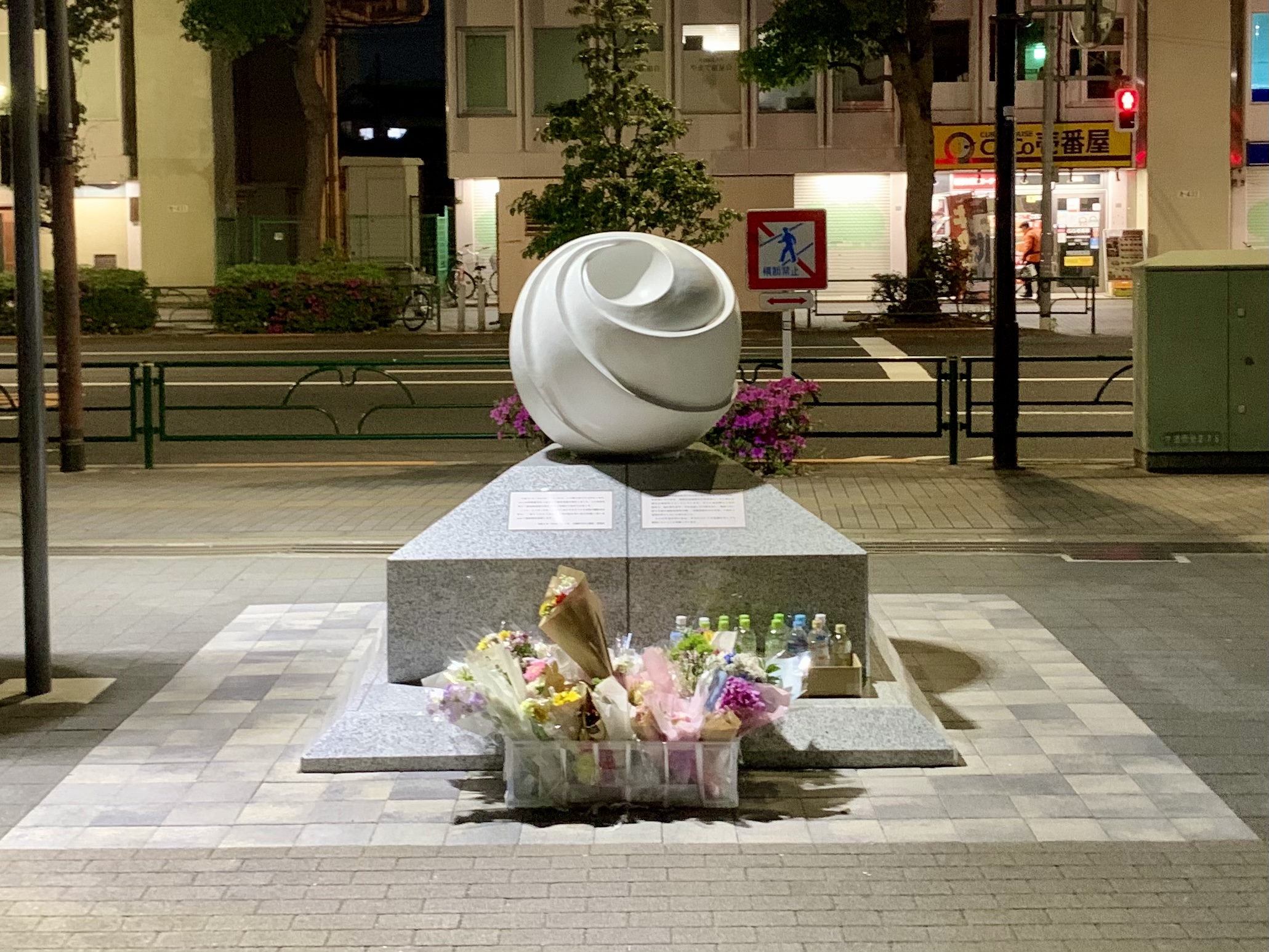
The Ikebukuro crash did not stay in the courtroom. In the week following the accident, Fuji News Network reported that 1,200 people in the Tokyo metropolitan district voluntarily surrendered their driving licenses. In the six months that followed, 42,252 people did the same -- an 80 percent increase over the previous year's rate, according to the Tokyo Metropolitan Police Department. Iizuka's own license was revoked by the Tokyo Metropolitan Public Safety Commission in May 2019. The incident also triggered an unusual controversy on Japanese Wikipedia, where editors repeatedly deleted any mention of the crash from Iizuka's biographical article, then locked the page to prevent further edits. The Asahi Shimbun publicly questioned this decision. Today, a small memorial stands near the crash site on the pedestrian crossing in Higashi Ikebukuro, marking the spot where a lunchtime errand ended two lives and forced an entire nation to confront uncomfortable questions about who gets to be called a suspect and who gets to be called "sir."
From the Air
Located at 35.726°N, 139.719°E in the Toshima ward of Tokyo, near Higashi-Ikebukuro Station on the Tokyo Metro. The Ikebukuro district is identifiable from altitude by its dense commercial skyline and the Sunshine 60 tower, one of the tallest buildings in the area, located just east of the crash site. The intersection is in a heavily built-up commercial-residential area. Tokyo International Airport/Haneda (RJTT) is approximately 12 nautical miles to the south-southwest. Narita International Airport (RJAA) is approximately 35 nautical miles to the east-northeast.