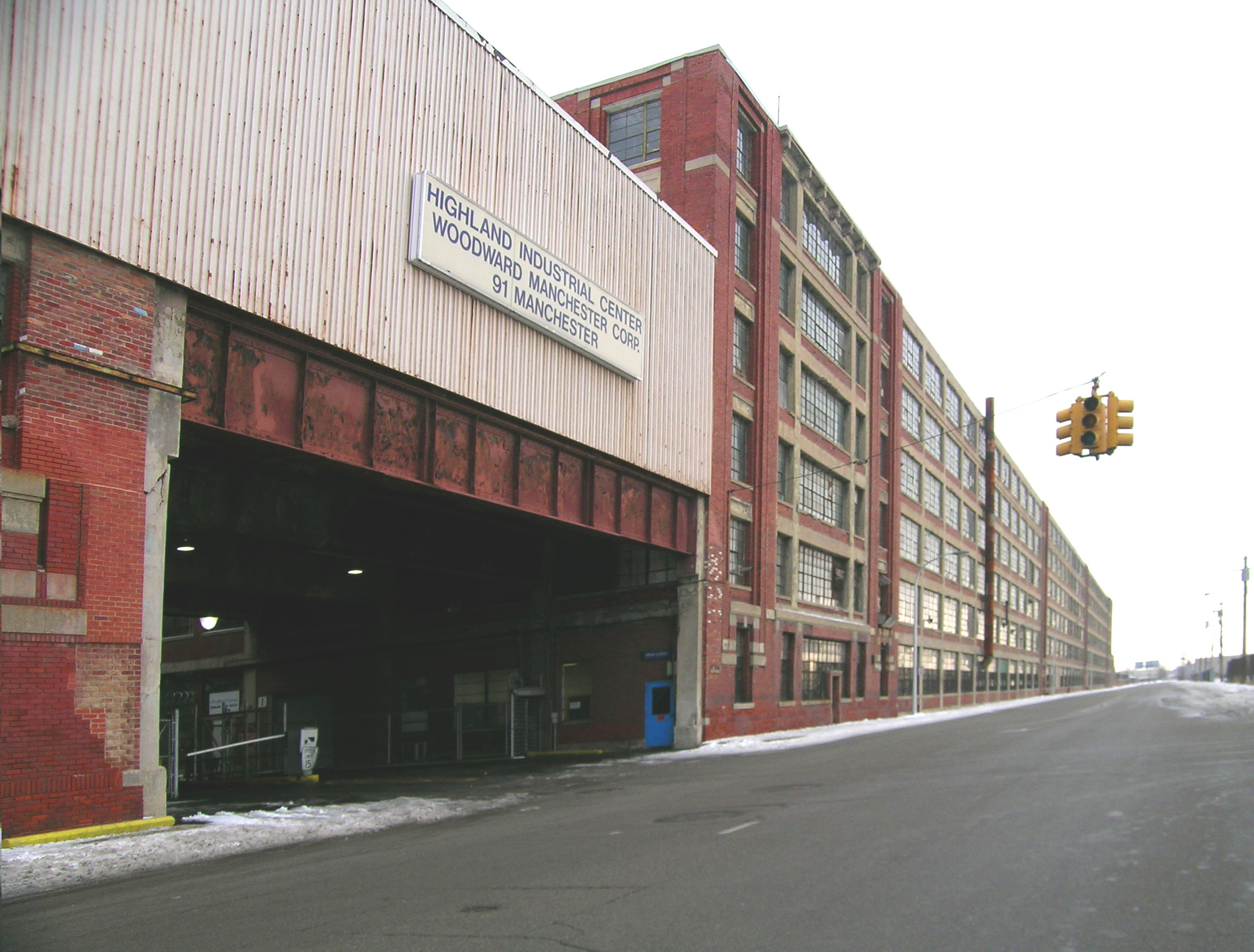
Highland Park Ford Plant
On January 5, 1914, Henry Ford made an announcement that shook the business world harder than any product launch could. Workers at his Highland Park plant would earn five dollars a day - more than double the prevailing $2.34 wage - and their shifts would drop from nine hours to eight. The news drew ten thousand job seekers to the factory gates the next morning, and the crowd grew so unruly that fire hoses were turned on them in freezing January temperatures. What drew the mob was not just the pay. It was the factory itself - a 102-acre complex on Woodward Avenue that had already transformed how things are made. The Highland Park Ford Plant was the first factory in history to assemble automobiles on a continuously moving line, a breakthrough that cut production time by nearly 90 percent and made the Model T affordable for the very workers who built it.
The Machine That Changed the World
Before Highland Park, building a car meant skilled workers stationed at fixed positions, with parts brought to them. Ford's third factory inverted that logic. Beginning in 1913, the chassis moved along a line while workers performed single, specialized tasks as it passed. The result was staggering: assembly time for a Model T dropped from 728 minutes to just 93. With division of labor, ruthless cost-cutting, and relentless process optimization, the Highland Park line drove the Model T's price from $700 in 1910 down to $350 by 1917, making automobile ownership possible for ordinary Americans. At the time of its opening, the Highland Park plant was the largest manufacturing facility in the world, and its spacious, efficient design became the template for industrial architecture worldwide. Albert Kahn, the architect behind the complex, pioneered the use of reinforced concrete and enormous windows that flooded the factory floor with natural light - earning the building the nickname 'the Crystal Palace.'
The Five-Dollar Day
Ford's wage announcement was not pure altruism - it was brilliant industrial strategy. Employee turnover at Highland Park had reached 31.9 percent in 1913, a crippling rate when the assembly line demanded reliability and consistency from every worker along its length. The five-dollar day cut turnover to 1.4 percent by 1915. Ford was offering nearly three times what other unskilled manufacturing plants paid, and the effect rippled through Detroit's economy and far beyond. Workers could now afford the very cars they assembled, creating a feedback loop of production and consumption that economists would later identify as a foundational principle of mass consumer capitalism. The move also attracted waves of new workers to Detroit, contributing to the city's explosive growth in the early twentieth century. Highland Park, the small enclave city entirely surrounded by Detroit where the plant stood, became a boomtown. Ford's combination of high wages, shorter shifts, and mass production efficiency was not just a business innovation - it was a social experiment that redefined the relationship between labor and industry.
Rise and Decline
As Ford's operations expanded, production shifted to the massive Rouge River complex in Dearborn by the late 1920s, though Highland Park continued as part of Ford's manufacturing and administrative network for decades. The plant transitioned to tractor production and various industrial uses through the mid-twentieth century. But by the 1980s, large sections were being dismantled - the boiler building, administrative offices, and major factory structures torn down piece by piece. Ford sold off its tractor interests between 1990 and 1993, ending that chapter of production. Through the 2010s, steel-framed warehouse buildings were scrapped. By 2011, Ford used portions of the remaining complex primarily to store documents and artifacts for the Henry Ford Museum. A Forman Mills clothing warehouse occupied another section starting in 2006. The trajectory mirrored Detroit's broader industrial arc - from world-changing innovation to quiet storage, the buildings slowly emptying as the industries they birthed moved elsewhere.
What Remains
The Highland Park Ford Plant was designated a National Historic Landmark in 1978, recognizing its singular role in industrial history. The Woodward Avenue Action Association pursued a purchase agreement for two of the complex's eight remaining buildings - a four-story, 40,000-square-foot sales office and an 8,000-square-foot executive garage - envisioning a center with interpretive displays on automotive history, a theater with continuous video, and a starting point for historical tours including the group's 'In the Steps of Henry' route. The former factory was converted into a mall named Model-T-Plaza, its architectural features designed to recall the building's origins. The remaining buildings W, X, Y, and Z at Highland Industrial Center still occupy about 1.3 million square feet. The plant even found new life on screen when director Shawn Levy used it as a filming location for the 2011 Disney film 'Real Steel.' Standing at the corner of Manchester Street and Woodward Avenue, the surviving structures carry the weight of a revolution - the place where the modern assembly line was born and the American middle class found its economic footing.
From the Air
Located at 42.41°N, 83.10°W in Highland Park, Michigan - a small independent city entirely enclosed by Detroit. The plant complex sits prominently along Woodward Avenue, the main north-south arterial visible from altitude. From the air, the remaining industrial buildings and the Model-T-Plaza are identifiable along the Manchester Street corridor. Detroit City Airport (KDET) is approximately 6 miles southeast. Detroit Metropolitan Wayne County Airport (KDTW) is about 20 miles southwest. The Ford Rouge Complex in Dearborn, where production eventually moved, is visible approximately 10 miles to the southwest.