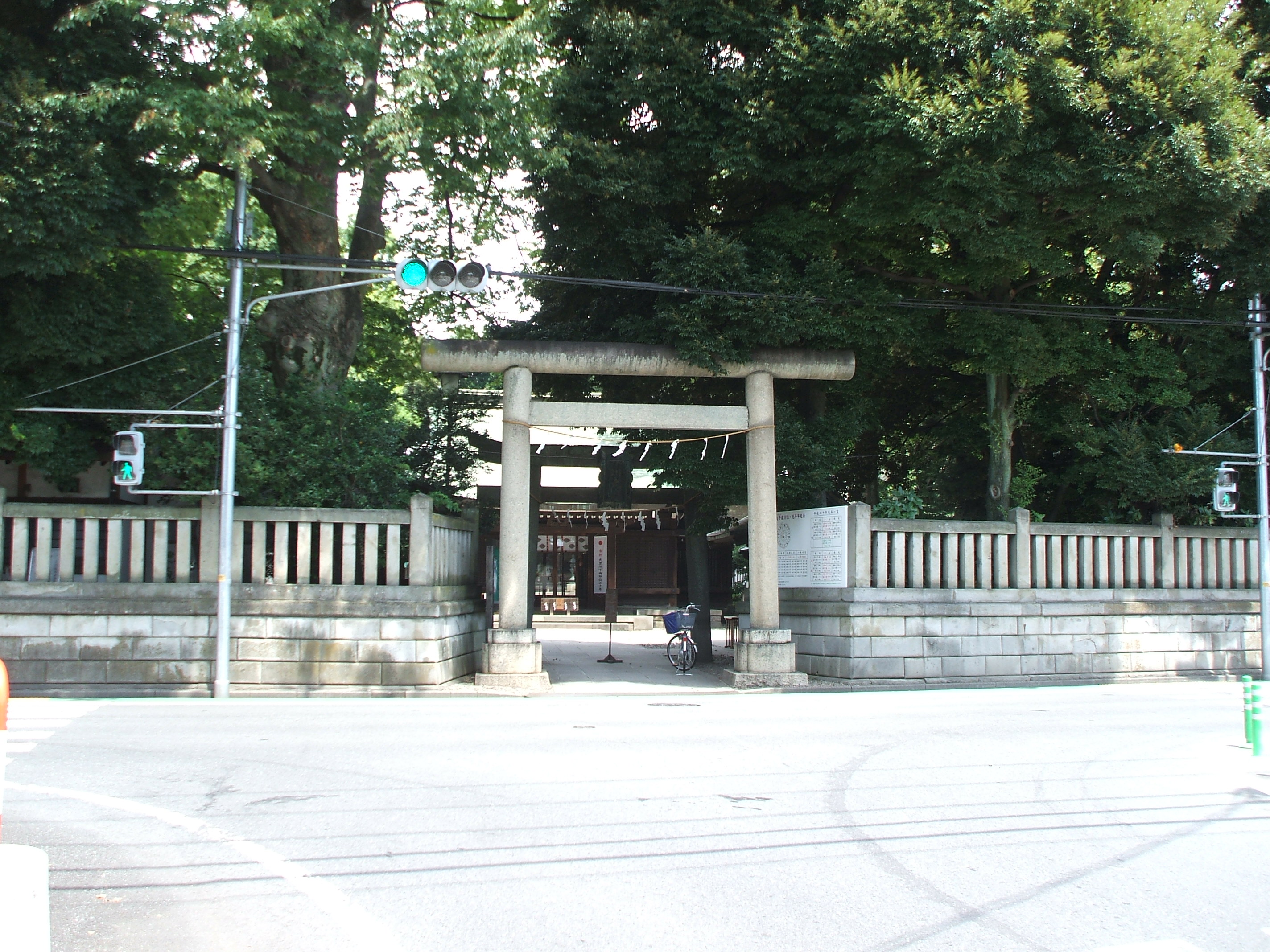
Hikawa Shrine: Where Two Thousand Wind Chimes Pray for Love
Every summer, two thousand glass wind chimes fill the grounds of Kawagoe Hikawa Shrine with a sound like rainfall made of crystal. Each one carries a small wooden plaque inscribed with a wish -- almost always for love. The shrine has been in the business of matchmaking since the year 541, when it was founded during the reign of Emperor Kinmei and dedicated to a divine family: the storm god Susanoo, his wife Kushinadahime, their son, and her parents. Two couples among five deities. The message was clear from the start. Nearly fifteen hundred years later, couples still line up at 8:08 on the eighth of each month -- eight being an auspicious number in Japanese tradition -- to pray for a good match. The number eight, written in kanji, fans outward at its base, a shape the Japanese read as widening fortune.
A Gate Tall Enough for a God's Family
The torii gate of Hikawa Shrine stands fifteen meters high, one of the tallest wooden torii in Japan, its bright vermilion frame commanding the approach like a doorway between worlds. Mounted at its center is a framed inscription bearing the calligraphy of Katsu Kaishu, the statesman who negotiated the bloodless surrender of Edo Castle in 1868 -- a man who understood the value of peaceful resolution, a fitting patron for a shrine devoted to harmonious union. Beyond the gate, the main hall displays elaborate wood carvings donated in 1849 by Matsudaira Naritsune, the lord of Kawagoe Domain. Every successive lord of the domain had worshipped here since 1457, when Ota Dokan built Kawagoe Castle nearby and the shrine became the spiritual guardian of the castle town. The carvings earned designation as an Important Cultural Asset of Saitama Prefecture, and visitors still pause to trace the intricate figures with their eyes before approaching the offering box.
Storm God, Gentle Protector
The theology of Hikawa Shrine explains its reputation. Susanoo-no-Mikoto is one of the most dramatic figures in Japanese mythology -- the tempestuous storm god who was banished from heaven, only to redeem himself by slaying the eight-headed serpent Yamata no Orochi to save the maiden Kushinadahime. Their love story is one of Japanese mythology's great romances: the wild god who calmed himself for the sake of another. The shrine enshrines them together with their son Onamuchi-no-Mikoto and Kushinadahime's parents, Ashinazuchi and Tenazuchi. Five deities, all family, including two married couples. Worshippers come seeking the same blessing these gods embody -- not passion alone, but the deeper fortune of enduring partnership. The shrine's formal name for this spiritual specialty is enmusubi, the tying of fated bonds.
The Corridor of a Thousand Wishes
The Wind Chime Festival, held from July through September, transforms the shrine into something close to a dream. Roughly two thousand handmade glass furin, each unique in color and shape, hang from wooden frames along a corridor stretching through the grounds. Thin wooden strips bearing visitors' handwritten wishes dangle from the bells, and when the summer wind stirs them, the combined chiming fills the air with a sound that is simultaneously delicate and overwhelming. By day, sunlight filters through the translucent glass in shifting colors. After sunset, soft illumination turns the corridor into a glowing tunnel, and the small river running through the shrine grounds -- called goshinsui, sacred water -- is lit to resemble the Milky Way. The festival draws around a hundred thousand visitors each summer and has become one of the most photographed scenes in the Kanto region, despite only beginning in 2014.
Floats Through the Castle Town
The shrine's most ancient celebration predates the wind chimes by centuries. The Reitaisai, held every October 14, is the shrine's grand festival and the spiritual origin of the Kawagoe Festival, which takes place the following weekend. During the festival, elaborately decorated floats called dashi parade through the old castle town streets of Kawagoe, each topped with a figure from Japanese mythology or history. When two floats meet at an intersection, they face each other for hikkawase -- a dramatic musical showdown where rival festival groups compete with drums, flutes, and chanting. The Kawagoe Festival earned designation as a National Important Intangible Folk Cultural Property and was inscribed on the UNESCO Intangible Cultural Heritage list, placing it among the most culturally significant festivals in Japan. The Great Purification ceremonies on July 31 and December 31 round out the ritual calendar, cleansing accumulated impurities before each new season.
From the Air
Located at 35.928°N, 139.489°E in the city of Kawagoe, Saitama Prefecture, roughly 30 kilometers northwest of central Tokyo. The shrine grounds sit in the northern part of Kawagoe's historic district. From 3,000-5,000 feet AGL, the shrine's large vermilion torii gate and forested grounds are visible amid the dense urban fabric. Iruma Air Base (RJTJ) lies approximately 8 kilometers to the northwest. Honda Airport, a private airfield near Okegawa, is roughly 10 kilometers to the northeast. Tokyo Haneda Airport (RJTT) is about 50 kilometers to the south-southeast. The Shingashi River runs nearby, providing a useful visual reference when navigating to Kawagoe's historic core.