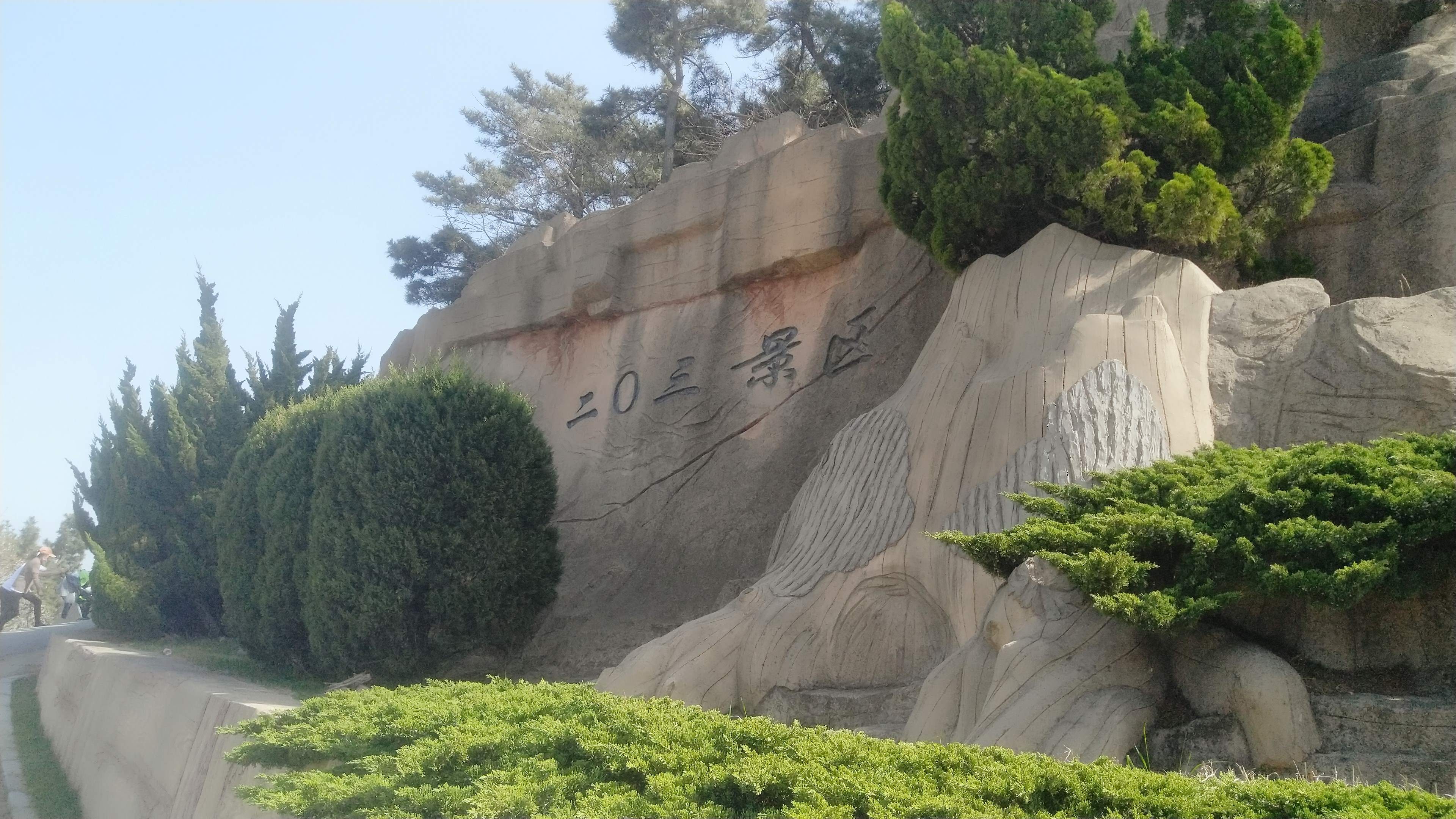
Hill 203
The hill is 203 meters tall. That is its entire name -- a surveyor's measurement, stripped of poetry, reduced to arithmetic. Yet this unremarkable elevation above the port of Lushunkou became, in the winter of 1904, the most fought-over piece of ground in the Russo-Japanese War. General Nogi Maresuke, whose own son died in the assault, gave it a different name afterward. Using kanji that share the same pronunciation as the numeral but carry a different meaning, he called it "Erlingshan" -- the Mountain Where Your Spirits Lie.
Why 203 Meters Mattered
Hill 203 commands a direct line of sight to the harbor of Lushunkou below. During the Siege of Port Arthur in 1904-1905, the Russian Pacific Fleet sheltered in that harbor, protected by heavy shore batteries and fortifications. If the Japanese could take Hill 203, they could direct artillery fire onto the Russian ships with devastating accuracy. The Russians understood this perfectly and fortified the hill accordingly. What followed was one of the fiercest close-quarters battles of the entire war, as Japanese infantry charged repeatedly into entrenched Russian positions. The hill changed hands multiple times as both sides fed reinforcements into a grinding battle of attrition on its slopes. The human cost was staggering on both sides, and the landscape itself was torn apart by shellfire until little remained but churned earth and shattered timber.
A Father's Grief in Verse
General Nogi Maresuke lost both of his sons in the Russo-Japanese War. The younger died in the fighting for Hill 203. After the battle, Nogi composed a poem for the hill that remains famous in Japan. By choosing kanji characters that could be read as the number 203 but carried the meaning "thee-spirits mountain," he transformed a topographic designation into an elegy. The poem honored the dead of both armies -- the Japanese soldiers who had stormed the slopes and the Russians who had defended them. Nogi's grief became a defining image of the war's cost, a reminder that the generals who ordered the assaults bore their own unbearable losses. After Japan's victory and the end of the Meiji era, Nogi and his wife died by ritual suicide on the day of Emperor Meiji's funeral in 1912.
From Battlefield to Blossom Garden
In 1993, the Japan-China Friendship Exchange Support Association for Children donated 1,300 cherry blossom trees to Dalian City. They were planted at the foot of Hill 203's south peak, on ground that had soaked up the blood of two armies nearly a century earlier. The plantings grew into an annual tradition. Since 1998, the "Cherry Blossom Journey" event has drawn visitors each spring, and since 2005 it has been elevated to the Dalian Lushun Cherry Blossom Festival. In April 2009, a new cherry blossom garden opened on the hill, covering more than 500,000 square meters with over 3,700 trees of 18 varieties. A stele at the site commemorates the Sino-Japanese children's friendship exchange. Where soldiers once fought hand-to-hand in freezing trenches, families now walk beneath canopies of pink and white petals -- a transformation that even Nogi, who understood both war and poetry, might have found fitting.
From the Air
Located at 38.83N, 121.19E, Hill 203 rises 203 meters above sea level west of central Lushunkou. From the air, the cherry blossom gardens are visible in spring as a pink mass on the hillside. Dalian Zhoushuizi International Airport (ZYTL) is approximately 40 km to the northeast. The hill overlooks Lushun harbor to the east, which is clearly visible from moderate altitude. Fly at 1,500-3,000 ft for the best view of the hill's relationship to the harbor below.