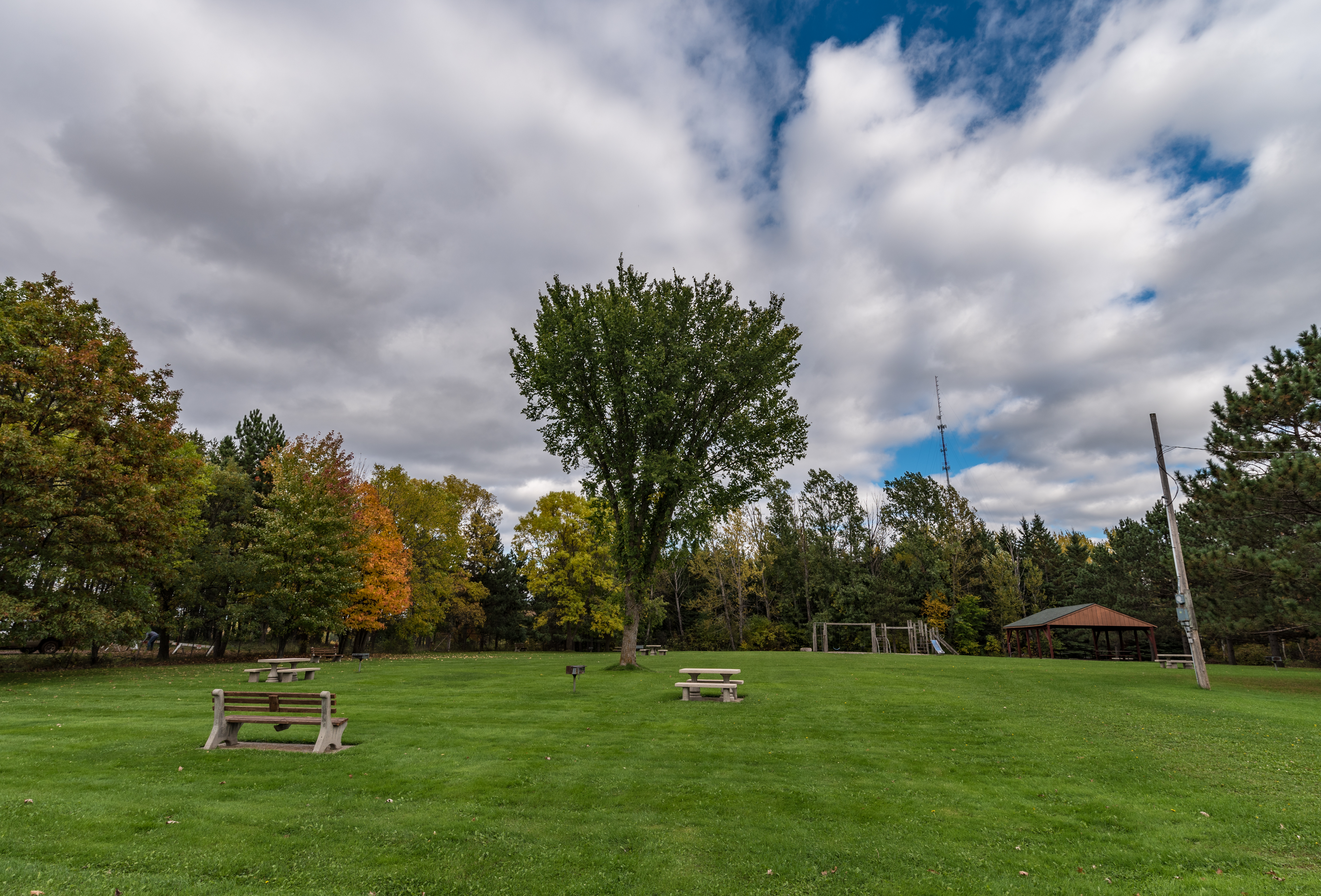
Hill-Annex Mine State Park
The Iron Range Resources and Rehabilitation Board bought the Hill-Annex Mine for one dollar. That price made a kind of sense: the mine had been stripped, the ore exhausted, the equipment silent. What the board received was a colossal hole in the earth near Calumet, Minnesota, ringed by weathered buildings dating to the early twentieth century. They turned the community club into a museum and started giving tours. The Minnesota Legislature made it a state park in 1988. Then, in 2024, the Department of Natural Resources closed the park permanently -- because the iron ore was not exhausted after all, and mining would return to Hill-Annex. A place that became a park because a mine died is now dying as a park so the mine can live again.
Sixty-Three Million Tons
The land was first leased for mineral exploration in 1892, part of the frenzy that followed the discovery of iron ore across the Mesabi Range in northeastern Minnesota. A second lease came in 1900, and active mining began in 1913. Over its operational life, Hill-Annex produced 63 million tons of iron ore, making it the sixth largest producer in the state. The open pit deepened year by year, carving through ancient rock while generations of miners worked the benches above. Around the rim, the infrastructure of extraction took shape: an office building and laboratory around 1930, a maintenance shop from the same era, a truck repair shop and wooden water tower dating to 1919, and a community club built in 1915 where miners and their families gathered. The former mine was listed on the National Register of Historic Places in 1986 as a historic district.
Raptors in the Rock
Mining stripped away more than iron ore. It exposed the Coleraine Formation, a Cretaceous-era geological deposit found only in Minnesota. In 2014, the Hill Annex Paleontology Project began as a volunteer-led study through the Science Museum of Minnesota, later moving to the Minnesota Discovery Center in Chisholm. The results were remarkable. In 2015, researchers found the end piece of a toe bone from a dromaeosaur -- a raptor roughly five to six feet tall that lived during the Late Cretaceous Period. It was only the second piece of dinosaur remains ever found in the state of Minnesota. The pit also yielded ammonites, crocodile remains, and various species of fish, sharks, turtles, crabs, mollusks, snails, and clams. An industrial wound in the landscape had become a window into a time when this part of Minnesota lay beneath a shallow sea, teeming with life that predated the iron ore by tens of millions of years.
Nature Reclaims a Pit
After mining ceased and the site became a park, conservationists began adding vegetation to rehabilitate the scarred landscape. The effort paid off. Grouse, deer, coyotes, timber wolves, and black bears took up residence in the recovering terrain. Raptors returned too -- not the Cretaceous kind, but living ones: eagles, peregrine falcons, and hawks circling above the old pit. The juxtaposition was striking: a place gutted by industrial extraction becoming habitat for some of Minnesota's most iconic wildlife. The Iron Range is full of such transformations, where abandoned pits fill with water to become swimming holes and forests slowly reclaim the spoil piles. Hill-Annex was the version of that story with a state park sign out front.
The Park That Went Back to Work
The Minnesota Department of Natural Resources took over the site in 1991, but the arrangement always carried an asterisk. When MNDNR assumed responsibility, they noted the transfer was "consistent with the historical expectation that mining would return to this site." In 2024, that expectation became reality. The DNR permanently closed Hill-Annex Mine State Park, clearing the way for iron ore extraction to resume. The decision reflected a tension woven through the entire Mesabi Range: the same geology that makes these places historically fascinating also makes them economically valuable. Hill-Annex served as both museum and monument for decades, its historic buildings and fossil beds drawing visitors into the story of Minnesota's iron heritage. Now the pit will deepen again, the trucks will roll, and the fossils still embedded in the Coleraine Formation will either be carefully salvaged or crushed into aggregate.
From the Air
Located at 47.3344°N, 93.2725°W on the Mesabi Iron Range in Itasca County, Minnesota. The open pit is visible from moderate altitude as a distinctive scar in the forested landscape, north of the small town of Calumet. The Mesabi Range runs roughly southwest to northeast; other open-pit mines are visible along the corridor. Nearest significant airports include Range Regional Airport (KHIB) in Hibbing approximately 15 miles to the northeast and Chisholm-Hibbing Airport. Grand Rapids/Itasca County Airport (KGPZ) lies to the west. Terrain is rolling Iron Range topography at approximately 1,400 feet MSL.