Himeji
They call it the White Heron. Himeji Castle rises above the city like a bird poised for flight, its white plastered walls and sweeping rooflines layered against the sky in a composition so perfect it seems less built than sculpted. While fire, earthquakes, and war leveled nearly every other original castle in Japan, Himeji's survived them all. The castle that stands today is essentially the same structure completed in 1609, making it one of the largest and oldest intact wooden buildings on Earth.
A Fortress Disguised as Poetry
Himeji Castle's beauty is deliberate misdirection. Behind those elegant white walls lies one of the most sophisticated defensive systems ever designed. The approach to the main keep winds through a labyrinth of gates, dead ends, and narrow passages designed to slow and confuse attackers. Openings in the walls, shaped like circles, triangles, and rectangles, are not decorative flourishes but firing ports for archers and gunners. The castle's 83 rooms sprawl across multiple connected buildings, and visitors today still get lost navigating the same corridors that would have trapped invaders four centuries ago. Built in the late 1500s and expanded by Ikeda Terumasa after the Battle of Sekigahara in 1600, the castle took nearly a decade to reach its current form. Its survival through centuries of conflict is partly luck and partly a testament to the fortress's sheer scale, which made demolition impractical even during the Meiji Restoration when hundreds of other castles were torn down.
The Mountain Temple Above the Clouds
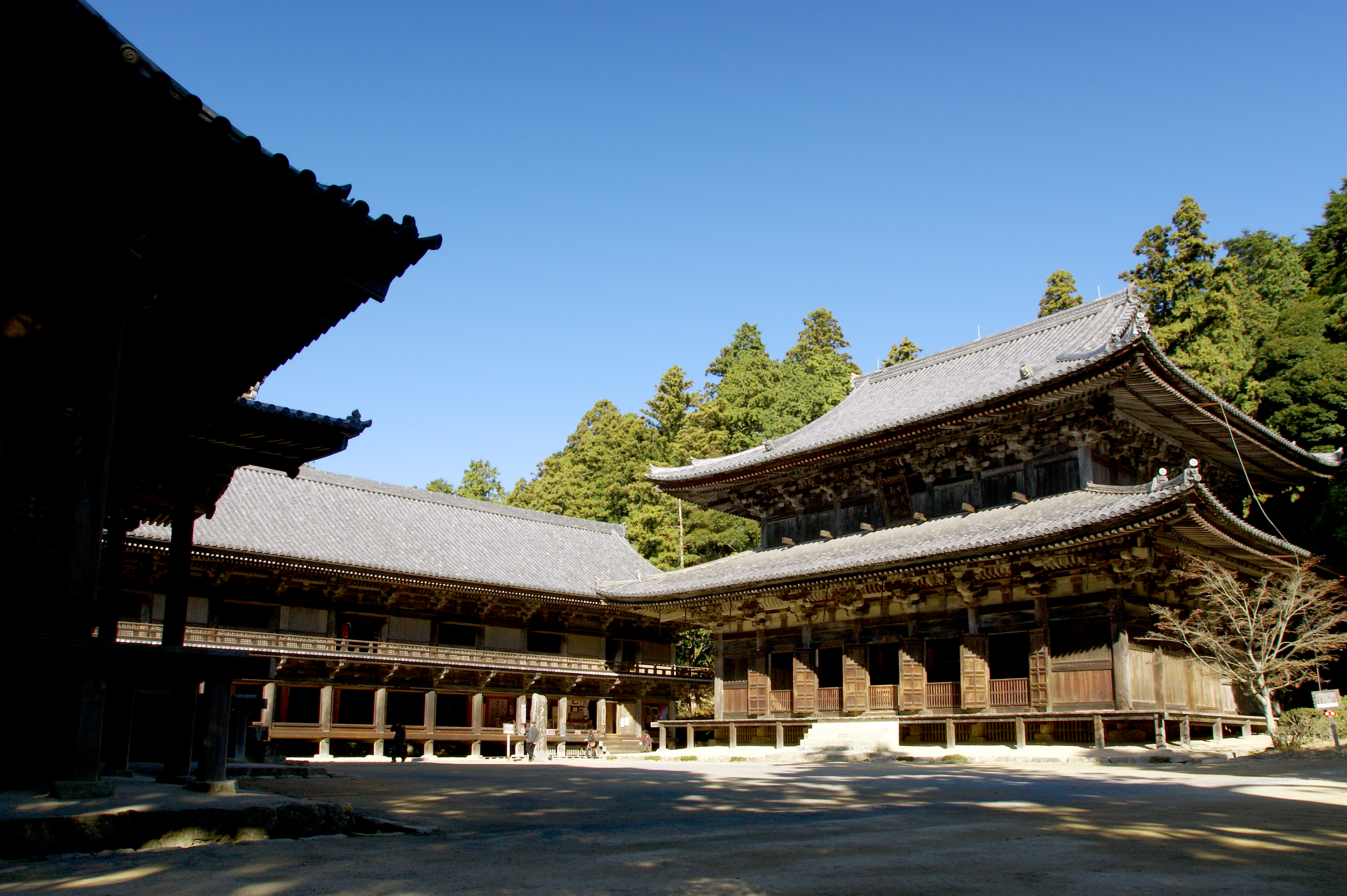
Himeji is not just a castle town. Take a bus to the edge of the city and ride a ropeway up Mount Shosha, and the urban landscape gives way to a thousand-year-old temple complex hidden in ancient cedar forest. Engyoji Temple, founded in 966, spreads across the mountainside in a series of halls connected by forest paths. The temple gained unexpected global fame when it served as a filming location for The Last Samurai, and props from the production can still be found at the JR station information center downtown. But long before Hollywood arrived, Engyoji was a center of learning and worship. Its Maniden hall, perched on a hillside supported by massive wooden stilts, offers views down through the forest canopy that make the climb worthwhile even for visitors with no particular interest in Buddhist architecture.
Cherry Blossoms and War Drums
Every spring, roughly a thousand cherry trees surrounding the castle erupt into bloom, and Himeji stages one of the finest hanami viewing parties in western Japan. Koto melodies and taiko drumming fill the grounds around the second Sunday of April, as families spread blankets beneath cascading petals. But the city's festival calendar runs deeper than cherry season. The Oshiro Matsuri in early August sends a parade down the main boulevard to the castle gates, where a stage hosts performances that blur the line between tradition and contemporary dance. In autumn, moon-viewing ceremonies near the harvest moon feature classical plays performed under lantern light. And during the Nada Matsuri, one of the region's most spirited autumn festivals, massive portable shrines are carried through the streets by teams of chanting bearers, a spectacle of controlled chaos that reveals the city's working-class roots beneath its elegant castle-town surface.
Living in the Castle's Shadow
Otemae-dori, the broad boulevard connecting Himeji Station to the castle, functions as the city's spine. A fifteen-minute walk along it takes visitors past the Miyuki-dori shopping arcade, where white leather goods and iron-tongued wind chimes make surprisingly refined souvenirs. Kokoen Garden, a reconstruction of nine distinct Edo-period gardens on the former site of the castle's western residence, offers a quieter counterpoint to the castle's grandeur. The city sits along the Sanyo Shinkansen corridor, reachable from Osaka in under an hour by bullet train, yet it retains the feel of a provincial capital rather than a satellite of the Kansai megalopolis. From the elevated shinkansen platform, passengers can catch a glimpse of the castle between buildings, the same view that has drawn travelers off the train and into the city for decades.
From the Air
Located at 34.82°N, 134.69°E in western Kansai, Japan. Himeji Castle is visible from altitude as a distinctive white structure on a hill in the center of the city. Nearest airports include Kobe Airport (RJBE) 65 km southeast and Osaka Itami (RJOO) 85 km east. The castle complex and its surrounding moats are identifiable landmarks from medium altitude.