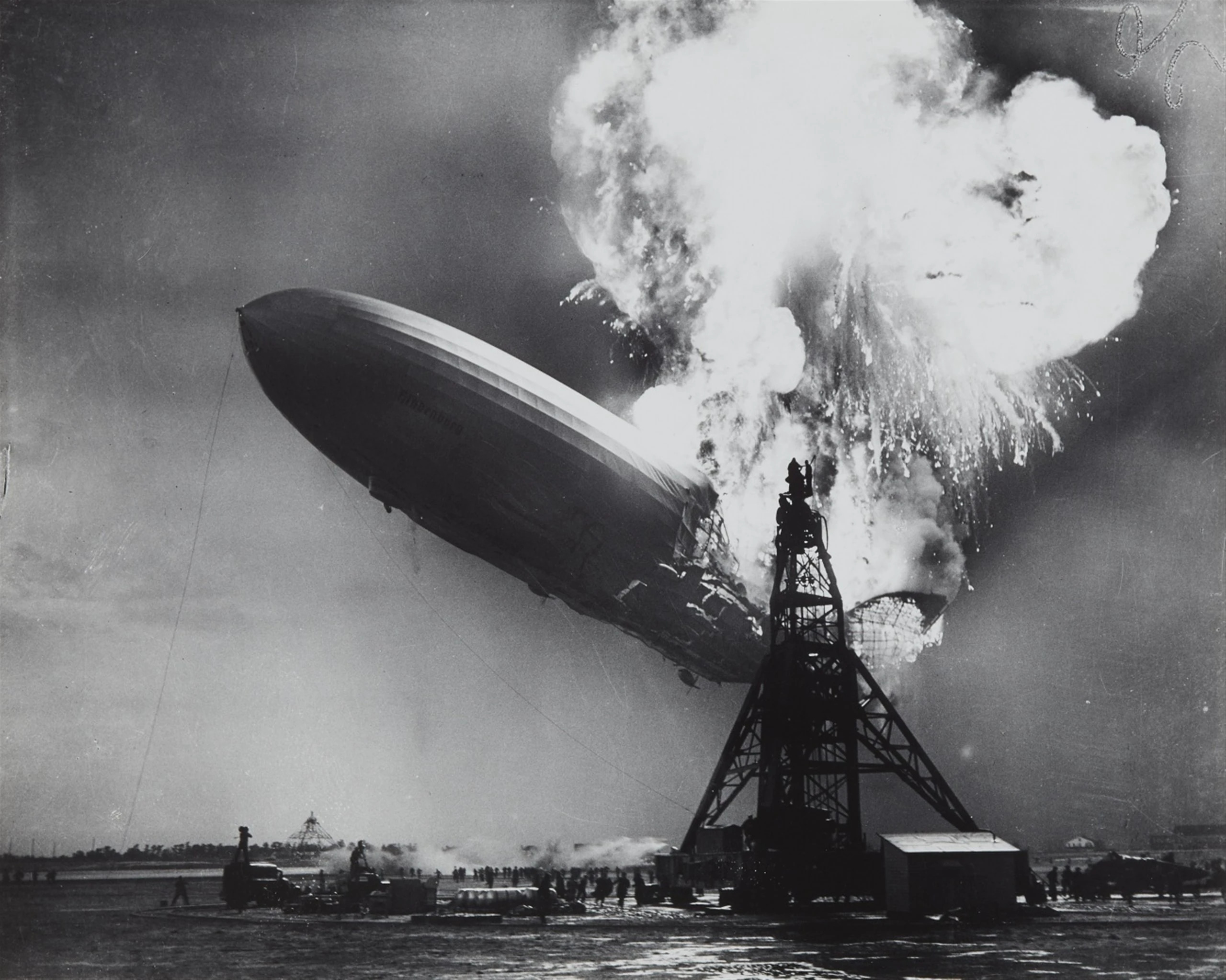
The Hindenburg Disaster: 'Oh, the Humanity!'
At 7:25 PM on May 6, 1937, the German airship Hindenburg approached its mooring mast at Lakehurst Naval Air Station in New Jersey after a three-day crossing from Frankfurt. Newsreel cameras were rolling. Radio reporter Herbert Morrison was describing the scene. Then the hydrogen that kept the 804-foot airship aloft ignited. In 34 seconds, the Hindenburg was destroyed - 36 of the 97 people aboard died, along with one crewman on the ground. Morrison's anguished cry - 'Oh, the humanity!' - became one of the most famous moments in broadcast history. The disaster, captured on film and audio, ended the age of the passenger airship forever.
The Ship
The Hindenburg was the largest aircraft ever built - 804 feet long, kept aloft by 7 million cubic feet of hydrogen gas. It was a flying luxury liner, carrying passengers across the Atlantic in two days of elegant comfort. Passengers dined on fine china, slept in private cabins, and walked a promenade with views of the ocean below.
Germany had operated airships safely for decades. The Hindenburg's sister ship, the Graf Zeppelin, had made 590 flights without a single fatality. The Americans used non-flammable helium, but the U.S. refused to export it to Nazi Germany. Germany had to use hydrogen - and hydrogen burns.
The Crossing
The Hindenburg departed Frankfurt on May 3, 1937, with 36 passengers and 61 crew aboard. The crossing was routine but delayed by headwinds. By May 6, the airship was approaching Lakehurst, where thunderstorms had forced it to wait offshore.
By evening, the weather had cleared enough for landing. The ship approached the mooring mast at about 200 feet. Ground crew waited to grab the landing lines. Newsreel cameras were set up - Hindenburg arrivals were glamorous news events. Herbert Morrison of WLS Chicago was recording a radio commentary. Everything was normal. Then, at 7:25 PM, it wasn't.
The Fire
Witnesses saw a small flame near the top rear of the ship, near the vertical fin. Within seconds, the entire tail section was engulfed. The fire spread forward at incredible speed. The Hindenburg's tail dropped as hydrogen vented. The nose rose, then the entire ship fell to earth, consumed by flames that reached 2,000°F.
The disaster took 34 seconds from first flame to complete destruction. Passengers and crew leaped from windows. Some survived falls of over 100 feet because burning debris had softened the ground. Others burned in the wreckage. Remarkably, 62 of the 97 people aboard survived.
The Voice
Herbert Morrison's radio commentary became the disaster's permanent audio monument. 'It's burst into flames!' he cried, his voice cracking with emotion. 'Get out of the way! Get out of the way!... Oh, the humanity, and all the passengers screaming around here!'
Morrison's broadcast wasn't live - it was recorded and played the next day. But his anguished voice, combined with newsreel footage, created one of the first true multimedia news events. People could see and hear the disaster as it happened. The Hindenburg became the first catastrophe of the media age.
The End
The cause of the fire was never definitively established. Static electricity igniting hydrogen is the most likely explanation, though sabotage was suspected at the time. The flammable dope coating the fabric may have contributed to the fire's rapid spread.
The disaster ended passenger airship travel. Plans for American airship routes using helium were abandoned. Within months, Pan Am was operating flying boats across the Atlantic. Within years, propeller aircraft would cross oceans routinely. The Hindenburg's destruction marked the end of an era and the beginning of modern aviation. The great airships were never seen again.
From the Air
The Hindenburg disaster occurred at Lakehurst Naval Air Station (40.03N, 74.35W) in central New Jersey. Lakehurst Maxfield Field (KNEL) is the same location. Newark Liberty (KEWR) is 65km north. The terrain is flat coastal plain pine barrens. A monument marks the crash site. Joint Base McGuire-Dix-Lakehurst now encompasses the area.