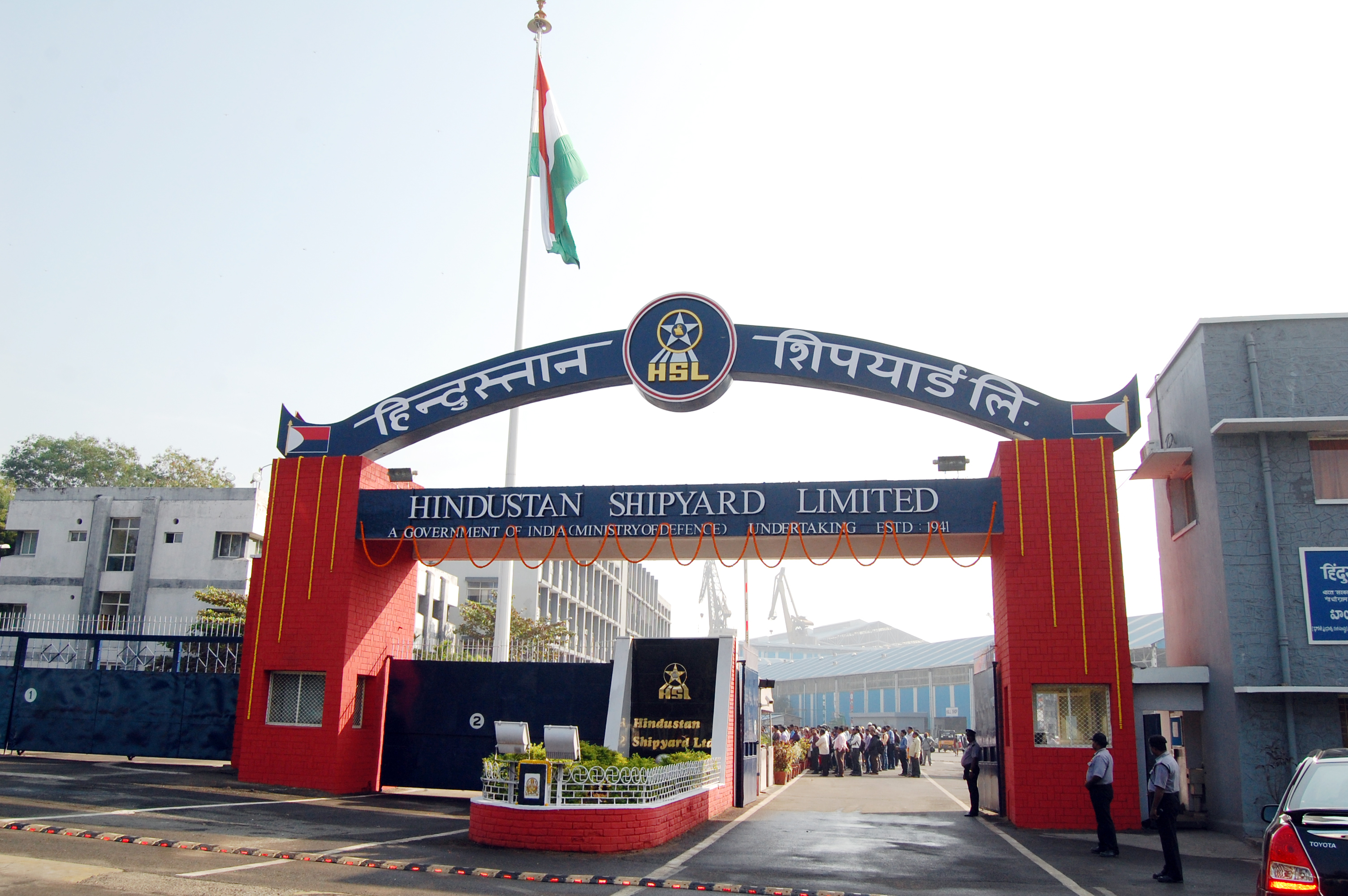
Hindustan Shipyard
In November 1940, while the world was at war and India was still a British colony, an industrialist named Walchand Hirachand took possession of a stretch of coastal land at Visakhapatnam. His ambition was straightforward and radical: India would build its own ships. The Scindia Shipyard, as he named it after the Scindia Steam Navigation Company he had co-founded, was not the first Indian shipyard -- but it would become the most symbolically important. When independence came in 1947, the yard was ready. The following year, the first ship constructed entirely in independent India slid down the ways into the Bay of Bengal. Jawaharlal Nehru himself came to Visakhapatnam to launch her. They named her Jal Usha -- Dawn of the Waters.
From Private Vision to National Asset
Walchand Hirachand chose Visakhapatnam for practical reasons: a natural deep-water harbour on the east coast, sheltered enough for shipbuilding, accessible enough for trade. He built the yard as a private enterprise with partners Narottam Morarjee and Kilachand Devchand, all three families present at the 1948 launch ceremony that marked a new era for Indian manufacturing. Walchand died in 1953, and his heirs ran the yard successfully for another eight years. Then, in 1961, the Indian government nationalized it, renaming it Hindustan Shipyard Limited. The conversion from private ambition to public institution was a common story in Nehruvian India -- the state absorbing what private capital had started, with the conviction that strategic industries belonged to the nation.
Building the Fleet
Over the decades, Hindustan Shipyard became a workhorse of Indian maritime capability. By 2009, the yard had built over 192 vessels and repaired nearly 2,000 more. The list reads like a catalogue of India's naval and commercial needs: bulk carriers, offshore patrol vessels, survey ships, drill ships, offshore platforms, and support vessels of every description. Notable builds include the ocean surveillance ship INS Dhruv and the diving support vessel INS Nistar. The yard's capacity -- vessels up to 80,000 deadweight tonnage -- makes it India's second-largest shipyard, behind only Cochin Shipyard in Kerala. Its covered building dock, three slipways, dry dock, and fitting-out jetty give it the infrastructure to handle everything from new construction to submarine repair and retrofitting.
A Difficult Middle Age
For all its symbolic importance, Hindustan Shipyard spent much of its later history struggling. In 2010, the government transferred HSL from the Ministry of Shipping to the Ministry of Defence, acknowledging that the yard's future lay in military and strategic vessels rather than commercial competition. The shift reflected a broader reality: Indian public-sector shipyards faced stiff competition from yards in South Korea, China, and Japan that built commercial vessels faster and cheaper. For nearly four decades, HSL operated at narrow losses, its balance sheet a study in survival more than prosperity. The turnaround, when it finally came, was dramatic. In 2022, HSL recorded its highest value of production in history -- 613 crore rupees from shipbuilding alone. By April 2025, the yard achieved a profitable turnover for the first time in close to forty years.
The View from the Water
Today Hindustan Shipyard sits compact along the Visakhapatnam waterfront, its cranes and slipways visible against the harbour backdrop. Plasma cutting machines slice steel in covered workshops. Vessels in various stages of completion line the fitting-out jetty. It is not a glamorous facility -- shipyards rarely are -- but it carries the weight of what it represents: India's oldest continuously operating shipyard, a place where the country's industrial ambition first met the sea. Walchand Hirachand's original vision -- that India could and should build its own ships -- has been validated many times over, in 192 hulls and counting. The yard now aims for miniratna status, a government designation that would grant it greater financial autonomy. Eighty-five years after a private industrialist surveyed this coast and decided to build, the shipyard endures.
From the Air
Located at 17.69N, 83.28E on the Visakhapatnam waterfront along the Bay of Bengal. The shipyard's cranes, slipways, and covered building dock are clearly visible from the air, positioned along the inner harbour. Visakhapatnam Airport (ICAO: VOVZ) is approximately 10 km to the northwest. At 2,000-4,000 feet, the entire harbour complex and shipyard infrastructure are laid out below. The Eastern Naval Command headquarters sits nearby to the north.