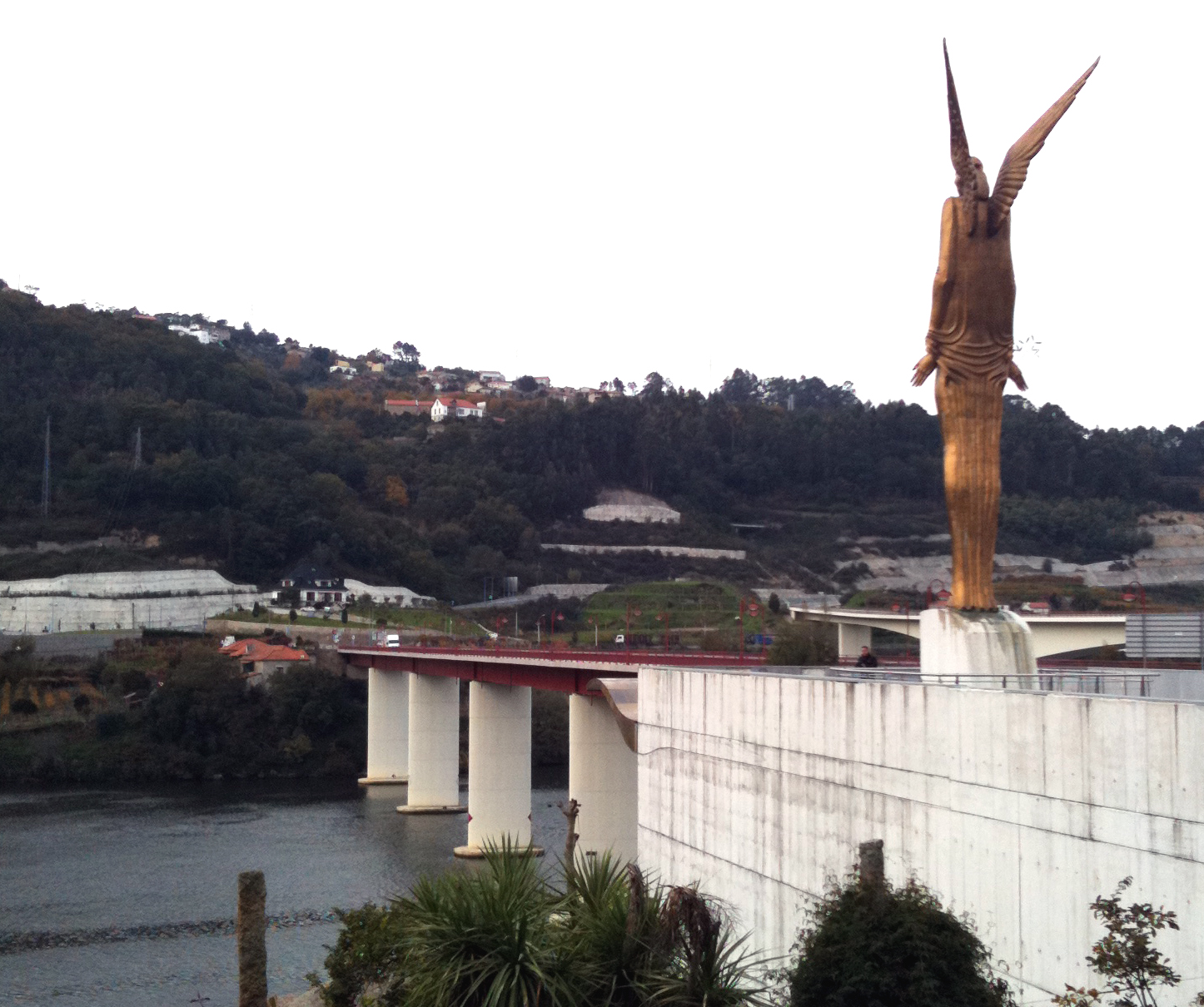
Hintze Ribeiro Bridge Collapse
Two months before the bridge fell, the people who crossed it every day told anyone who would listen that it was going to collapse. In January 2001, residents of Castelo de Paiva and Entre-os-Rios demonstrated against the deteriorating condition of the Hintze Ribeiro Bridge, a 114-year-old structure spanning the Douro River in northern Portugal. They demanded repairs, better road access, some acknowledgment that the bridge they depended on was visibly degrading. Nobody acted in time. On the evening of 4 March 2001, after days of heavy rain, one of the bridge's pillars gave way. Part of the deck collapsed into the swollen river, taking a bus and three cars with it. Fifty-nine people died.
A Foundation of Sand
The Hintze Ribeiro Bridge was built between 1884 and 1886, named after Ernesto Hintze Ribeiro, who was President of the Council of Ministers when it was constructed. The bridge rested on six pillars, but its design carried a fatal weakness: two of those pillars were not anchored to bedrock but instead sat on sand deposits in the riverbed. For decades, this was sufficient. Then, beginning in the 1970s, industrial sand extraction -- dredging -- intensified in the Douro. The sand deposits around the vulnerable pillars began eroding, undermined not by the river's natural flow but by human activity upstream and at the site itself. A 1982 survey documented that the sand deposits had almost disappeared. Yet the bridge remained in service for another nineteen years, its foundations progressively weakened by the very industry that operated beneath it.
The Evening of 4 March
Heavy rains had swollen the Douro for days. The bridge scour -- the erosion of material around bridge foundations by moving water -- had been a slow-motion crisis for decades, but the flooding of early March 2001 delivered the final blow. On the evening of 4 March, a pillar undermined by years of sand extraction and days of flooding gave way. The deck above it dropped into the river. A bus carrying passengers and three cars were on the span when it fell. Firefighters from Entre-os-Rios launched search and rescue operations within minutes, but the Douro in flood is merciless. The river's powerful current carried victims and wreckage downstream, scattering debris across thirty kilometers of waterway before reaching the Atlantic Ocean.
Fifty-Nine Names
The death toll reached 59 people, but the agony of the disaster extended far beyond that number. Of those 59, only 23 bodies were recovered in the immediate area. The Douro's current carried the rest far downstream. Bodies were found inside retrieved vehicles, on beaches along northern Portugal's coast, and even in the Spanish region of Galicia. The last body was discovered on 22 May 2001, seventy-nine days after the collapse. Thirty-six of the victims were never recovered at all. For their families, the river became both grave and torturer -- the knowledge that their loved ones were somewhere in the Atlantic, unreachable, unrecoverable. Portugal declared two days of national mourning. Within twenty-four hours of the disaster, the Minister of Social Infrastructure, Jorge Coelho, resigned, claiming political responsibility for the failure to maintain the bridge.
The Bridge After the Bridge
The collapse severed the only direct link between Castelo de Paiva in the Aveiro District and Entre-os-Rios in the Porto District. Residents who had crossed the Douro in minutes now faced a seventy-kilometer detour to reach Porto. Dismantlement of the ruined bridge began in June 2001. A new bridge, built seven meters upstream of the original, was inaugurated in May 2002 -- also named the Hintze Ribeiro Bridge, preserving the connection to history while replacing the structure that history had condemned. Beside the new bridge stands a memorial: a concrete plinth inscribed with all fifty-nine names, surmounted by a twelve-meter bronze angel. The crypt and statue together rise twenty meters above the riverbank, visible to every car that crosses the water where so many died. The memorial belongs to the families' association, a reminder that behind every infrastructure failure are people who demanded better and were not heard.
From the Air
Located at 41.08N, 8.30W where the Douro River flows between Castelo de Paiva and Entre-os-Rios in northern Portugal. The new Hintze Ribeiro Bridge and memorial statue are visible from moderate altitude. The Douro valley is steep-sided here, with the river winding through forested hills. Nearest major airport is Francisco Sa Carneiro (LPPR / Porto) approximately 40 km to the west. The Douro River valley is a major visual navigation reference, running roughly east-west. Terrain elevations in the area range from 50-300 m.