Hiraga Gennai: The Man Who Wrote About Farting and Built Japan's First Electrostatic Generator
One of Hiraga Gennai's most celebrated literary works is a satirical essay called On Farting, in which the author stages a vigorous debate between himself and a Confucian samurai over whether a street performer's ability to make music with his flatulence qualifies as art. The samurai considers it an offense against propriety. Gennai considers it genius. That argument -- between rigid orthodoxy and wild creative freedom -- captures the man who wrote it. Born in 1729 in Sanuki Province on the island of Shikoku, Gennai was a low-ranking samurai's son who became a pharmacologist, a student of Dutch learning, an inventor, a mining prospector, a ceramicist, a painter, a novelist, and the builder of Japan's first electrostatic generator. He died in a prison cell in 1780, possibly of tetanus, after allegedly killing two carpenters in a drunken rage. His friend Sugita Genpaku was denied permission to hold a funeral. Two and a half centuries later, Gennai's grave in Tokyo's Taito ward is a National Historic Site, and the character of Gennai has appeared in everything from Star Trek to Digimon.
From Herb Gardens to Dutch Science
Gennai began studying herbalism at 12, apprenticed to a physician in the Takamatsu Domain where his family served as low-ranking samurai supplementing their income with farming. By 18, he had been offered an official position tending the local herb garden. In 1748, his father died and he became head of the family. Four years later, the domain sent him to Nagasaki -- one of the only Japanese ports where foreign ships were permitted to dock -- to study Western medicine. The Dutch East India Company and Chinese traders in Nagasaki introduced Gennai to European pharmaceutical techniques, surgery, and ceramics. He handed his house to his sister's husband and moved to Osaka and Kyoto to study herbal medicine under Toda Kyokuzan, then arrived in Edo in 1757. There, under the mentorship of Tamura Ransui, he became the first to successfully cultivate ginseng domestically, ending Japan's reliance on expensive Chinese imports of the medicinal herb.
The Erekiteru and the Asbestos Cloth
Gennai's scientific curiosity had no single lane. In Edo, he prospected for minerals, wove asbestos into fireproof cloth he called Kakanpu, built a thermometer he named the Kandankei, and constructed his most famous invention: the Erekiteru, an electrostatic generator modeled on Dutch scientific instruments he had encountered in Nagasaki. In 1761, he discovered iron deposits in Izu Province and brokered a mining venture. He held exhibitions of his inventions that drew the attention of Tanuma Okitsugu, a senior official in the Tokugawa shogunate, and the prominent physicians Sugita Genpaku and Nakagawa Jun'an. In 1766, he helped the Kawagoe Domain develop an asbestos mine in what is now Chichibu, Saitama. He studied techniques for improving charcoal furnace efficiency and river boat construction. In 1772, on a trip to Nagasaki, he uncovered a store of clay and petitioned the government to let him manufacture pottery at scale. The resulting "Gennai ware" -- brilliantly colored earthenware following the Kochi ware tradition of his native Shikoku -- still bears his name.
Satire, Scandal, and the King of Hell
Gennai's literary output was as restless as his scientific career. He wrote satirical novels in the kokkeibon and dangibon genres, and authored two guidebooks to the male prostitutes of Edo. His novel Rootless Grass imagines Enma, the King of Hell, falling in love with an onnagata -- a male kabuki actor who plays female roles. Enma sends a kappa to kidnap the actor, but the kappa falls in love with him instead and brings back a less attractive substitute. When Enma ventures into the mortal world to fetch the actor himself, he is defeated by the hero actor Ichikawa Raizo I. The story ends by revealing itself as Raizo's dream, foretelling his death. In A Lousy Journey of Love, two lice traverse a boy's body in an absurdist picaresque. In On Farting, Gennai used a debate over a professional flatulist's act to expose the arbitrary boundary between high and low culture in Tokugawa society -- a theme that ran through all his work.
A Mysterious Death and Two Graves
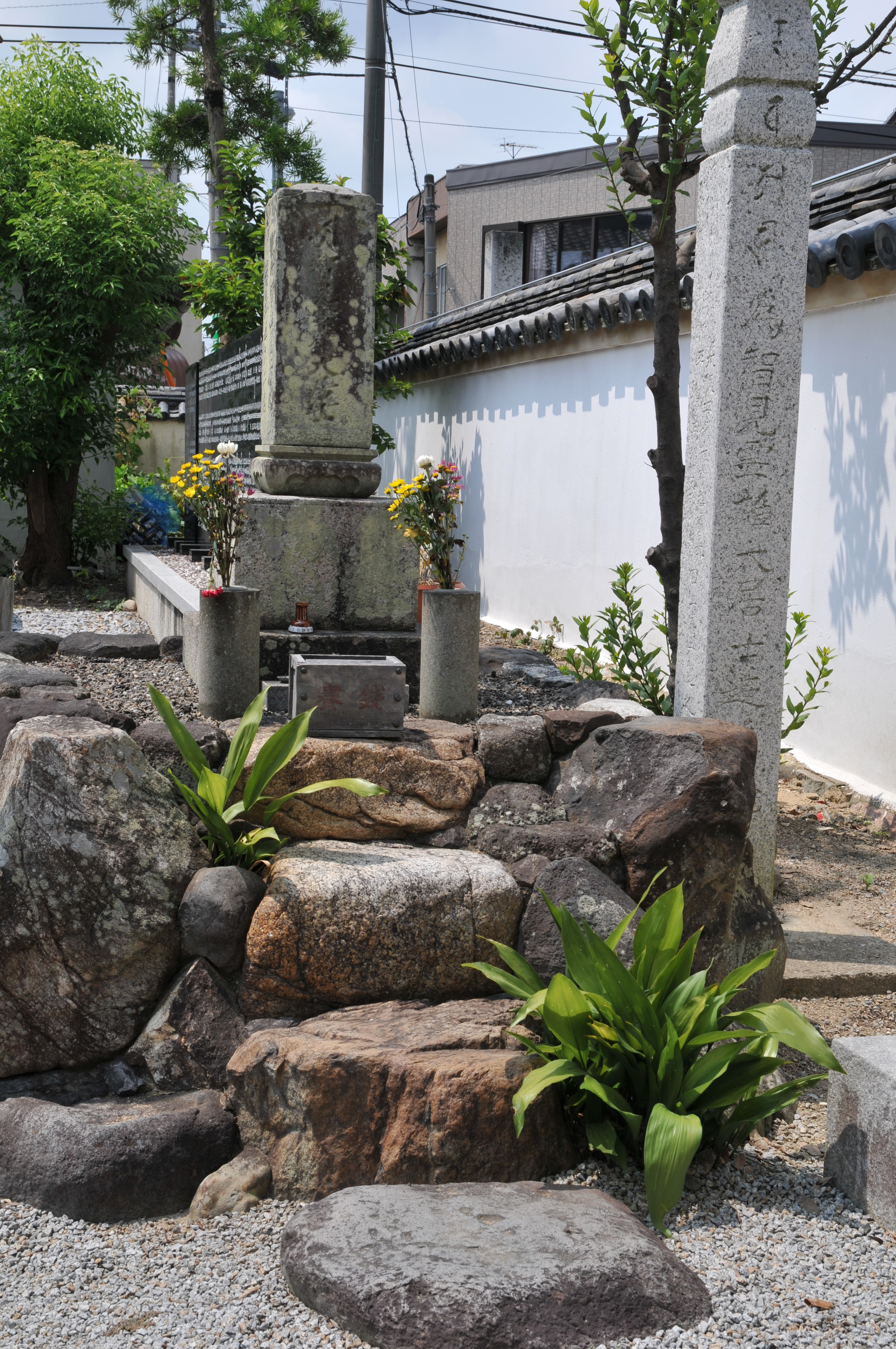
In 1773, Gennai traveled to Kubota Domain at the invitation of Lord Satake Yoshiatsu to teach mining engineering. While in Dewa Province, he also gave lessons in Western oil painting. By the summer of 1779, he was back in Edo, overseeing repairs to a daimyo mansion. Then the story turns dark. The prevailing account holds that Gennai killed two carpenters on the project in a drunken rage after they accused him of stealing the building plans. He was arrested and died in prison on January 24, 1780, reportedly of tetanus. Sugita Genpaku petitioned the shogunate to hold a funeral, but was refused, so he held a memorial service with no body and no tombstone. This refusal fueled lasting speculation that Gennai had not actually died in prison but had been spirited away -- perhaps through the intervention of Tanuma Okitsugu -- to live out his days in obscurity. Despite the original prohibition, Gennai eventually received a grave at the temple of Sosen-ji in Asakusabashi, Tokyo. Behind it lies the grave of Fukusuke, his longtime manservant, and beside the tombstone stands a monument inscribed by Sugita Genpaku. The tomb became a National Historic Site in 1943. A second grave rests at the Hiraga family temple in Sanuki, Kagawa, where it all began.
From the Air
The grave of Hiraga Gennai is located at 35.728°N, 139.806°E in the Taito ward of eastern Tokyo, near the Sumida River. The site is a 12-minute walk from Minami-Senju Station on the Hibiya Line, in a dense urban area. From altitude, the Sumida River provides the primary navigational reference, with the Taito district nestled along its western bank. Asakusa and the Senso-ji temple complex are visible to the southwest. Tokyo International Airport/Haneda (RJTT) is approximately 12 nautical miles to the south. Narita International Airport (RJAA) is approximately 35 nautical miles to the east-northeast.