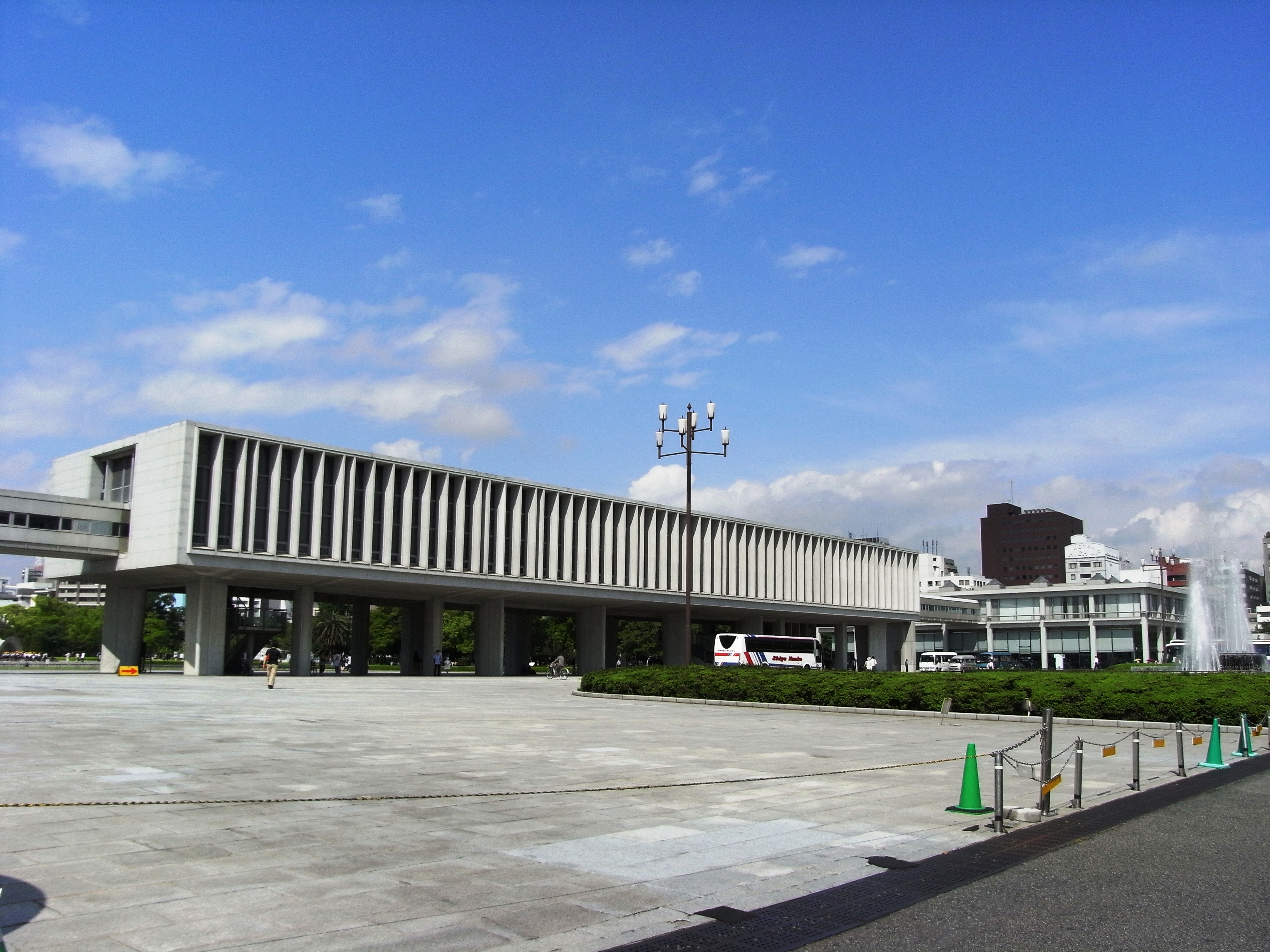
Hiroshima Peace Memorial Museum
A wristwatch stopped at 8:15. A child's lunchbox, the rice inside carbonized to charcoal. A set of stone steps with a human shadow burned permanently into them by the thermal flash. These are not reproductions. They are the actual objects, pulled from the ruins of Hiroshima in the days and weeks after August 6, 1945, and they sit behind glass in the Hiroshima Peace Memorial Museum with the quiet authority of things that were there when the world split open. Designed by architect Kenzo Tange and opened in August 1955, the museum has welcomed more than 53 million visitors in its first fifty years -- over a million per year, making it one of the most visited museums in Japan and the primary destination for school groups from across the country. It does not editorialize. It shows what happened, item by item, person by person.
What the Objects Say
The museum's power lies in its commitment to personal artifacts over abstract displays. The West Wing -- now the Main Building -- concentrates on the physical evidence of destruction. A section called Material Witness presents clothing, watches, hair, and other personal effects worn by victims at the moment of the bombing. Damage by the Heat Rays shows what temperatures reaching several thousand degrees did to wood, stone, metal, glass, and human skin. Damage by the Blast documents the shockwave that flattened every wooden structure within two kilometers. Damage by the Radiation details the invisible assault on the human body that continued long after the fire and wind had passed. Each item is accompanied by the name of the person who owned it and, where known, the story of how they died. A boy's tricycle. A girl's school uniform. Fingernails. The museum insists that you understand these belonged to specific people -- not statistics, not abstractions, but individuals with families who mourn them.
Architecture of Remembrance
Kenzo Tange's design for the museum is itself a statement. The main building is elevated on pilotis -- concrete columns that raise the structure above the ground, creating an open view beneath the building that frames the cenotaph and, beyond it, the Atomic Bomb Dome. This alignment is precise and intentional: standing at the museum's entrance, a visitor looks through the cenotaph's arch directly at the ruins of the Dome, connecting the place where the dead are remembered to the place where they died. Tange, who would later win the Pritzker Prize, understood that a memorial museum must do more than house artifacts. It must organize the visitor's emotional journey through space. The elevated design also has a practical function -- it protects the exhibits from the flooding that periodically affects the low-lying river delta on which Hiroshima is built.
Renovations and Reckoning
The museum has undergone several major renovations, each reflecting evolving ideas about how to present the bombing to new generations. A 1994 renovation divided the museum into the East Wing, covering Hiroshima's pre-war history and the political decisions that led to the bomb, and the West Wing (Main Building), focusing on the physical damage. The East Wing included letters exchanged between scientists and government leaders discussing atomic development -- primary documents that placed the bombing within its political and scientific context. A major renovation beginning in 2014 transformed both wings. The East Wing reopened in 2017 with interactive displays and projection mapping that replaced a physical city model, allowing visitors to watch the bomb blast ripple across a digital recreation of Hiroshima. The Main Building reopened in April 2019 after seismic retrofitting, with exhibits restructured to prioritize victims' belongings over explanatory displays. The museum's curators made a deliberate decision: let the objects speak first, and provide context second.
The Peace Watch
Among the museum's quieter exhibits is the Peace Watch -- a clock that counts the number of days since the last nuclear test and the number of days since the Hiroshima bombing. When a nation conducts a nuclear test, the first counter resets to zero. The second counter never resets. It simply grows. The Peace Watch embodies the museum's dual purpose: to memorialize the past and to monitor the present. Hiroshima's municipal government has sent formal protests to every nation that has conducted a nuclear test since the museum opened, and those protests are archived alongside the artifacts of 1945. The museum's own mission statement, displayed at the entrance, concludes with a sentence that reads not as hope but as demand: "Hiroshima's deepest wish is the elimination of all nuclear weapons and the realization of a genuinely peaceful international community." In a building filled with melted glass and burned uniforms, the word "wish" carries a different weight than it does elsewhere.
From the Air
Located at 34.391N, 132.453E within Hiroshima Peace Memorial Park, on the southern side of the park between the Motoyasu and Honkawa rivers. The museum's long, elevated building is aligned on a north-south axis with the cenotaph and the Atomic Bomb Dome. Hiroshima Airport (RJOA) is approximately 45 km east. From 3,000-8,000 feet, the museum building is visible as a long rectangular structure elevated on columns within the green space of the park.