Historic Flight Foundation
One of the collection's Douglas DC-3s was built to fly the Hump -- the treacherous eastern Himalayas route that claimed hundreds of aircraft during World War II. Seventy years later, that same airplane was flying summer Fly Days over Puget Sound, giving passengers a taste of what aviation felt like before the jet age. The Historic Flight Foundation did not just display old airplanes. It flew them. And then, in a story that had nothing to do with aviation and everything to do with financial fraud, it lost every single one.
Biplanes to Bombers
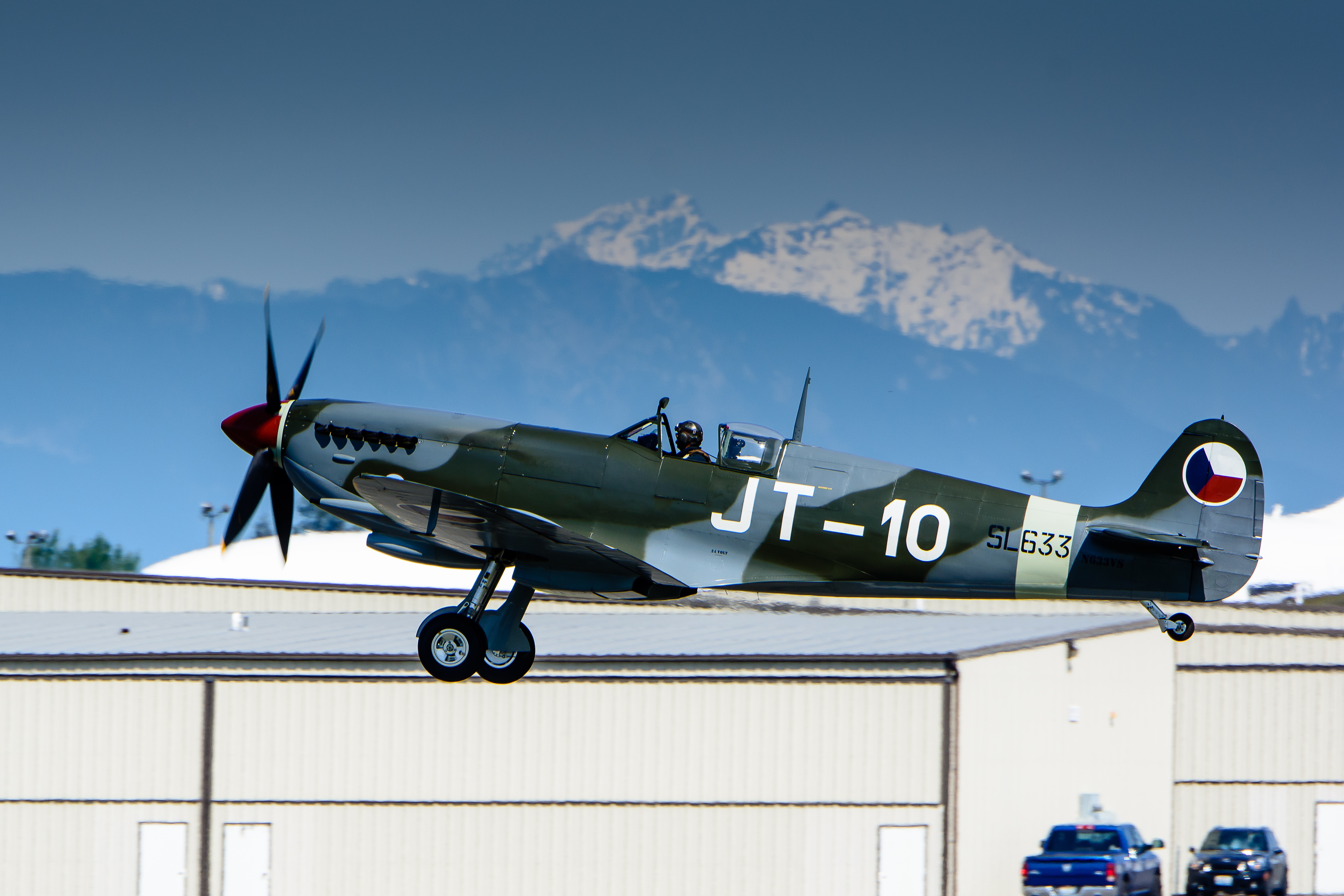
John T. Sessions founded the Historic Flight Foundation in 2003 with a specific vision: preserve aircraft from the thirty-year span between Charles Lindbergh's solo Atlantic crossing in 1927 and the first commercial flight of the Boeing 707 in 1957. During those three decades, aviation evolved from wood-and-fabric biplanes to commercial jets, and Sessions wanted to keep that transformation tangible. Every aircraft in the collection was restored to flying condition -- not static museum pieces behind velvet ropes, but working machines that took to the sky regularly. The collection grew to include a Beech Staggerwing, a Boeing-Stearman Model 75, a Supermarine Spitfire, a P-51B Mustang, a B-25 Mitchell bomber in RAF colors, and a Hamilton H-47 that was the sole airworthy example of its type anywhere in the world.
Two Hangars, Two Coasts
The foundation opened its hangar at Paine Field in Mukilteo to the public in March 2010. For nearly a decade, visitors could watch restoration work in progress and attend monthly Fly Days where the aircraft took off and landed on the same runway used by Boeing's 747 and 787 production lines. But when commercial airlines began operating out of Paine Field, the museum found itself squeezed. On December 17, 2019, Historic Flight opened a second location at Felts Field in Spokane. The plan was to maintain both sites, but by spring 2020, the entire collection had moved east, with Mukilteo reduced to maintenance duties. Sessions himself had been injured in a 2018 air show crash involving the museum's de Havilland Dragon Rapide, an accident that cost him his foot. He wanted to fly again regardless.
Grounded by Fraud
The end came not from mechanical failure or financial mismanagement of the museum itself, but from a lawsuit filed in Williston, North Dakota. UMB Bank had loaned funds to one of Sessions' companies for an apartment complex. A jury determined that the company fraudulently transferred funds to Sessions' other ventures -- including the museum -- and awarded a $20.1 million judgment. The museum's Spitfire was damaged in an accident in July 2023. A month later, the foundation announced it would temporarily close. By September, the B-25 had been sold by the court-appointed receiver. In December, additional aircraft were cleared for sale. By April 2024, every airplane in the collection had been sold to pay off Sessions' legal debts. The hangar became a storage facility. The Spokane Airport Board denied Sessions' attempt to revive the museum or repurpose another hangar as an event center.
What Flew and What Remains
At its peak, the collection numbered fifteen aircraft spanning the golden age of flight. The DC-3 in Pan American livery -- one of only 300 built specifically for Hump operations -- was among the most historically significant. Two de Havilland Beavers, a Grumman Bearcat, a Canadair T-33 Silver Star, a Travel Air 4000, and a Waco UPF-7 rounded out a fleet that won multiple awards at the National Aviation Heritage Invitational in 2017. The foundation also housed two vintage "Jammer" touring buses from Yellowstone and Glacier National Parks. All of it is gone now, dispersed to private buyers and other collections. What remains is the story of a museum that proved old airplanes could still fly -- and a reminder that what grounds them in the end is rarely the machines themselves.
From the Air
Formerly located at Paine Field (KPAE), 47.901N, 122.291W. The museum hangar was on the south side of the field near the commercial terminal. Paine Field is home to Boeing's widebody production facility and is a major aviation landmark. Felts Field (KSFF) in Spokane, where the collection relocated, is at 47.683N, 117.323W. Both fields are towered and accessible to general aviation.