Seventeen Monuments, Eleven Centuries: Kyoto's UNESCO World Heritage
Kyoto almost ceased to exist in 1945. The city sat on the United States' original list of atomic bomb targets, selected precisely because it had survived the firebombing campaign that leveled most other Japanese cities. Its cultural treasures were intact -- and that made it a pristine target for measuring the weapon's destructive power. Secretary of War Henry L. Stimson intervened personally, removing Kyoto from the list. He had visited the city on a diplomatic trip in 1926 and refused to authorize its destruction. Nagasaki was added to the target list instead. That single decision preserved eleven centuries of continuous cultural production: thirteen Buddhist temples, three Shinto shrines, and one castle, spanning from the Heian period through the Edo era. UNESCO recognized them collectively as a World Heritage Site in 1994. Thirty-eight buildings within the designation are National Treasures. One hundred sixty are Important Cultural Properties. The story of Kyoto's monuments is inseparable from the story of how close they came to vanishing entirely.
Capital of a Thousand Years
In 794, the Japanese imperial family moved the capital to Heian-kyo, and Kyoto remained the seat of imperial power for over a millennium. That extraordinary continuity produced an equally extraordinary concentration of religious and secular architecture. The seventeen properties in the World Heritage designation span from the eighth century to the nineteenth, each representative of the era that built it. They are spread across three cities: Kyoto and Uji in Kyoto Prefecture, and Otsu in neighboring Shiga Prefecture. Together they contain the largest concentration of designated Cultural Properties in Japan -- a density of artistic and architectural achievement unmatched anywhere else in the country. Wars, fires, and earthquakes destroyed individual buildings repeatedly over the centuries, but the institutions survived, rebuilding on the same sacred ground generation after generation.
Temples of Fire and Gold
The stories embedded in these temples read like a compressed history of Japan. To-ji, founded in 796 -- just two years after the capital's founding -- was one of only three Buddhist temples permitted in the early city. It is the sole survivor of the three. Kiyomizu-dera, originally completed in 780, has burned down and been reconstructed nine times; its main hall sits on a hillside supported by massive wooden pillars, assembled without a single nail. Enryaku-ji on Mount Hiei once commanded an army of warrior monks and harbored 3,000 sub-temples before the warlord Oda Nobunaga attacked in 1571, leveling the buildings and slaughtering the monks. Kinkaku-ji -- the Golden Pavilion, with its upper floors entirely gilded -- was burned to the ground in 1950 by a monk later judged mentally ill, then rebuilt in 1955. And Ryoan-ji's dry landscape garden, fifteen rocks on raked white gravel, remains one of the most contemplated arrangements of stone on earth.
Where Power Changed Hands
Nijo Castle stands apart from the temples and shrines as the sole secular structure in the designation, and its history carries a particular drama. Ordered built in 1601 by Shogun Tokugawa Ieyasu and completed under Tokugawa Iemitsu in 1626, the ornately decorated complex served as the Kyoto residence and reception hall for the Tokugawa Shoguns for over two centuries. Its nightingale floors were engineered to chirp underfoot, warning of intruders. In 1867, the last shogun, Tokugawa Yoshinobu, stood in the Ninomaru Palace and declared the end of the shogunate, returning authority to the Imperial Court. The room where feudal Japan ended is still there, its painted screens and coffered ceilings preserved. The castle became an Imperial detached palace until it was donated to the city of Kyoto in 1939.
The Oldest and the Quietest
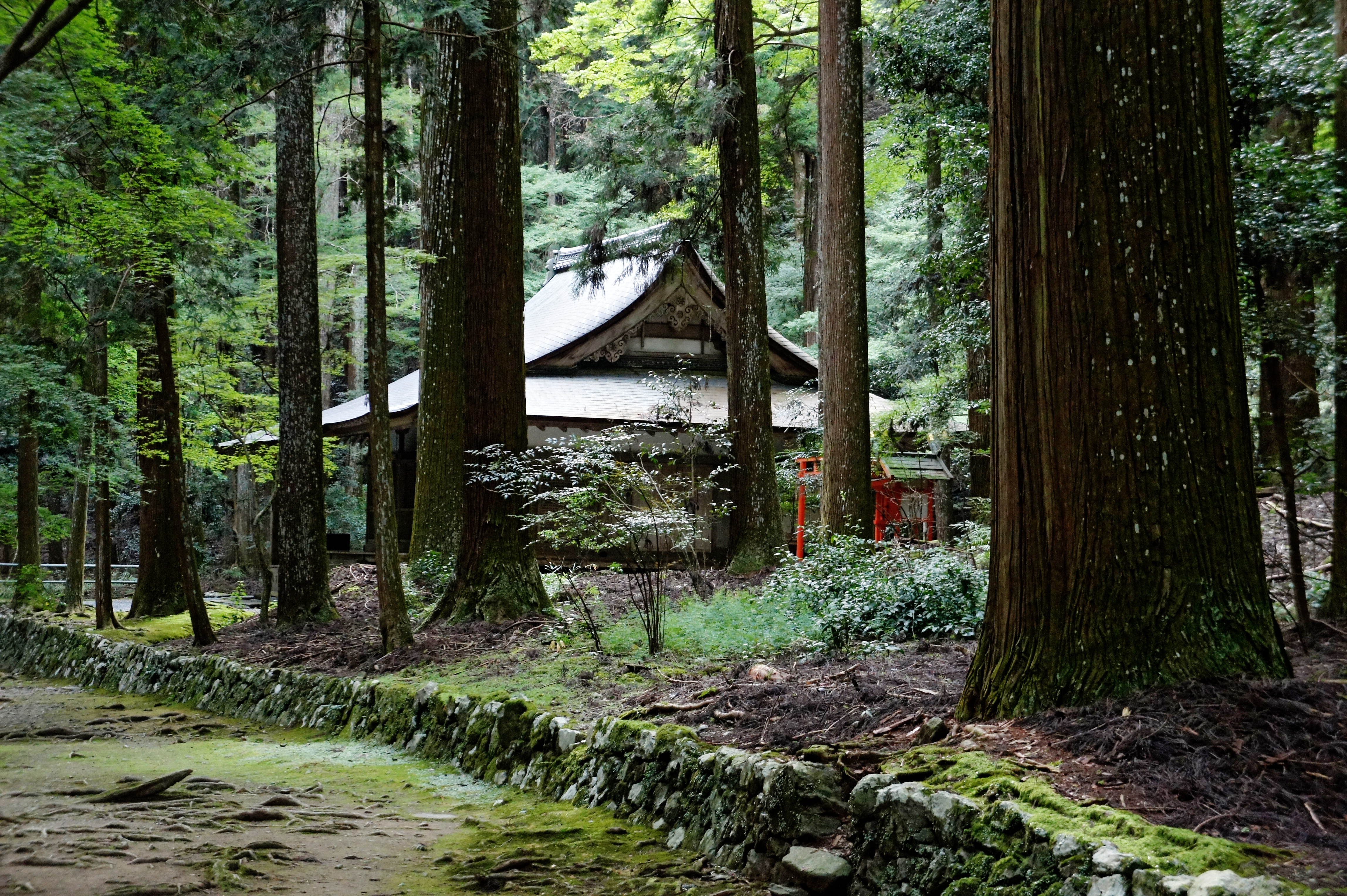
Not all seventeen sites carry the fame of the Golden Pavilion. Ujigami-jinja, built around 1060 in the town of Uji south of Kyoto, is the oldest original Shinto shrine in Japan. It served as the guardian shrine for the nearby Byodo-in, whose Phoenix Hall -- originally an aristocratic villa converted to a Buddhist temple in 1053 -- was designed to represent the Pure Land Paradise in the West. Kozan-ji sits in the mountains northwest of the city, an ideal location for mountain asceticism, its oldest surviving building dating from the Kamakura period. Saiho-ji, the Moss Temple, hosts over 120 varieties of moss in its two-tiered garden, a green carpet of subtle shades that survived the Onin War's fires and two Edo-period floods. These quieter sites carry as much weight in the designation as their famous neighbors -- each one a chapter in the eleven-century story the designation preserves.
Survival as Legacy
Eight gardens within the designation carry the status of Special Places of Scenic Beauty. Four more are Places of Scenic Beauty. The numbers are impressive in aggregate: 38 National Treasures, 160 Important Cultural Properties, seventeen properties spanning ten centuries. But the deeper significance of Kyoto's World Heritage designation lies in what it represents about survival. These are not ruins. They are living institutions -- temples where monks still meditate, shrines where worshippers still pray, a castle where visitors still walk the nightingale floors. Fires destroyed them; they were rebuilt. Wars scattered their communities; the communities returned. An atomic bomb was aimed at them; one man's memory of a 1926 visit saved them. The Historic Monuments of Ancient Kyoto survive not because they were protected from history, but because they endured it.
From the Air
The seventeen properties are distributed across a wide area centered on Kyoto at approximately 35.06N, 135.75E. The Kyoto basin is easily identifiable from altitude, enclosed by mountains on the north, east, and west, with the Katsura and Kamo rivers flowing through the city. Individual temples with large grounds -- Kinkaku-ji, Kiyomizu-dera, Nijo Castle -- are visible at lower altitudes. Enryaku-ji sits atop Mount Hiei (848 meters) on the northeast border with Shiga Prefecture. Byodo-in and Ujigami-jinja lie in Uji, roughly 10 nautical miles south. Best overview at 5,000-8,000 feet AGL. Nearest major airport is Osaka Itami (RJOO), approximately 20 nautical miles southwest. Kansai International (RJBB) is approximately 50 nautical miles south.