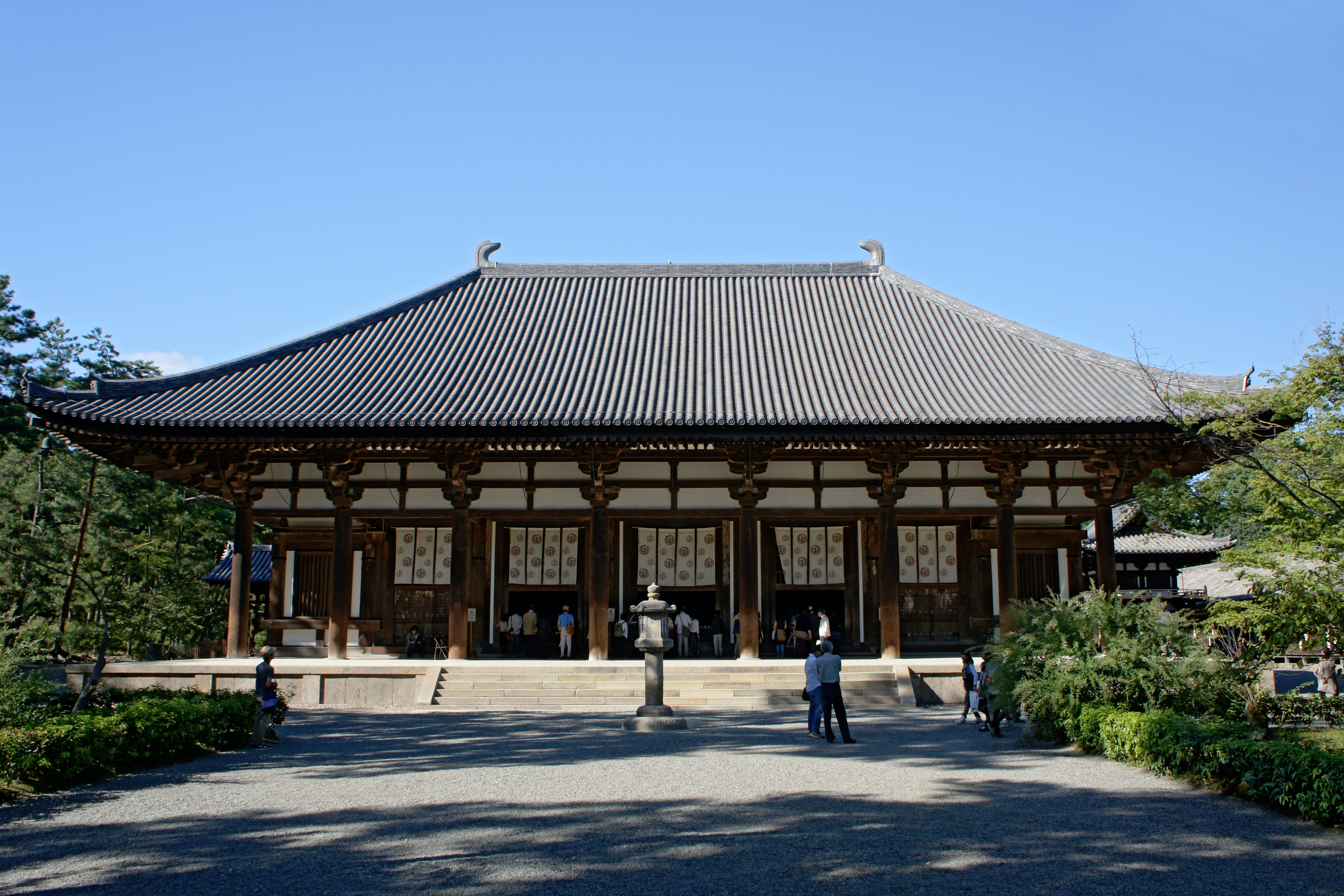
Historic Monuments of Ancient Nara: Eight Sites, Thirteen Centuries
Since 841, no one has been allowed to cut a tree or kill an animal in the Kasugayama Primeval Forest. That single decree, issued when Nara had already ceased to be Japan's capital for nearly half a century, preserved a mountainside forest that now shelters 175 species of trees, 60 types of birds, and 1,180 species of insects. The forest is one of eight places in Nara that UNESCO inscribed together as a World Heritage Site in 1998 -- a collection so diverse it includes five Buddhist temples, one Shinto shrine, the excavated remains of an imperial palace, and this ancient woodland. Between them, these eight sites hold 26 buildings designated as National Treasures by the Japanese government and 53 classified as Important Cultural Properties. They span the range from the Asuka period to the Nara period, from the seventh century to the eighth, from emperors who prayed for their sick consorts to Chinese monks who crossed the sea to bring new teachings to Japan.
Temples Born from Prayer and Politics
The five temples in the collection read like a compressed history of Japanese Buddhism. Yakushi-ji was commissioned by Emperor Tenmu in 680 to pray for his consort's recovery from illness -- she eventually succeeded him as Empress Jito. Originally built in Fujiwara-kyo, the entire temple was disassembled and physically moved to Nara eight years after the imperial court relocated to the new capital. Kofuku-ji, founded by the powerful Fujiwara clan, became one of the great institutional temples of the Nara period. Todai-ji houses the Daibutsu, the Great Buddha, one of the largest bronze statues in the world. Toshodai-ji was founded in 759 by Jianzhen, a Tang dynasty Chinese monk who crossed the sea to Japan, and its Golden Hall -- a single-story structure with a hipped tiled roof and seven-bay-wide facade -- is considered the archetype of classical Japanese temple architecture. Gangoji rounds out the five, its history stretching back to one of Japan's earliest Buddhist establishments.
A Shrine, A Palace, A Forest
Kasuga Grand Shrine, the collection's sole Shinto representative, sits at the base of Mount Kasuga and has been intertwined with the primeval forest above it for over a millennium. The prohibition on hunting and logging in the Kasugayama forest dates to 841, creating what is effectively one of the oldest continuous nature preserves in the world. The forest blankets the mountainside in dense, undisturbed canopy -- a living relic of what the landscape looked like before human habitation reshaped the Nara basin. At the opposite end of the collection stands the Nara Palace Site, where the Heijo Palace complex served as the imperial residence and administrative center from 710 to 784 AD. When the capital moved to Kyoto, the palace was abandoned and vanished beneath farmland. Archaeological excavations beginning in 1959 have gradually revealed its foundations, and major reconstructions -- including the Suzakumon Gate and the Great Hall of State -- now mark the site.
The Logic of Listing Them Together
UNESCO's decision to group these eight sites into a single World Heritage listing rather than recognizing them individually reflects a deliberate argument: that Nara's significance lies not in any single monument but in the concentration of sacred, political, and natural heritage within one compact area. Several of the sites physically overlap with Nara Park, the public green space famous for its free-roaming deer. Todai-ji, Kofuku-ji, and the Kasugayama Primeval Forest all share boundaries with the park, creating a landscape where tourists feeding deer are standing on ground that holds National Treasures underfoot and ancient forest overhead. The Nara Palace Site received the additional designation of Special Historic Site, while the Kasugayama forest was classified as a Special Natural Monument -- the highest levels of cultural and natural protection Japan offers. Together, these layers of designation reflect a city that functioned as the spiritual, political, and ecological heart of Japan for the better part of a century, and whose monuments have endured, in various states of repair and ruin, for thirteen hundred years.
Walking Through Layers of Time
What makes Nara's World Heritage cluster remarkable from the air or on foot is its compactness. The eight sites are scattered across a walkable area of the old capital, many of them within a few kilometers of each other. A visitor can move from the reconstructed vermilion columns of the Heijo Palace to the towering bronze Buddha of Todai-ji to the moss-draped silence of the Kasugayama forest in a single day. Each site carries a different emotional register: the imperial ambition of the palace, the devotional intensity of the temples, the serene indifference of the primeval forest. The deer that wander freely through Nara Park -- considered sacred messengers of the gods in Shinto tradition -- move between these worlds without distinction, browsing temple grounds and palace lawns alike. It is a landscape where the sacred, the political, and the natural have been layered on top of each other for so long that separating them would be impossible. UNESCO recognized that in 1998, and the listing endures as one of the most concentrated expressions of cultural heritage in all of Japan.
From the Air
Centered at approximately 34.68°N, 135.84°E in the city of Nara, Japan. From altitude, the World Heritage sites are distributed across the eastern and northern sections of the city. Nara Park, which overlaps with several listed sites, appears as a large forested and open green area in the eastern part of the city. The Kasugayama Primeval Forest is the densely wooded hillside east of the park. The Heijo Palace site is the large flat open area in the northern part of the city. Osaka Itami Airport (RJOO) is approximately 30 km to the west. Kansai International Airport (RJBB) is roughly 60 km to the southwest. Best viewed at 3,000-5,000 feet AGL to see the full distribution of sites across the Nara basin.