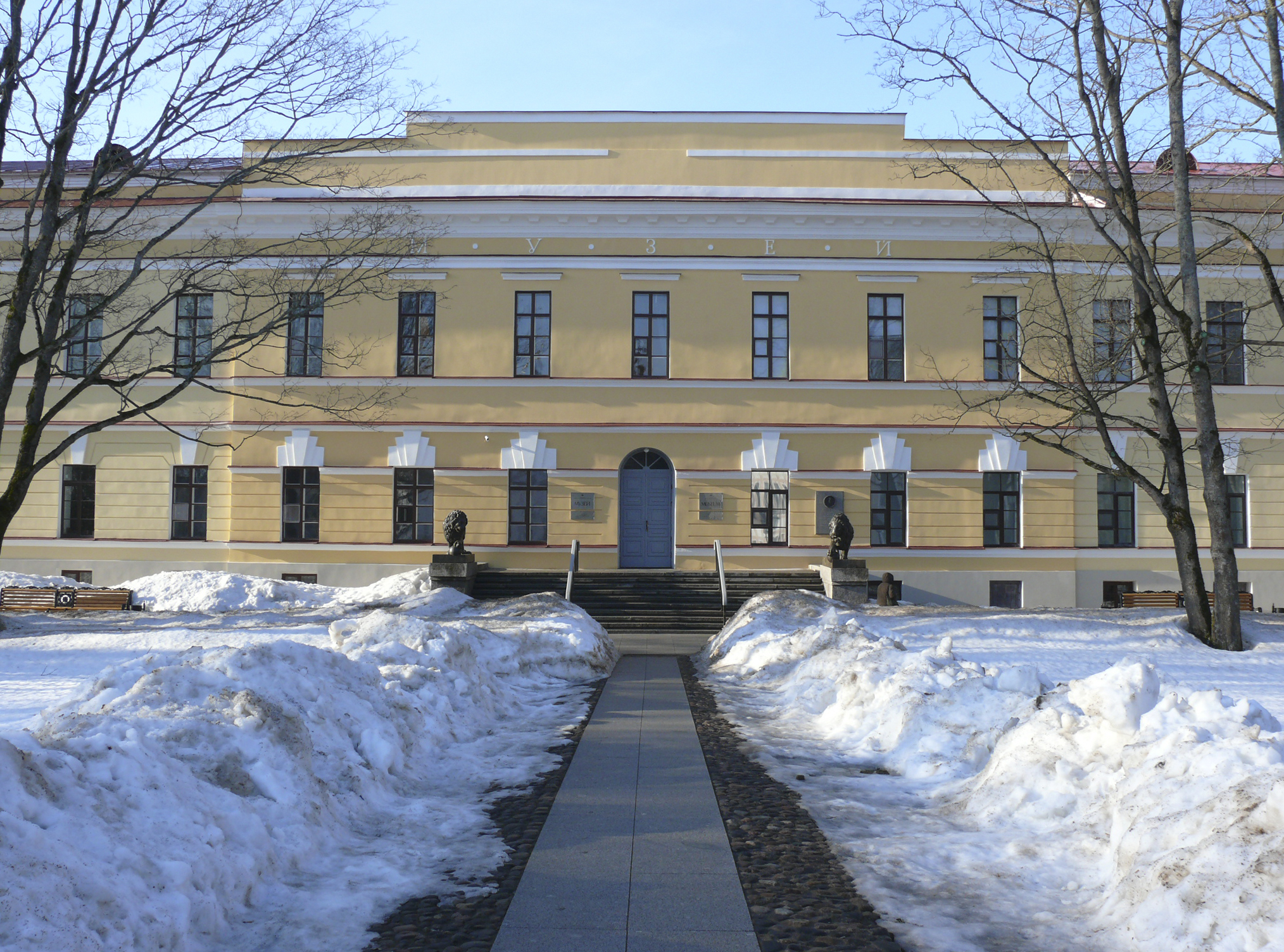
Historic Monuments of Novgorod and Surroundings
Before there was a Moscow, there was Novgorod. The city sat on the trade route from the Varangians to the Greeks - the river highway that connected Scandinavian raiders to Byzantine Constantinople through the heart of the Russian forest. By the eleventh century Novgorod was the second city of Kievan Rus. By the twelfth it had thrown off princely rule and become a republic. Decisions were made in a public assembly called the veche - the only Russian city besides Pskov to govern itself this way. The veche elected its prince, taxed its merchants, sent its trading caravans south to Byzantium and west to the Hanseatic League. Then the Mongols swept across the Russian steppe in 1237 and destroyed everything in their path - Vladimir, Suzdal, Kiev. Novgorod was spared. Spring thaws turned the forests around it into impassable bog. The Mongol horsemen turned back before they reached the city. For two more centuries the republic held.
The Veche and the Saint
The veche bell hung in the city kremlin and called citizens to assembly. Adult male freemen gathered in the square, debated, shouted, and decided by acclamation. There were elected officials - the posadnik who ran civic affairs, the tysiatskii who commanded the militia - and an elected archbishop who served as both spiritual head and ambassador. The prince was contracted, hired and fired. The Saint Sophia Cathedral, completed in 1050, gave the city its religious anchor. Five domes, walls of pale limestone, frescoes that survived eight centuries until German shelling damaged them in the Second World War. The cathedral's bronze Magdeburg Doors were taken as war booty from a Hanseatic raid - twelfth-century German bronze, depicting biblical scenes, that now serve as the western entrance. The city kremlin around the cathedral, called the Detinets, encloses a sequence of buildings including the Chamber of Facets from 1433, the oldest surviving stone civic building in Russia.
The Painters of Novgorod
Because Novgorod was spared the Mongol wave, ecclesiastical construction continued through the fourteenth century, when the rest of Rus was rebuilding from rubble. The city became Russia's painting school. The Church of the Transfiguration on Ilyina Street, built in 1374, contains frescoes by Theophanes the Greek - a Byzantine master who emigrated from Constantinople and reshaped Russian religious art. His figures are gaunt, intense, lit by inner fire. Andrei Rublev, the most celebrated of all Russian icon painters, learned from Theophanes a generation later. The Nereditsa Church from 1198, the Saint Nicholas Church on Lipno Island from 1292, the Church of Theodore Stratelates from 1361 - the UNESCO inscription includes thirty-seven separate monuments scattered across the city and its surroundings, each a fragment of a school of architecture and painting that defined Russian religious art before Moscow imported its own.
The End of the Republic
Moscow had been growing all this time. By the fifteenth century Ivan III - Ivan the Great - was consolidating Russian principalities under the grand prince's authority, and Novgorod's republican independence was an obvious target. In 1471 Ivan defeated Novgorod's army at the Battle of Shelon. He returned in 1478 and finished the work, formally annexing the republic. The veche bell was taken down and hauled to Moscow as a trophy. The Hanseatic League's Novgorod office, which had operated for nearly three centuries, was closed in 1494. Ivan's grandson Ivan IV - Ivan the Terrible - completed the destruction in 1570 with a massacre that killed tens of thousands of Novgorod's citizens, accusing the city of plotting to defect to Lithuania. The republic's traditions were erased. The trade routes shifted south and west. Novgorod became a provincial town.
Soil as Archive
What makes Novgorod uniquely valuable to historians is the soil. The city sits on heavy clay that excludes oxygen. Anything organic dropped on the ground in medieval Novgorod was preserved - leather shoes, wooden combs, bone dice, and most importantly, birchbark letters. Hundreds of these letters have been excavated since the 1950s, written between the eleventh and fifteenth centuries by ordinary citizens: business correspondence, love letters, children's schoolwork, complaints to authorities. They prove that medieval Novgorod was widely literate, including women and children, at a time when literacy in much of Europe was confined to clergy. The UNESCO inscription specifically includes the layered soil deposits between the ninth and seventeenth centuries - an underground archive of daily life that continues to yield new finds. A boy named Onfim who lived around 1260 left several pages of homework decorated with sketches of himself as a knight slaying enemies. His drawings survive.
Almost Lost, Then Restored
German forces occupied Novgorod from August 1941 to January 1944. The city was systematically destroyed before they retreated. Saint Sophia was shelled, the Nereditsa Church was reduced almost to rubble, frescoes that had survived eight centuries were lost in days. After the war, Soviet restorers worked for decades to rebuild what could be rebuilt. Some monuments were lost beyond recovery. Some were reconstructed brick by brick from prewar surveys and photographs. The city - now formally Veliky Novgorod, Great Novgorod, to distinguish it from Nizhny Novgorod on the Volga - has about two hundred thousand residents. The medieval ensemble is its center of gravity. Children walk to school past churches that were old when Columbus sailed. UNESCO inscribed the site in 1992, the first year after the Soviet Union dissolved, when Russia was rediscovering its medieval past after seven decades during which religious heritage had been officially neglected. The republic that Moscow destroyed lives on as a memory and a soil-deep archive.
From the Air
Veliky Novgorod sits at 58.52°N, 31.29°E on the Volkhov River where it flows out of Lake Ilmen. The city is roughly 200 km south-southeast of Saint Petersburg. The medieval center is anchored by the Detinets kremlin on the river's west bank with the five domes of Saint Sophia visible from a distance. Yuriev Monastery and other monastic ensembles cluster south along the river toward Lake Ilmen. The nearest major airport is Pulkovo (ULLI) at Saint Petersburg; Novgorod's own airport (ULNN) is small and limited-use. Best viewed at 3,000-6,000 feet AGL on clear days, when the river and the cluster of medieval monuments stand out against forested countryside.