Historical Capitals of China
Beijing's name means "Northern Capital," which immediately implies the existence of others. Nanjing means "Southern Capital." These are not arbitrary labels but positions in a conversation that has lasted three millennia. China has moved its seat of power more than a dozen times, and each relocation tells a story about military pressure, economic reality, or dynastic ambition. The four cities traditionally honored as the Four Great Ancient Capitals -- Xi'an, Luoyang, Nanjing, and Beijing -- represent the poles of this gravitational contest, but they are far from the only contenders.
Xi'an and the Western Anchor
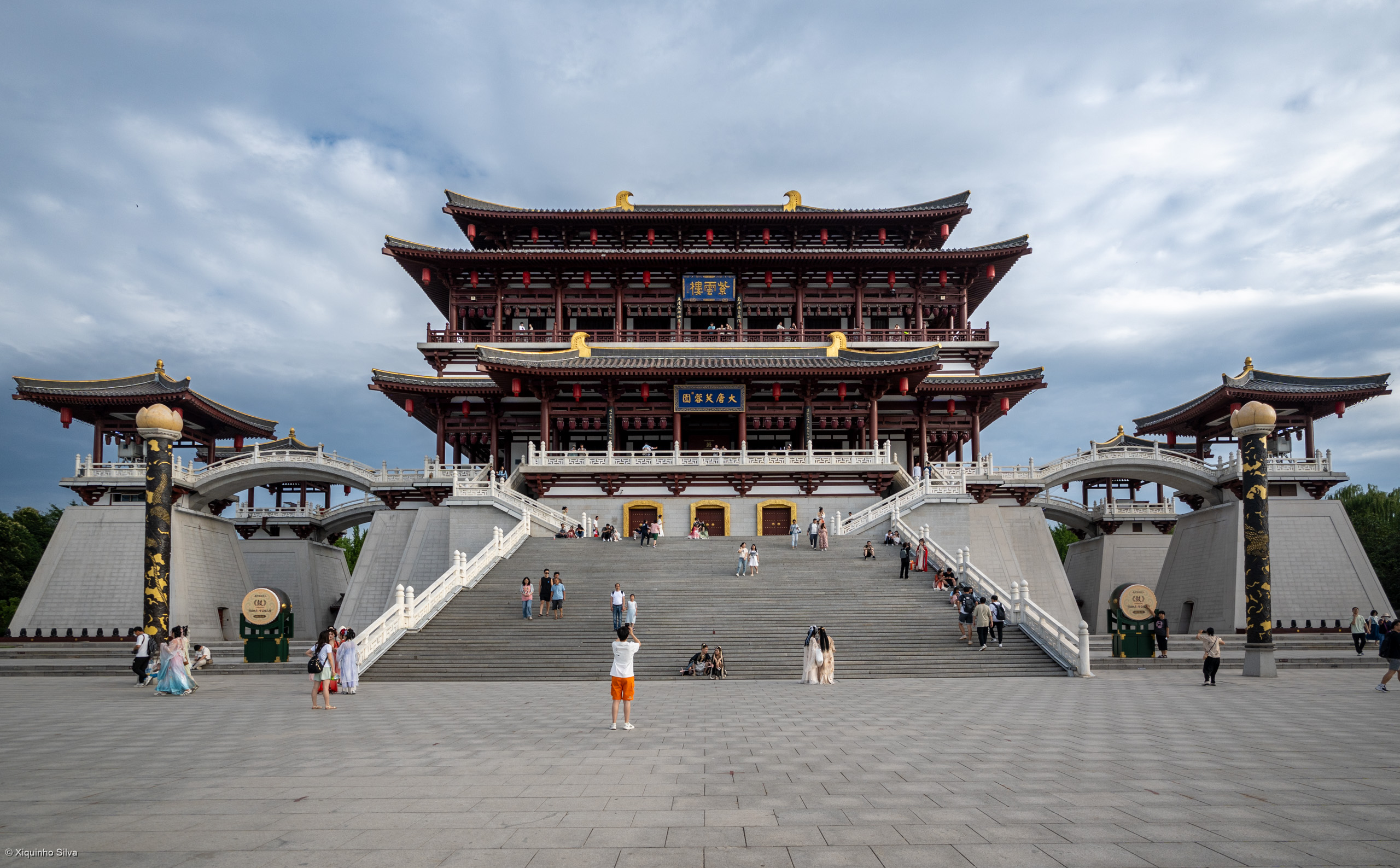
No city has served as China's capital more times than Xi'an, known historically as Chang'an. The site anchored Chinese civilization from the Western Zhou dynasty around 1046 BC through the Tang dynasty, which fell in 907 AD -- roughly two thousand years of intermittent centrality. The Qin dynasty unified China from nearby Xianyang. The Western Han governed from Chang'an. The Sui dynasty renamed it Daxing. The Tang made it the largest city in the world and the eastern terminus of the Silk Road. Xi'an's advantage was geography: it sat in the fertile Wei River valley, protected by mountains on three sides, with access to both the Central Plain and the western frontier. Its disadvantage was the same geography -- as population grew and resources depleted, the capital drifted eastward.
Luoyang and Kaifeng: The Eastern Pull
Luoyang, the Eastern Zhou and Eastern Han capital, served as the natural counterweight to Xi'an. Situated closer to the productive agricultural heartland of the North China Plain, it offered better access to food supplies and water transport along the Yellow River system. The Northern Wei moved their capital to Luoyang in 493 AD, and the city hosted the Cao Wei, the Western Jin, and multiple Five Dynasties governments. Kaifeng, further east, became the capital of the Northern Song dynasty from 960 to 1127, when it was known as Bianjing. The Song made it the most commercially vibrant city in the world, but its position on flat, indefensible terrain left it vulnerable. When the Jurchen Jin dynasty invaded, the Song court fled south to Hangzhou, which became the capital of the Southern Song from 1127 to 1276 under the name Lin'an.
Nanjing: Southern Refuge, Southern Power
Nanjing's political career spans the full arc of Chinese history's north-south divide. It served as capital for all six of the Southern Dynasties between 220 and 589 AD, when northern China was frequently controlled by non-Han regimes. The Ming dynasty founder established his capital there in 1368 before his successor relocated to Beijing in 1421. The Taiping Heavenly Kingdom seized it in the 1850s and renamed it Tianjing, the Heavenly Capital. The Republic of China government under the Nationalists made Nanjing its capital from 1928 to 1949. Each time, the choice of Nanjing signaled something specific: distance from northern threats, proximity to the Yangtze River's economic power, or a deliberate break from the political traditions of the old northern capitals.
Beijing: The Northern Fortress
Beijing's tenure as capital is more recent than its rivals but no less consequential. The city began as Ji, capital of the ancient state of Yan, more than three thousand years ago. The Jurchen Jin dynasty made it their main capital as Zhongdu in the twelfth century. Kublai Khan built an entirely new city adjacent to it -- Khanbaliq, or Dadu -- as the capital of the Yuan dynasty. Marco Polo called it Cambuluc. The Ming dynasty moved the capital there from Nanjing in 1421, and it has remained the seat of Chinese government through the Qing dynasty, the Beiyang Republic, and the People's Republic. Beijing's strategic logic was military: positioned at the northern edge of the Chinese heartland, it served as a base for projecting power into Mongolia and Manchuria while guarding the passes that connected the plains to the steppe.
Capitals That History Forgot
Beyond the famous four, China's capital history includes dozens of lesser-known seats of power. Chengdu served the Shu Han kingdom during the Three Kingdoms period and multiple subsequent regimes. Chongqing was the wartime capital of the Nationalist government from 1937 to 1945 during the Japanese invasion. Changchun became the capital of the Japanese puppet state Manchukuo. Ruijin in Jiangxi served as the capital of the Chinese Soviet Republic from 1931 to 1934, before the Long March. Even Xanadu -- Shangdu, the summer capital of the Yuan dynasty that Coleridge immortalized in poetry -- sits within this tradition. Taipei has served as the seat of the Republic of China government since 1949. The sheer number of capitals reflects a political culture in which the location of power was never permanently settled, always subject to the next dynasty's strategic calculus.
From the Air
Beijing, the current capital, is located at 39.900N, 116.400E. The Four Great Ancient Capitals span a vast geographic range: Xi'an (34.26N, 108.94E) in the west, Luoyang (34.62N, 112.45E) in the center, Nanjing (32.06N, 118.80E) in the southeast, and Beijing in the north. From altitude, the geographic logic of capital placement becomes clear -- each sits on a major river plain or at a strategic pass. Nearest airport to Beijing: ZBAA (Beijing Capital International).