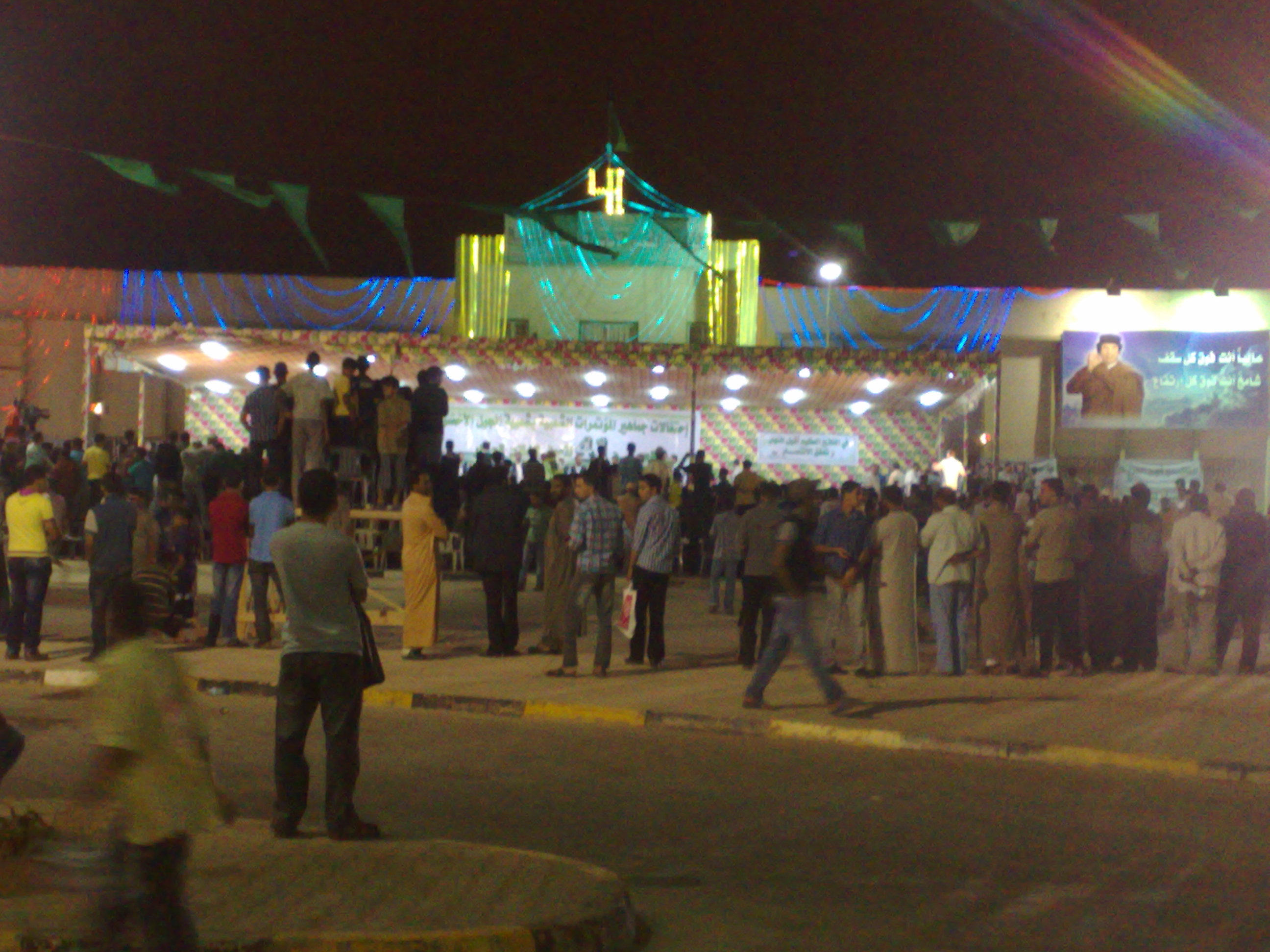
History of Libya under Muammar Gaddafi
On September 1, 1969, a 27-year-old army captain seized control of Libya while King Idris was in Turkey receiving medical treatment. The coup was bloodless. Within days, Crown Prince Hasan renounced his claim to the throne, foreign governments extended recognition, and Captain Muammar Gaddafi promoted himself to colonel and commander-in-chief. Nobody -- least of all the Western diplomats who quickly accommodated the new regime -- could have predicted that this young officer would hold power for 42 years, outlasting the Cold War, surviving American airstrikes, and reinventing himself from revolutionary firebrand to self-styled King of African Kings before being dragged from a drainage culvert and killed by his own people.
The Revolutionary Template
Gaddafi modeled his takeover explicitly on Nasser's 1952 Egyptian revolution. His twelve-member Revolutionary Command Council declared Libya the Libyan Arab Republic, promising freedom, unity, and social justice. The early moves followed the Nasserist playbook: nationalizing foreign interests, forging ties with the Soviet bloc while claiming nonalignment, and channeling oil revenues toward education, healthcare, and housing. The results were tangible. Per capita income rose above $11,000 in nominal terms -- the fifth highest in Africa. Primary education became compulsory for both sexes. Women gained legal equality and expanded employment opportunities. Libya achieved Africa's highest Human Development Index score. But these gains came wrapped in a political system that tolerated no dissent. Political parties were banned. The press was conscripted as an instrument of the revolution. In October 1970, the remaining Italian and Jewish communities were expelled and their property confiscated.
The Jamahiriya Experiment
In 1977, Gaddafi unveiled his most ambitious creation: the Jamahiriya, an Arabic neologism meaning roughly "state of the masses." The system, outlined in his Green Book, claimed to abolish traditional government in favor of direct democracy through local popular congresses. In practice, it created an impenetrable bureaucracy of overlapping jurisdictions that served Gaddafi's purpose of remaining the only person who understood how the system worked. Revolutionary committees -- nominally grassroots organizations -- surveilled the population with an intensity rivaling Ba'athist Iraq. An estimated ten to twenty percent of Libyans served as informants. Opposition activists were publicly executed, with the killings rebroadcast on state television. Private enterprise was gutted: shops were replaced by state-run "people's supermarkets," bank accounts were seized for government projects, and property ownership was restricted to a single dwelling. By 1982, between 50,000 and 100,000 Libyans had fled abroad.
The World's Most Generous Troublemaker
Gaddafi's foreign policy defied any coherent ideology. He funded the African National Congress and the Provisional IRA with equal enthusiasm, supplying over $12.5 million in cash and six massive arms shipments to the Irish republicans. He supported the Palestine Liberation Organization, Filipino separatists, Colombian guerrillas, and the Sandinistas in Nicaragua. He armed and trained Charles Taylor, whose forces would commit atrocities across West Africa. He invaded Chad repeatedly through the 1970s and 1980s before being expelled in the Toyota War of 1987. He picked a border war with Egypt in 1977. Francois Mitterrand called him "unstable." Ronald Reagan dubbed him the "mad dog of the Middle East." Anwar Sadat simply called him a "possessed demon." After Libyan agents bombed the La Belle nightclub in West Berlin in April 1986, killing three, the United States retaliated with airstrikes on Tripoli and Benghazi.
Isolation and Rehabilitation
The 1988 bombing of Pan Am Flight 103 over Lockerbie, Scotland, brought international sanctions that cut Libya's airline connections, froze foreign assets, and eroded its refining capacity through the 1990s. Gaddafi's role on the world stage diminished considerably. In 1999, Libya surrendered two suspects for trial, and sanctions were suspended. After the September 11 attacks, Gaddafi pivoted sharply, pursuing nuclear disarmament and rapprochement with Western governments eager for access to Libyan oil. By 2009, he was elected head of the African Union, presiding over a coronation ceremony in Addis Ababa where he declared his ambition to create a "United States of Africa." European leaders who had once bombed his compounds now shook his hand. The rehabilitation was dramatic and, as events would prove, short-lived.
The End in a Drainage Pipe
When the Arab Spring reached Libya in February 2011, the families of prisoners massacred at Abu Salim prison in 1996 were among the first to take to the streets. The revolt spread rapidly. A National Transitional Council formed in Benghazi, and by March, a NATO-led coalition was conducting airstrikes against Gaddafi's forces. The International Criminal Court issued an arrest warrant in June. Tripoli fell in August. Gaddafi declared Sirte, his hometown, the new capital, but it too was overrun. On October 20, 2011, retreating loyalist forces were hit by a NATO airstrike near Sirte. Gaddafi was found hiding in a drainage culvert and killed by rebel fighters. The 42-year rule of the man who had styled himself Brotherly Leader and Guide of the Revolution ended in a ditch on the outskirts of the city where he was born. Libya has not found stability since.
From the Air
This story encompasses all of Libya but is centered on Tripoli at 32.83N, 13.17E. Key sites include Tripoli (government seat), Sirte (Gaddafi's hometown and final stand, approximately 450 km east along the coast), and Benghazi (center of the 2011 uprising, 1,000 km east). Tripoli International Airport (HLLT) is the primary reference point. The Libyan coastline stretching from Zawiya in the west to Misrata and beyond in the east encompasses the main theater of the 2011 conflict. Best viewed at 10,000-15,000 feet AGL for geographic scope.