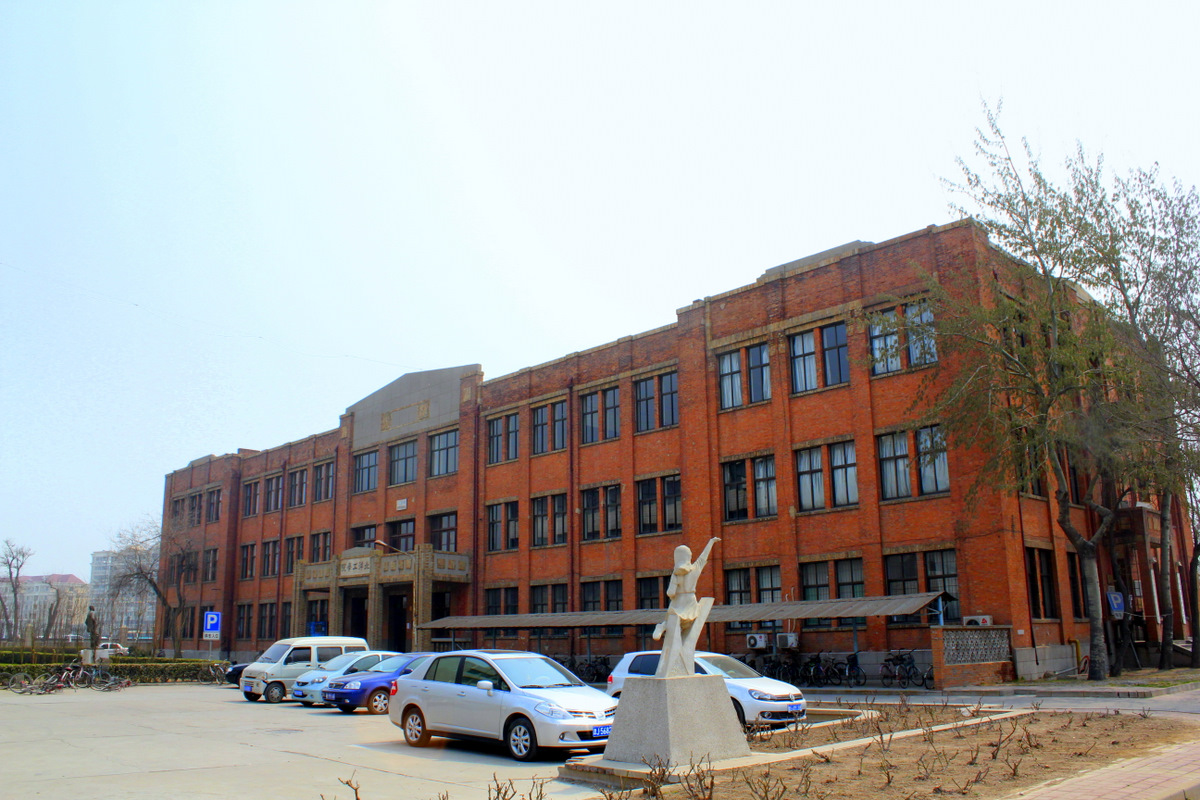
History of Peiyang University
The files were burned and the founding date could never be verified. So when Peiyang University needed an anniversary to celebrate, it chose October 2, 1895 -- the date the Guangxu Emperor approved its creation with an imperial rescript. It was the first government-run university in modern China, established in Tianjin by the customs official Sheng Xuanhuai with a motto borrowed from practical philosophy: "Seeking truth from facts." Over the next century, the university would be renamed, relocated, split apart, merged, and fought over by alumni who never stopped believing that Peiyang was something worth preserving.
Born from Defeat
China's humiliation in the First Sino-Japanese War and the punishing Treaty of Shimonoseki created the urgency. The nation needed engineers, scientists, and technicians to build modern industry, and it needed them trained in Western methods. Sheng Xuanhuai, who had been studying plans for a modern school since his appointment as Tianjin Customs Circuit Intendant in 1892, saw his opportunity. He submitted proposed regulations to Wang Wenshao, the Viceroy of Zhili, requesting imperial approval. On October 18, 1895, Beiyang University Hall opened on the former site of Bowen Academy. Over a thousand people applied; barely more than ten were admitted. The First Class School modeled its four-year program on American undergraduate education.
Occupation and Exile
In 1900, the Eight-Nation Alliance invaded Tianjin and Beijing. The university closed. Faculty and students fled to Shanghai, where Sheng Xuanhuai arranged for them to continue their studies at Nanyang Public School. German troops seized the campus for use as barracks, destroying equipment and archives -- including, critically, the records that would have documented the exact founding date. Yuan Shikai, as the new Viceroy of Zhili, tried repeatedly to negotiate the campus's return but failed. Eventually, Chief Instructor Tenney traveled to Berlin and extracted 50,000 taels of silver in compensation, which funded reconstruction. History repeated itself in 1937, when the Second Sino-Japanese War forced the university to relocate west to Xi'an, where it helped form the National Xi'an Temporary University.
The Science Fortress
By 1917, the Ministry of Education had forced Peiyang to stop admitting law students, and the university embraced its destiny as China's premier engineering institution. Law students transferred to Peking University; engineering students came the other way. The specialization paid off. In 1918, three Peiyang graduates achieved first-place rankings in national examinations: Xu Mo in diplomacy, Li Ping in the senior civil service, and Kang Shimin in the Tsinghua study-abroad competition. By the 1930s and 1940s, the university's five engineering research institutes earned it the nickname "the science fortress building a nation." The president during one of the university's most turbulent periods was Mao Yisheng, the legendary bridge engineer, who secured Boxer Indemnity funds for reconstruction after a devastating setback.
A Name That Would Not Die
In 1951, the government merged Peiyang University with the Hebei Institute of Technology and renamed the combined institution Tianjin University. The Peiyang name was officially gone, but its alumni refused to let it disappear. In the 1960s, Peiyang graduates who had moved to Taiwan attempted to restore the university there. In 1969, presidential adviser Chen Lifu inspected potential sites in Taoyuan County. In 1970, the Ministry of Education of the Republic of China planned a joint restoration with Sun Yat-sen University and Jinan University, but the plan never materialized. Back on the mainland, Mao Yisheng proposed restoring the Peiyang name in 1980. Alumni supported the idea enthusiastically, but it did not succeed. Today, Tianjin University celebrates its anniversary on October 2, the day the Guangxu Emperor endorsed the creation of an institution whose name has changed but whose identity endures in memorial pavilions, campus squares, and the stubborn pride of its graduates.
From the Air
Located at 39.18°N, 117.17°E in northern Tianjin. The original Peiyang University campus site is now part of the Hebei University of Technology campus, with surviving historical buildings including the Tuancheng, Nanlou, and North Buildings. Tianjin University's main campus, which inherited Peiyang's legacy, is located about 5 km south. Nearest airport: Tianjin Binhai International (ZBTJ), approximately 18 km east. Beijing Capital International (ZBAA) is about 120 km northwest. The university campuses are identifiable from the air by their large quadrangles and green spaces.