HM Prison Maze
The H-Blocks got their name from their shape: four wings extending from a central corridor, seen from above like the letter H repeated across a flat landscape southwest of Belfast. HM Prison Maze -- known to republicans as Long Kesh, to most people simply as the Maze -- was built on a former Royal Air Force station about nine miles from the city. Between 1971 and 2000, it held thousands of paramilitary prisoners from both sides of Northern Ireland's conflict, and its story traces the arc of the Troubles themselves: from internment and defiance to hunger strikes, negotiation, and an uneasy peace.
Internment and the Compounds
The prison began as a hastily converted internment camp. In August 1971, Operation Demetrius saw the British Army and Royal Ulster Constabulary arrest 342 people suspected of IRA membership. The intelligence was poor -- 104 of those arrested were released when it emerged they had no paramilitary connections. The internees were housed in Nissen huts on the disused RAF airfield, separated by paramilitary affiliation. By 1972 there were 924 internees. The vast majority -- over 94 percent -- were Catholic nationalists. In July 1972, Special Category Status was introduced, granting paramilitary prisoners privileges including free association, civilian clothes, and extra visits. It was an implicit acknowledgment that these were not ordinary criminals. By the time 1,981 people had passed through internment, the prison had become a symbol of everything wrong with the British approach to Northern Ireland.
The Blanket and the Hunger Strike
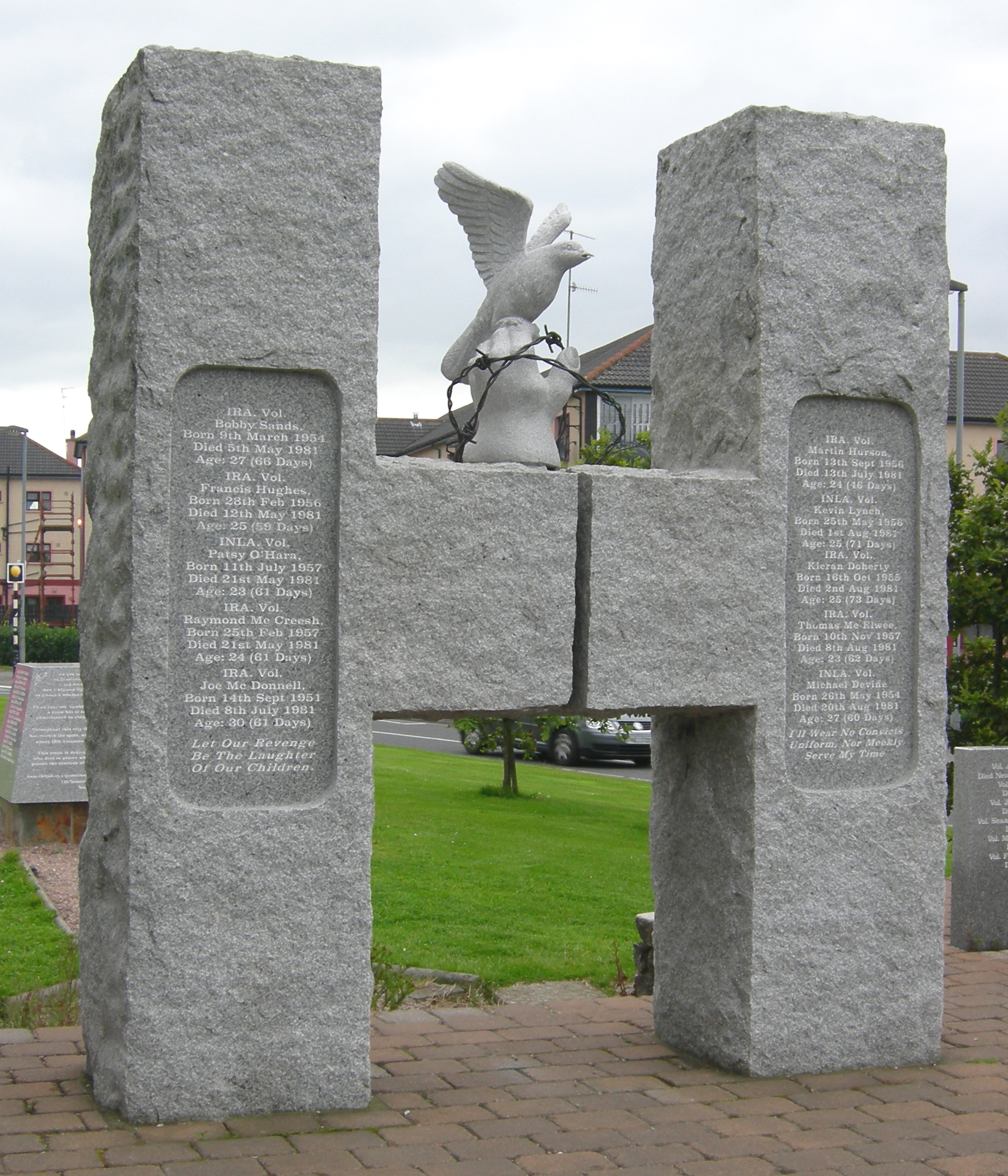
When Special Category Status was revoked for new prisoners in March 1976, the confrontation that would define the Maze began. Kieran Nugent, the first prisoner affected, refused to wear a prison uniform, declaring that convicted criminals -- not political prisoners -- wear uniforms. He wrapped himself in a blanket. By 1978, more than three hundred men had joined the 'blanket protest.' When prisoners were beaten on their way to showers and toilets, the protest escalated into the 'dirty protest,' with prisoners refusing to leave their cells. The European Court of Human Rights censured the British government in 1978 for cruel, inhuman, and degrading treatment. The crisis culminated in the 1981 hunger strike, in which ten republican prisoners, led by Bobby Sands, starved themselves to death in pursuit of political status. The hunger strikes transformed the political landscape of Northern Ireland, galvanizing support for Sinn Fein and fundamentally altering the trajectory of the conflict.
Escape, Murder, and the Shape of the Conflict
The Maze was a theatre of the Troubles in microcosm. In September 1983, thirty-eight IRA prisoners staged the largest prison break in UK peacetime history, overpowering guards in H-Block 7 with smuggled handguns. Nineteen escaped; nineteen were recaptured. One prison officer died of a heart attack after being stabbed. In December 1997, Loyalist Volunteer Force leader Billy Wright was shot dead inside the prison by two Irish National Liberation Army inmates -- a killing inside supposedly the most secure prison in Europe that raised deep questions about collusion or incompetence. Republican and loyalist prisoners organized along military lines within their respective blocks, exercising authority that sometimes rivaled that of the prison administration itself.
From Prison to Peace Process
The Maze's final chapter was its most unexpected. In January 1998, Secretary of State Mo Mowlam made a surprise visit to the prison to speak directly with loyalist prisoners, including Johnny Adair and Michael Stone of the Ulster Defence Association. They had voted for their representatives to withdraw from peace talks. After Mowlam's visit, they changed their minds. The talks continued, leading to the Good Friday Agreement on April 10, 1998. In the two years that followed, 428 prisoners were released. On September 29, 2000, the last four prisoners were transferred to other facilities, and the Maze closed. Plans for the 360-acre site have shifted repeatedly since -- a proposed stadium, a peace center, agricultural showgrounds. The hospital and parts of the H-Blocks are listed buildings. What to do with a place that means such different things to different communities remains, like much in Northern Ireland, unresolved.
From the Air
HM Prison Maze is at 54.49N, 6.11W on the outskirts of Lisburn, about 9 miles southwest of Belfast. The site of the former RAF Long Kesh airfield is visible as a large flat area with remnants of H-Block structures. Nearest airports: Belfast International (EGAA) about 10 nm north, Belfast City (EGAC) about 8 nm east. Now partially redeveloped as Balmoral Park. Best viewed below 3,000 ft AGL.