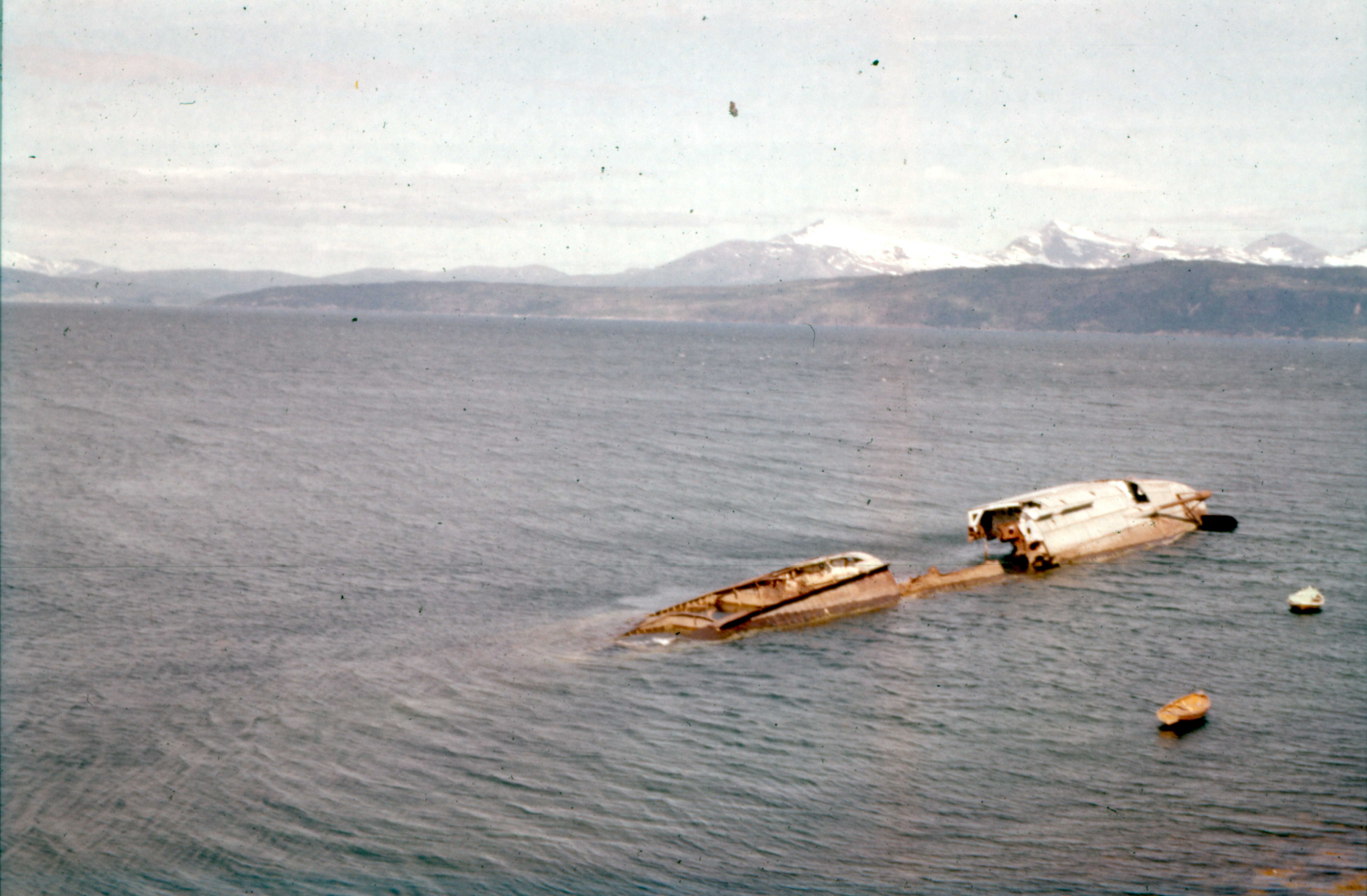
HMS Hardy (H87)
Captain Bernard Warburton-Lee had been told there were six German destroyers in Narvik, possibly more. The Admiralty left the decision to him. He chose to attack. Before dawn on 10 April 1940, Hardy led four of her sister destroyers down the Ofotfjord through a blinding snowstorm, straight into a harbour full of enemy warships. What followed was one of the most ferocious destroyer actions of the Second World War -- and the engagement that earned Warburton-Lee a posthumous Victoria Cross, the first to be awarded in the conflict.
From Birkenhead to the Spanish Civil War
Hardy was built by Cammell Laird at Birkenhead, laid down on 30 May 1935, launched on 7 April 1936, and commissioned on 11 December of that year. At a cost of 278,482 pounds excluding armament, she was the flotilla leader of the H-class destroyers -- slightly larger and better-equipped than her half-sisters to accommodate the flotilla commander and his staff. She displaced 1,455 tons at standard load, could make 36 knots, mounted five 4.7-inch guns, and carried eight torpedo tubes. Her first years of service were spent in the Mediterranean, patrolling Spanish waters during the Civil War to enforce the Non-Intervention Committee's arms embargo. She stood by when her sister Hunter struck a mine off Almeria in May 1937 and was berthed in Palma, Majorca, when Republican aircraft bombed the port -- escaping without damage.
Hunting Raiders in the South Atlantic
When the Second World War began in September 1939, Hardy was in Malta. By October she had been transferred to Freetown, Sierra Leone, joining Force K to hunt German commerce raiders preying on Allied shipping in the South Atlantic. It was unglamorous but essential work -- the Kriegsmarine had sent armed merchant cruisers and pocket battleships to disrupt Britain's maritime lifelines, and every warship that could be spared was pressed into the hunt. After a brief overhaul at Devonport in January 1940, Hardy returned to home waters, was assigned convoy escort duties out of Greenock, and on 9 March rejoined the 2nd Destroyer Flotilla at Scapa Flow as its flagship. The Home Fleet was concentrating in northern waters. Norway was about to become the next battlefield.
Dawn Attack on Narvik
On 9 April 1940, Germany invaded Norway. The Admiralty ordered Warburton-Lee to take his flotilla up the Ofotfjord and attack German shipping in Narvik. Hardy led Havock, Hunter, Hotspur, and Hero through the narrow fjord in a surprise dawn attack on 10 April, emerging from a snowstorm into the harbour. Hardy's first torpedo salvo blew the stern off the German flagship Wilhelm Heidkamp, killing Commodore Friedrich Bonte, the German flotilla commander. Another torpedo struck a merchant ship. A second salvo of four torpedoes was fired at two other German destroyers but missed, damaging the ore docks instead. Warburton-Lee regrouped and led a second attack, but poor visibility limited the damage. The British destroyers had achieved surprise, but the Germans had ten destroyers scattered through the fjord system, and not all had been accounted for.
The Price of Courage
As Hardy and her consorts withdrew westward after their second attack, three German destroyers engaged them from behind. Then two more appeared ahead, crossing the T of the British formation -- the worst tactical position a naval force can face. Hardy's forward guns were knocked out almost immediately. Shells struck the bridge and superstructure, setting the ship ablaze. Warburton-Lee was mortally wounded. Every other officer on the bridge was killed or wounded except Paymaster Lieutenant G.H. Stanning, the Captain's Secretary, who despite his own injuries took command. After several more hits disabled Hardy's boilers, Stanning ordered her run aground at Vidrek to prevent her sinking in deep water. The First Lieutenant assumed command and ordered the ship abandoned, though some of her crew refused to leave until the last torpedo had been fired and No. 4 gun had exhausted its ammunition. Warburton-Lee was carried ashore but died within an hour from his head wounds.
Aftermath at Skjomen Fjord
Of Hardy's crew, 139 men made it ashore, though 26 were seriously wounded. The dead were eventually buried at Haakvik cemetery in Narvik, where their graves remain today. Hardy herself did not stay where she had been beached. A rising tide lifted her off the shore, and the abandoned, burning hulk drifted to the head of Skjomen fjord, where she capsized in the shallows. The wreck was still visible as late as 1963. Warburton-Lee was awarded the Victoria Cross posthumously, the citation noting that he had attacked against odds after being given the choice to withdraw. The First Battle of Narvik that Hardy helped initiate was a tactical success despite her loss -- the British destroyed or crippled several German destroyers and killed the German flotilla commander. Three days later, the battleship Warspite would return with nine destroyers to finish what Hardy had started.
From the Air
HMS Hardy was beached at Vidrek, near the entrance to Skjomen fjord, approximately 68.40°N, 17.20°E, south of Narvik in northern Norway. The Ofotfjord, where the battle took place, runs east-west and is clearly visible from altitude. Fly at 2,000-5,000 feet for dramatic views of the fjord system. Nearest airport is Harstad/Narvik Airport, Evenes (ENEV). Narvik itself sits at the head of the fjord. The wreck site at Skjomen is at the southern end of the fjord complex. Weather is frequently overcast with precipitation; clear days offer spectacular views of steep mountains dropping into deep fjords.