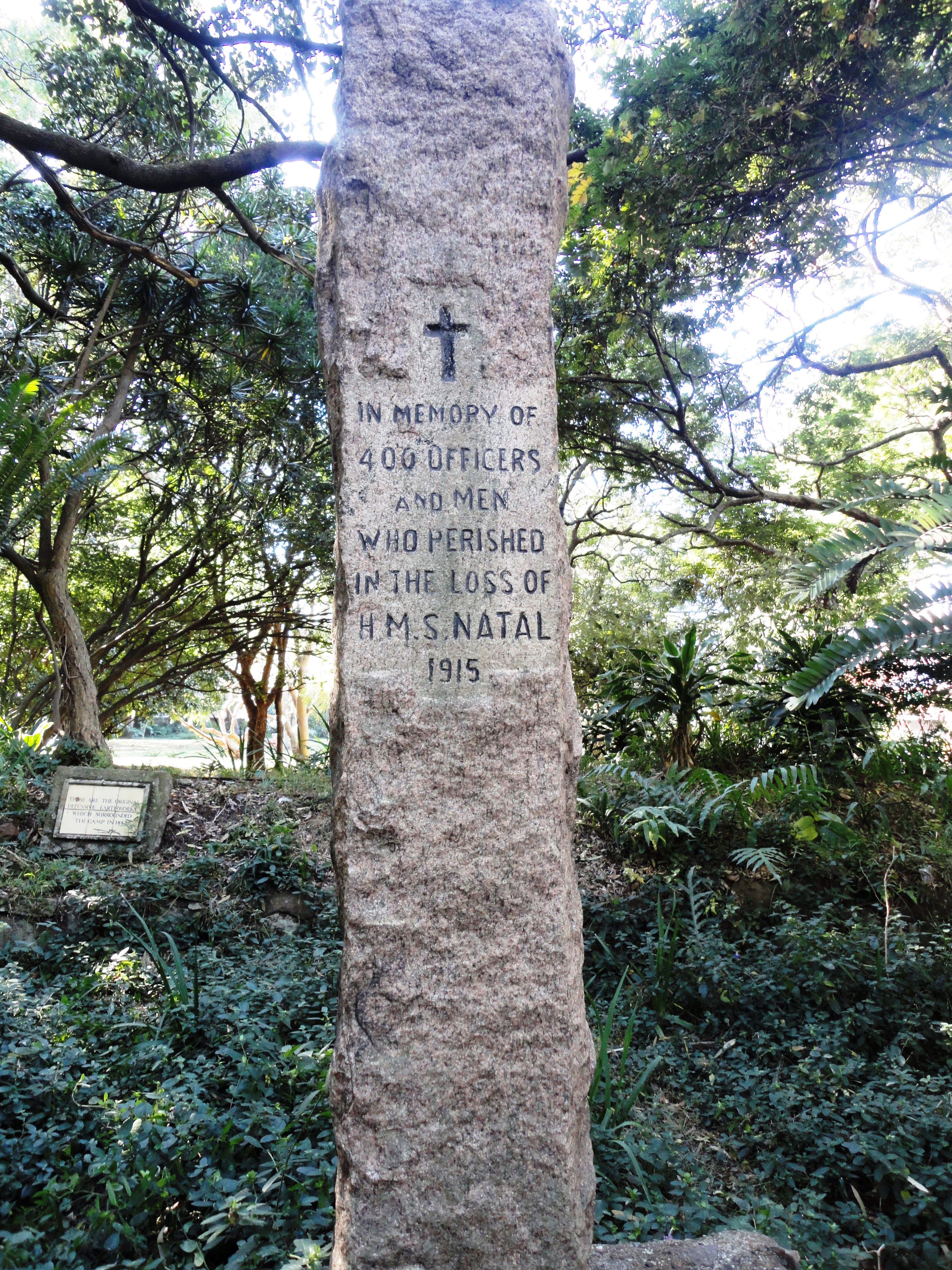
HMS Natal
Her crew called her the Sea Hearse, and the nickname proved grimly prophetic. HMS Natal was a 13,550-ton armoured cruiser built for the Royal Navy, completed in 1907 at a cost of over 1.2 million pounds -- funded largely by the inhabitants of the Colony of Natal in South Africa, whose name she bore. She escorted the royal yacht carrying King George V to the Delhi Durbar in 1911, and in 1912 she carried the body of the American Ambassador Whitelaw Reid home to New York. By December 1915, she lay at anchor in the Cromarty Firth with the 2nd Cruiser Squadron of the Grand Fleet, having never fired her guns in anger during the war. She would never get the chance.
A Winter Afternoon's Entertainment
On 30 December 1915, Captain Eric Back was hosting a film party aboard Natal. It was meant as a festive diversion during the monotony of wartime anchorage. He had invited the wives and children of his officers, a civilian friend with his family, and nurses from the nearby hospital ship Drina. Seven women, one civilian man, and three children were among the guests that afternoon. Shortly after 3:25 p.m., without warning, a series of violent explosions tore through the rear of the ship. Within five minutes, Natal had capsized. The protected waters of the Cromarty Firth, chosen for their safety from enemy attack, offered no protection against what had happened from within.
The Cause and the Cost
Initial speculation blamed a German U-boat or a submarine-laid mine, but divers found that the explosions originated internally -- in either the rear 9.2-inch shellroom or the 3-pounder and small arms magazine. The Admiralty court-martial concluded that faulty cordite was the likely cause. The official death toll was 390, but this figure did not include the women and children who had been aboard as guests. Other estimates place the total losses between 390 and 421 souls. Among the dead were sailors, officers, nurses, mothers, and children -- people gathered for an afternoon's entertainment who died in seconds.
A Tradition of Remembrance
Natal's hull remained visible at low water in the Cromarty Firth for decades. It became Royal Navy custom, maintained through to the Second World War, for every warship entering or leaving Cromarty to sound "Still" -- the order for all hands to come to attention -- as they passed the wreck. Officers and men would stand in silence, acknowledging the dead beneath the grey water. After numerous salvage attempts, much of the ship was recovered, and in the 1970s the remainder was demolished to remove the navigation hazard. A memorial plaque was unveiled in June 1992. The wreck site is now designated as a controlled site under the Protection of Military Remains Act 1986, recognised as a war grave.
Before the Disaster
Natal had led a noteworthy career even before tragedy found her. Powered by triple-expansion steam engines driving two shafts at 23,650 indicated horsepower, she could make 23 knots and carried six 9.2-inch Mark X guns in turrets, four 7.5-inch secondary guns, and twenty-six 3-pounder quick-firing weapons. She served with the 5th Cruiser Squadron from 1907 and transferred to the 2nd Cruiser Squadron in 1909. Captain William Reginald Hall -- who would later become the famous head of Naval Intelligence -- commanded her from 1909 to 1911. In June 1913, she collided with a fishing vessel in fog, an incident that foreshadowed her troubled relationship with fate.
From the Air
Located at 57.687N, 4.089W in the Cromarty Firth, Scottish Highlands. The wreck site lies in the sheltered waters of the firth, visible as a designated area near the town of Cromarty. Best viewed at 2,000-4,000 ft AGL. Nearest airport: Inverness (EGPE) 12 nm southwest. The firth's distinctive narrow entrance (the Sutors) is a prominent visual landmark.