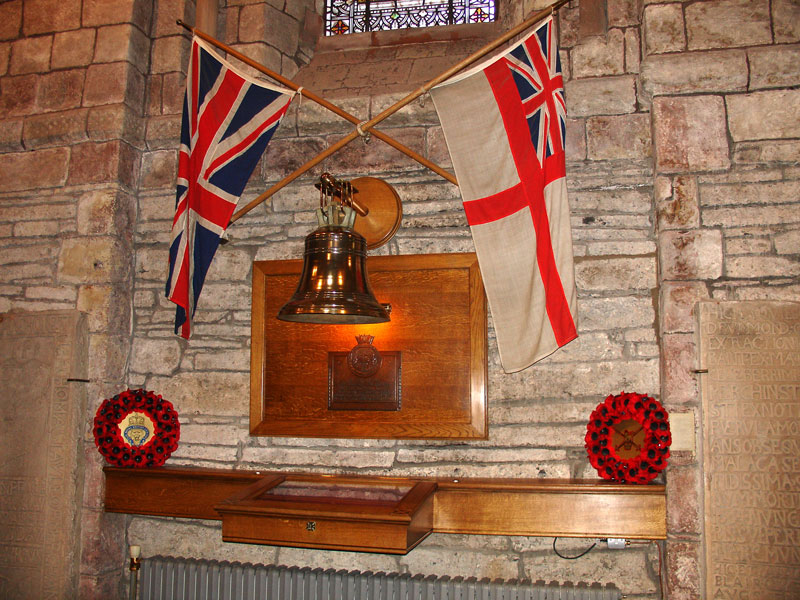
HMS Royal Oak (08)
The torpedo struck at 1:04 a.m. on 14 October 1939, and most of the crew of HMS Royal Oak barely noticed. A single explosion somewhere forward, muffled enough that many assumed an internal accident - perhaps a refrigerant compressor or a paint store catching fire. Captain William Benn ordered an inspection but saw no cause for alarm. Thirteen minutes later, three more torpedoes slammed into the battleship's starboard side. Within minutes, the 29,000-ton warship had capsized and sunk in the supposedly impregnable anchorage of Scapa Flow. Eight hundred and thirty-five men and boys died, including more than a hundred boy sailors under the age of eighteen.
Threading the Needle
The man who accomplished what the entire German Navy had failed to do in the First World War was Kapitänleutnant Günther Prien, commanding the submarine U-47. Scapa Flow's eastern approaches were blocked by sunken ships placed there as barriers during the previous war, but aerial reconnaissance had identified gaps between the blockships in Kirk Sound, narrow channels where a submarine might squeeze through on the surface at high tide. On the night of 13 October, Prien brought U-47 through Kirk Sound in darkness, scraping past the rusting hulks of the blockships with only metres to spare. The Northern Lights were flickering that night, bright enough to make Prien fear detection, but the anchorage was quiet. Most of the Grand Fleet was elsewhere. Royal Oak, elderly and too slow for convoy duty, lay at anchor with a skeleton watch.
Thirteen Minutes of Disbelief
Prien fired his first spread of torpedoes at 12:58 a.m. Only one struck home, hitting Royal Oak's bow. The damage seemed minor. Below decks, the explosion was so ambiguous that officers debated its cause while the submarine reloaded. Nobody ordered the crew to action stations. Nobody considered that a U-boat could be inside Scapa Flow - the idea was simply unthinkable. When Prien's second salvo hit at 1:16 a.m., there was no ambiguity. Three torpedoes struck the starboard side in quick succession, detonating the ship's magazine. A column of flame erupted through the deck. Royal Oak listed heavily, then rolled over. In the darkness and confusion, with oil spreading across the freezing water and the ship's hull trapping hundreds of men below, the death toll mounted with terrible speed.
Boys in the Water
What made the Royal Oak disaster especially devastating was the youth of many who died. The Royal Navy still trained boy sailors aboard its warships, and Royal Oak carried around 163 boy seamen, some as young as fourteen. Many were asleep in hammocks in the forward compartments when the torpedoes struck. Of those 163 boys, 134 perished — the largest loss of boy sailors in a single Royal Navy action. The survivors who made it into the water faced a new ordeal: the October sea was bitterly cold, thick fuel oil coated everything, and rescue boats from the nearby depot ship HMS Pegasus took time to reach the scene. Some men clung to wreckage for over an hour before being pulled to safety. The rescued emerged blackened with oil, shivering, many in shock. Of approximately 1,234 crew aboard, only 396 survived.
Defences Rebuilt in Concrete
Prien escaped through Kirk Sound the way he had come, surfacing into the open sea and setting course for Germany, where he was received as a hero. The sinking exposed the vulnerability of Scapa Flow so starkly that Winston Churchill, then First Lord of the Admiralty, ordered the eastern approaches permanently sealed. The result was the Churchill Barriers - four massive concrete causeways linking Mainland Orkney to Lamb Holm, Glimps Holm, Burray, and South Ronaldsay. Italian prisoners of war provided the labour force, and the barriers they built still serve as the road connections between these islands today. What began as a military necessity became permanent infrastructure, an accidental gift from a wartime tragedy.
An Upturned Hull, Still Bleeding
HMS Royal Oak lies in about 30 metres of water, her hull upside down on the seabed of Scapa Flow. She was designated a war grave, and each year a Royal Navy diver descends to replace the White Ensign that flies from the wreck - an underwater ceremony of remembrance for the 835 who remain entombed in the ship. Oil still leaks from her bunkers, forming rainbow slicks on the surface above, a slow seeping that the sea has not yet finished. The wreck is visible on calm days as a dark shadow beneath the water, close enough to shore that it can be seen from the cliffs. For Orkney, Royal Oak is not distant history. The survivors' descendants still live on the islands, and the anniversary of the sinking is marked with services at St Magnus Cathedral in Kirkwall. The ship lies where she fell, a steel tomb in the harbour that was supposed to be the safest place in the world.
From the Air
Located in Scapa Flow, Orkney, at approximately 58.931°N, 2.983°W. The wreck lies in 30 metres of water near the eastern shore of Scapa Flow, close to the Churchill Barriers. Best viewed from 1,500-2,000 feet, where Scapa Flow's enclosed natural harbour is clearly visible. Nearest airport is Kirkwall Airport (EGPA). The Churchill Barriers linking the southern islands are visible from the air as narrow causeways crossing the eastern channels.