Hofwyl-Broadfield Plantation
The name itself tells the story of reinvention. "Broadfield" came first, a planter's rebrand of a tract originally called Broadface, purchased by William Brailford in 1806 along the Altamaha River in Glynn County, Georgia. "Hofwyl" was added half a century later, borrowed from a progressive Swiss school, an aspiration grafted onto a property built entirely on the labor of enslaved people. By then the plantation had already consumed hundreds of lives to produce its real product: rice, grown in the tidal floodplains of coastal Georgia by more than 350 West Africans brought from Senegal and Sierra Leone. Today, the grounds are quiet, the main house preserved behind live oaks draped in Spanish moss, the rice fields long since reclaimed by marsh grass. Hofwyl-Broadfield Plantation State Historic Site preserves not a golden age but a full reckoning -- the wealth, the brutality, the decline, and the slow work of memory.
Rice and the Tidal Machine
By 1807, Broadfield Plantation was operating as a large-scale rice producer on more than seven thousand acres. Rice cultivation in coastal Georgia was not simple agriculture. It was hydraulic engineering, requiring an intricate system of dikes, canals, trunk gates, and ditches to harness the tidal flow of the Altamaha River. Twice daily, the tides would flood and drain the rice fields, a cycle that demanded constant maintenance and back-breaking labor. The enslaved workers who built and operated this system brought specialized knowledge from the rice-growing regions of West Africa, where tidal rice cultivation had been practiced for centuries. Their expertise made the plantation profitable; their suffering made it possible. At its peak, Broadfield was among the productive rice plantations along the Georgia coast, part of a network that made the Altamaha delta one of the wealthiest stretches of land in the antebellum South.
The Dent Family's Long Decline
When William Brailford died, the property passed to his son-in-law, Dr. James M. Troup, brother of Georgia Governor George Troup. Under Troup, the plantation expanded to 7,300 acres, and by his death in 1849, he held 357 people in bondage. His daughter Ophilia and her husband George Dent inherited the estate, built the main house that still stands today, and added the name Hofwyl. Then the Civil War shattered everything. George Dent and his fifteen-year-old son James marched off with the Confederate Army while Ophilia fled with the children to a refugee camp near Waycross. When the fighting ended, the family returned to a transformed world. Emancipation freed the people whose labor had sustained the estate. Taxes consumed the land. By the time James Dent assumed control in 1880, the vast acreage had been sold off piecemeal, the wealth was gone, and the rice economy that had built Broadfield was entering its final years.
From Rice Paddies to Dairy Pastures
Rice production at Hofwyl-Broadfield ended around 1915, defeated by competition from mechanized farms in Louisiana and Texas that could undercut the labor-intensive tidal method. Rather than abandon the property entirely, the Dent family pivoted. The former rice fields became dairy pastures, and for nearly three decades Hofwyl-Broadfield operated as a modest dairy farm -- a dramatic comedown from its days as a sprawling plantation, but enough to keep the family on the land. The dairy operation continued until 1942, when it too became unviable. The last Dent heir, Ophelia Dent, lived on the property until her death, preserving the main house and its furnishings largely as they had been for generations. She bequeathed the estate to the state of Georgia, and in 1976 the Georgia Department of Natural Resources opened it as Hofwyl-Broadfield Plantation State Historic Site.
What the Grounds Remember
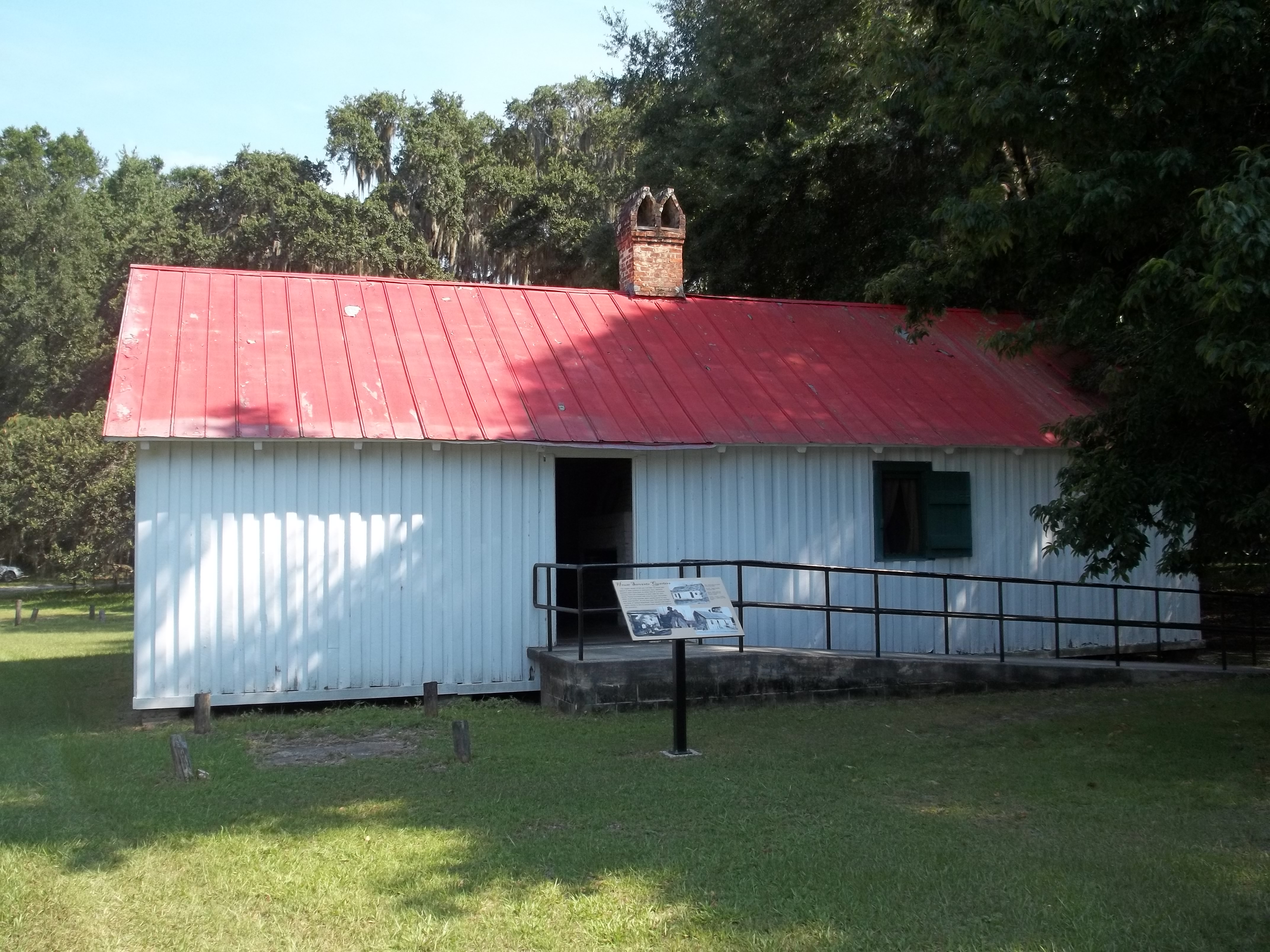
Walking the property today, visitors encounter a landscape layered with contradictions. The main house, built in the early 1850s, is a handsome but restrained structure -- no columned mansion out of a Hollywood film, but a working planter's home with a detached kitchen, a common feature that kept cooking heat and fire risk away from the living quarters. Behind the house stand the remains of the servant quarters and the barn. The grounds still trace the outline of the rice field infrastructure: the dikes, the canal paths, the flat expanses where tidal waters once ebbed and flowed on schedule. Interpretive programs at the site now tell the stories of the enslaved people who made the plantation function, drawing on the broader Gullah-Geechee heritage of the Georgia coast. The site sits within the cultural corridor that stretches from the Altamaha delta to the Sea Islands, a region where African cultural traditions, language patterns, and foodways survived the Middle Passage and centuries of bondage to persist into the present day.
From the Air
Located at 31.305N, 81.454W on the Altamaha River in Glynn County, Georgia. The site is on the mainland side of the coast, set back from the barrier islands. Look for the cleared grounds and historic structures amid dense tree cover along the river's tidal marshes. Nearest airports: Brunswick Golden Isles Airport (KBQK, approximately 12nm south), McKinnon St. Simons Island Airport (KSSI, 10nm southeast). Best viewed at 1,500-2,500 feet AGL. The broad tidal marshes of the Altamaha River delta spread visibly to the east, with the barrier islands -- St. Simons, Jekyll, and Sapelo -- beyond.