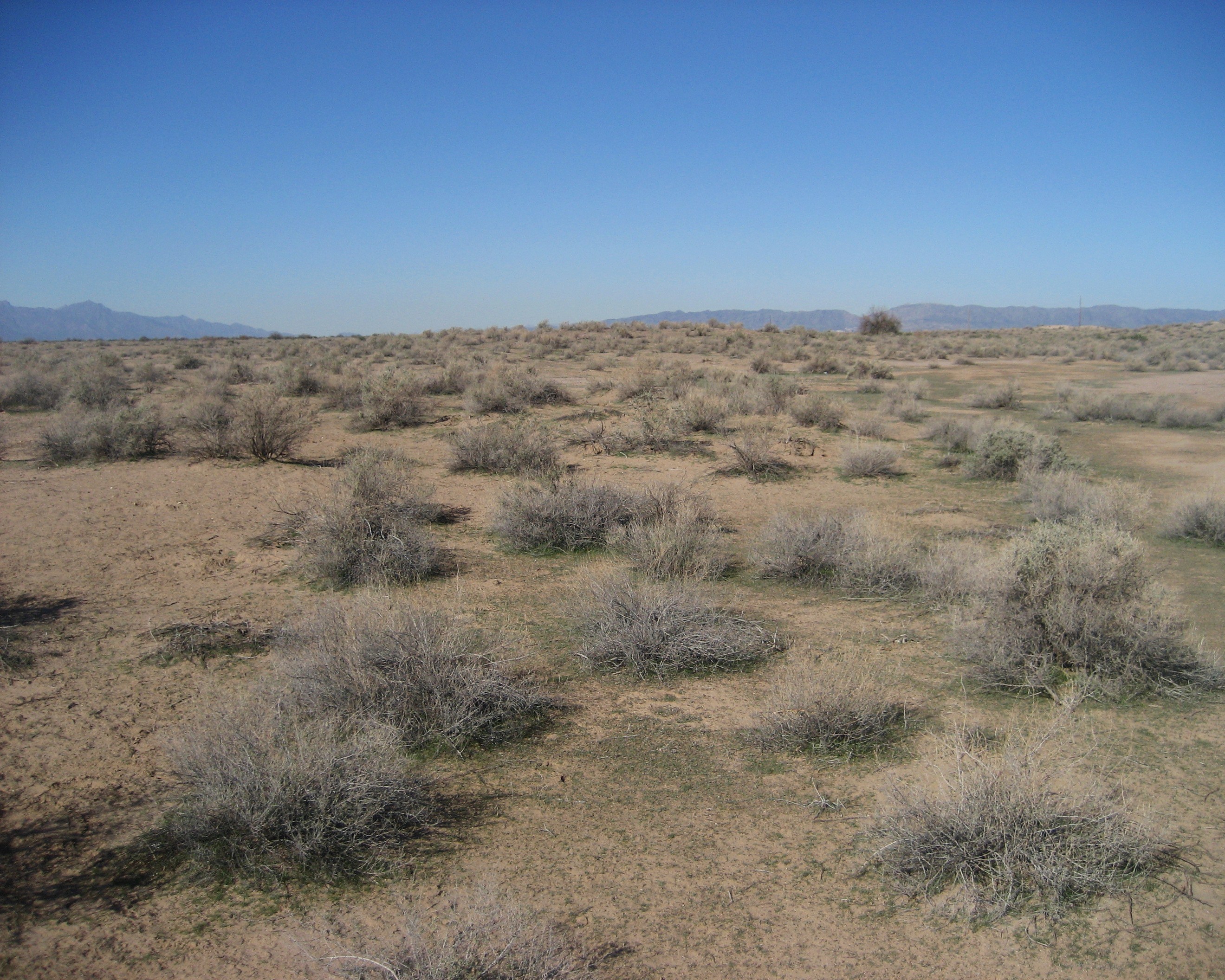
Hohokam Pima National Monument
In 1867, a retired soldier named Jack Swilling looked at the remains of ancient canals cutting through the Arizona desert and saw opportunity. He founded the Swilling Irrigating and Canal Company directly atop those thousand-year-old waterways, and when a settlement grew around his enterprise, someone suggested naming it Phoenix, after the mythical bird reborn from ashes. The ashes in question belonged to the Hohokam, whose village of Snaketown once held up to 3,000 people. Their name, in the O'odham language, means those who have gone. Where they went, and why they burned their own city around 1100 CE, remains one of the great mysteries of the American Southwest.
Masters of the Desert
The Hohokam should not have been able to farm here. The soil was sandy and dry, the volcanic mountains rugged, the rivers slow. Yet for more than a millennium, they grew beans, squash, tobacco, cotton, and corn in the inhospitable landscape. Their secret was engineering. Using woven mat dams, they channeled water from the Gila River through canals that stretched up to ten miles, transforming desert into farmland. Most of the population lived in pit houses, carefully excavated rectangular depressions with adobe walls supported by log corner posts. At its peak between 700 and 900 CE, Snaketown was central to the broader Hohokam culture, a thriving community in a land that seemed to forbid permanent settlement.
The Oval Mysteries
Archaeologists who first excavated Snaketown identified large oval-shaped fields as ballcourts, similar to those found throughout Mesoamerica. Each was roughly the size of a football field with raised embankments. But in 2009, researchers proposed a different explanation. The uneven embankments and curved sides seemed poorly suited for any ball game. Instead, they matched the dance floors used by the Tohono O'odham people for their Vikita ceremonies, practices that continued until at least the 1930s. Whether for sport or ceremony, these structures point to a complex society with rituals we can only partially understand from what they left behind.
The Burning
Something happened around 1100 CE. The archaeological record shows many buildings burned simultaneously, not the gradual decay of abandonment but the violent destruction of a functioning community. Then nothing. The site was never reoccupied. Archaeologist Emil Haury, who excavated Snaketown in the 1930s, suggested over-irrigation may have depleted the soil. Others point to the Medieval Warm Period, which brought droughts across the region. Some scholars argue the population dispersed quickly, perhaps violently. Whatever the cause, Snaketown, once apparently central to the entire Hohokam culture, became a ghost town. The people who had mastered desert farming for more than a thousand years simply vanished from the historical record.
Sacred Ground
Snaketown, an O'odham word meaning place of snakes, was designated a National Historic Landmark in 1964. Artifacts recovered from the site now reside at the Casa Grande Ruins National Monument museum in Coolidge, Arizona, and the Huhugam Heritage Center offers exhibits on tribal history and archaeology. But the land itself belongs to the Gila River Indian Tribe, who consider it sacred. Public access is restricted. The monument exists not as a place for tourists but as protected ground where an ancient people once built canals, homes, and a civilization that modern Phoenix literally rose upon. Those who have gone left only the foundations of what came after.
From the Air
Located at 33.19N, 111.92W, approximately 30 miles southeast of Phoenix within the Gila River Indian Community near Sacaton. The site is not publicly accessible due to tribal restrictions. From altitude, the desert terrain reveals little of what lies beneath, though irrigation patterns of the broader area echo the ancient canal systems. Nearest airports include Phoenix-Mesa Gateway (KIWA) approximately 20 miles northeast, and Phoenix Sky Harbor (KPHX) approximately 30 miles northwest. Casa Grande Ruins National Monument, which holds Snaketown artifacts, is located approximately 15 miles southeast near Coolidge.